Dip at a glance
Intermediate- Primary muscles
- Chest, Triceps
- Equipment
- Parallel dip bars
- Rest for strength
- 2 to 3 min
- Rest for hypertrophy
- 90 to 120s
Also works: Front deltoids, Core
How to perform the dip

 1
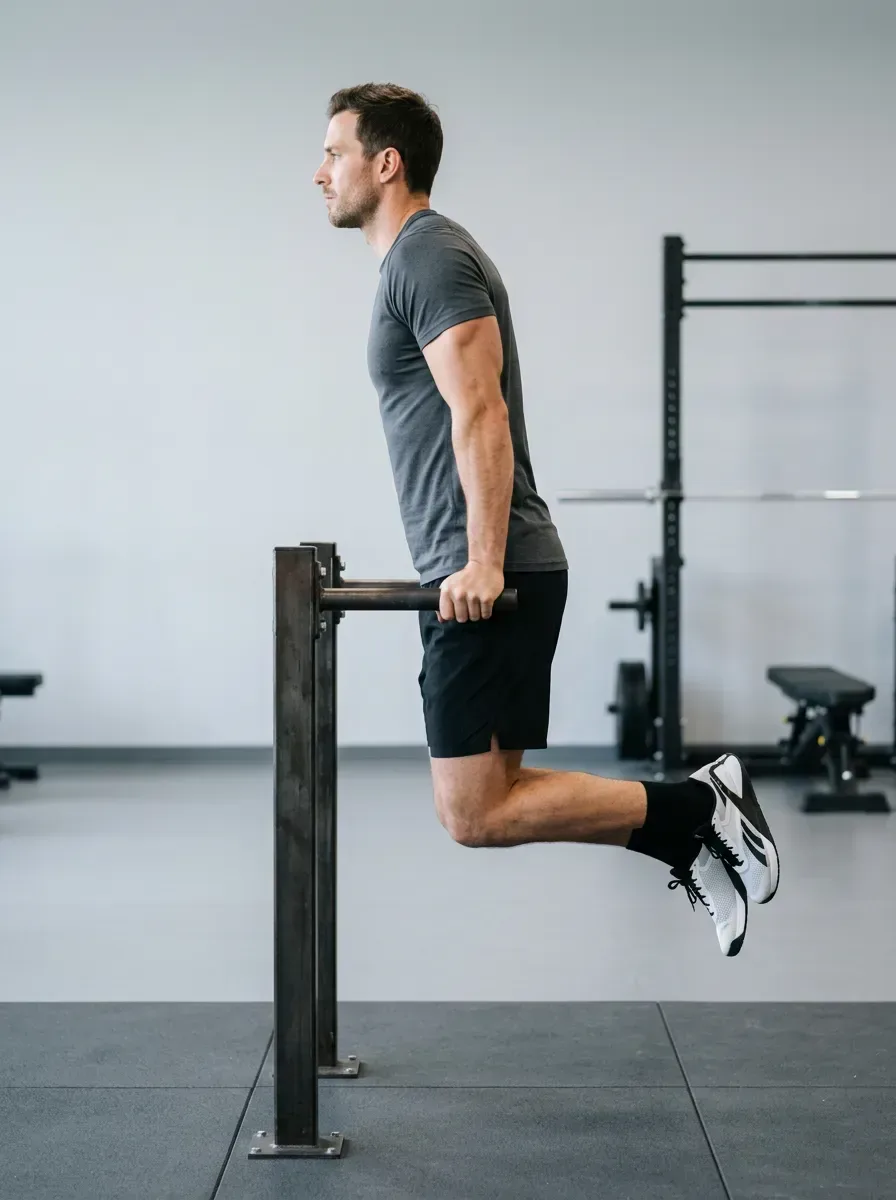
1Set the top position
Grip the bars and press up until your arms are straight and locked. Pull your shoulders down away from your ears, brace your core, and cross your feet behind you so your body hangs still rather than swinging.
 2
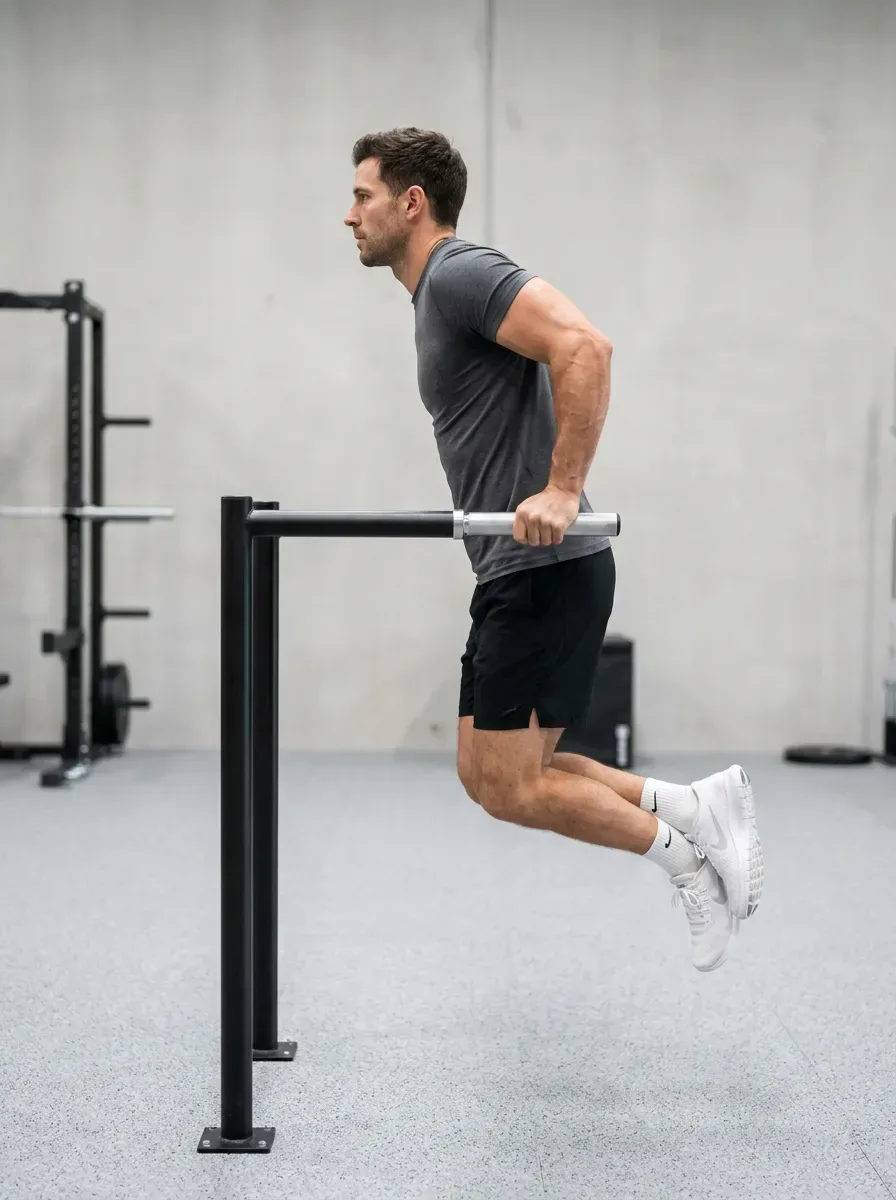
2Lower under control
Bend the elbows and lower until your upper arms are roughly parallel to the floor. Lean the torso forward slightly for more chest, or stay upright for more triceps. Take two seconds down rather than dropping.
 3
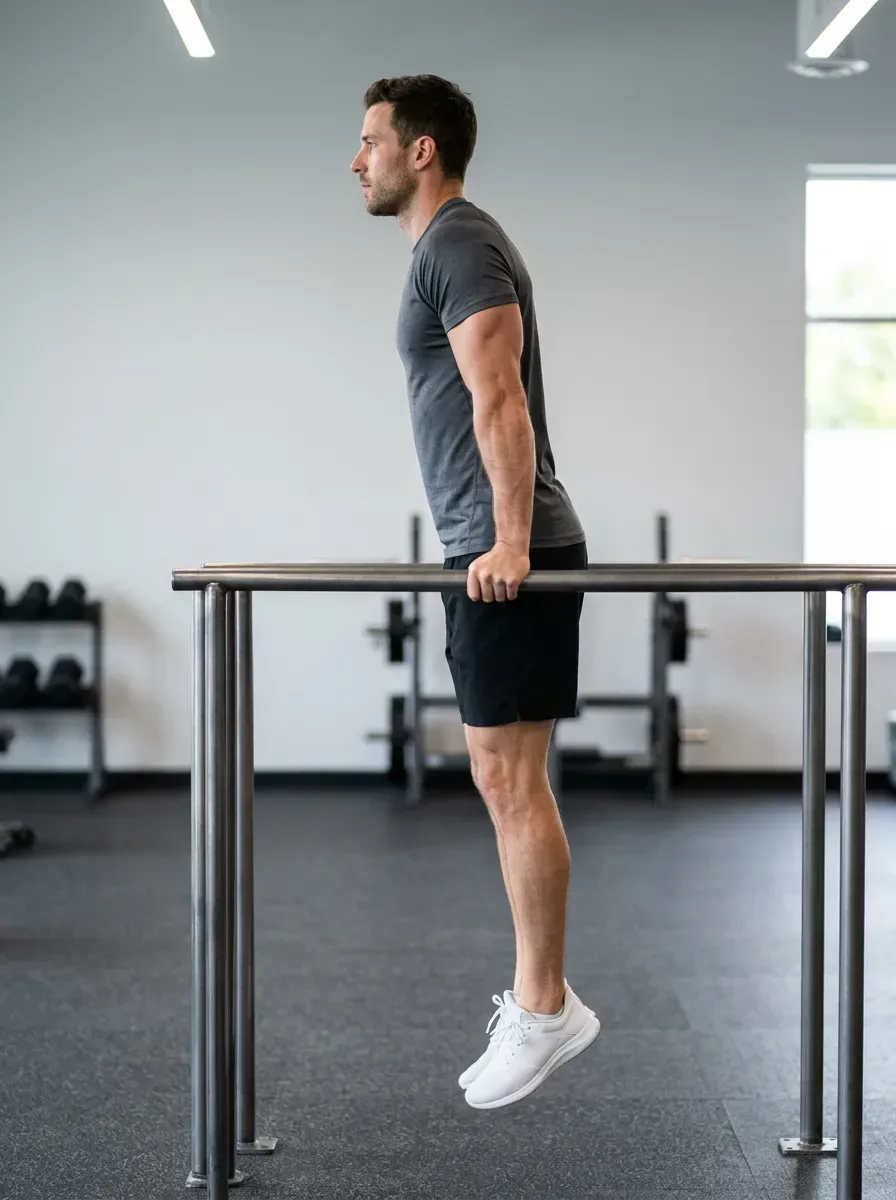
3Press back to lockout
Drive through the palms and press back up to a straight-arm finish without shrugging. Stop just short of a hard lockout if your elbows are sensitive, and reset your brace before the next rep.
Common mistakes
Shrugging the shoulders at the bottom
Fix: Actively pull your shoulder blades down and back before you descend. If the shoulders creep up toward your ears at the bottom, stop the set.
Going too deep
Fix: Lower until the upper arms are about parallel. Going deeper adds shoulder strain without adding meaningful chest or triceps work.
Bouncing out of the bottom
Fix: Pause briefly at the bottom. If you need momentum to reverse the rep, you are past your current strength and should use an assisted variation.
Flaring the elbows wide
Fix: Keep the elbows tracking closer to your sides. Wide flare shifts stress onto the shoulder joint.
Variations and progressions
Assisted dip
Use a machine or a resistance band under the knees to reduce the load while you build the strength for full bodyweight reps.
Bench dip
Easier and more triceps-biased, but harder on the shoulders. Useful as a finisher rather than a main movement.
Weighted dip
Add load with a dip belt once you can do 12 to 15 clean bodyweight reps. This is where dips become a genuine strength lift.
Ring dip
Considerably harder because the rings move. Excellent for stability, but only once your bar dips are solid.
Quick answer: dips train the chest and triceps with the front delts assisting. Rest 2 to 3 minutes between heavy or weighted sets and 90 to 120 seconds for higher-rep bodyweight work. Lean forward to bias the chest, stay upright to bias the triceps.
Why dips are worth doing
The dip is one of very few pressing movements where you move your body through space rather than moving a bar away from a fixed torso. That difference matters. Stabilising your own bodyweight recruits the chest, triceps, front delts and core together, which is why dips carry over to bench pressing far better than most machine pressing does.
They are also self-scaling. Assistance bands make them accessible to a beginner; a dip belt turns them into a legitimate heavy strength lift for an advanced lifter. Very few exercises span that range with no change in setup.
The catch is that dips are unforgiving of sloppy position. The bottom of a dip puts the shoulder in a relatively vulnerable place, and lifters who descend as far as possible tend to find that out eventually. The technique section above is not decoration — the depth cue is what keeps this exercise sustainable.
How to program them
For strength, work in the 4 to 8 rep range with a dip belt and rest 2 to 3 minutes. Treat them like a pressing compound and put them early in the session, as covered in exercise order.
For hypertrophy, 8 to 15 reps with 90 to 120 seconds of rest works well. Dips pair particularly well with rows in an antagonist superset, since the opposing muscles let each recover while the other works. See the antagonist superset guide.
As an accessory, 2 to 3 sets after your main press is plenty. Here you can shorten rest toward 90 seconds because the systemic demand is lower once you are already warm.
Where dips fit against other pressing
Dips sit between a bench press and an isolation triceps movement in demand. They need more rest than triceps work but less than a heavy bench press. If you want the specific rest number for any lift in your session, the exercise rest lookup lists all of them side by side, and the rest recommender will adjust for your goal, set number and effort.