Bulgarian Split Squat at a glance
Intermediate- Primary muscles
- Quads, Glutes
- Equipment
- Bench and dumbbells
- Rest for strength
- 2.5 to 4 min
- Rest for hypertrophy
- 90 to 150s per leg
Also works: Hamstrings, Adductors, Core
How to perform the bulgarian split squat
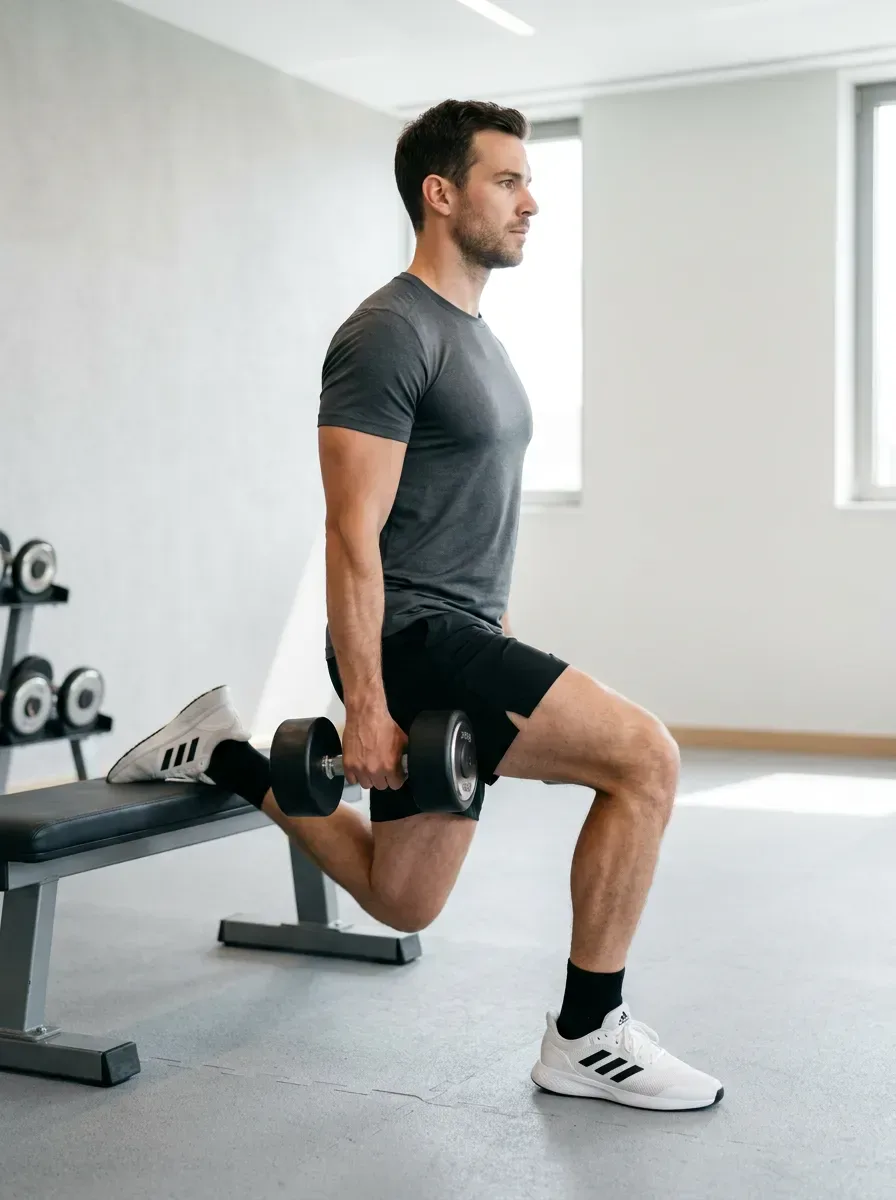 1
1Find your stance

Place the top of your rear foot on a bench behind you and step the front foot far enough forward that the front shin will stay near vertical. Hold a dumbbell in each hand, torso upright.
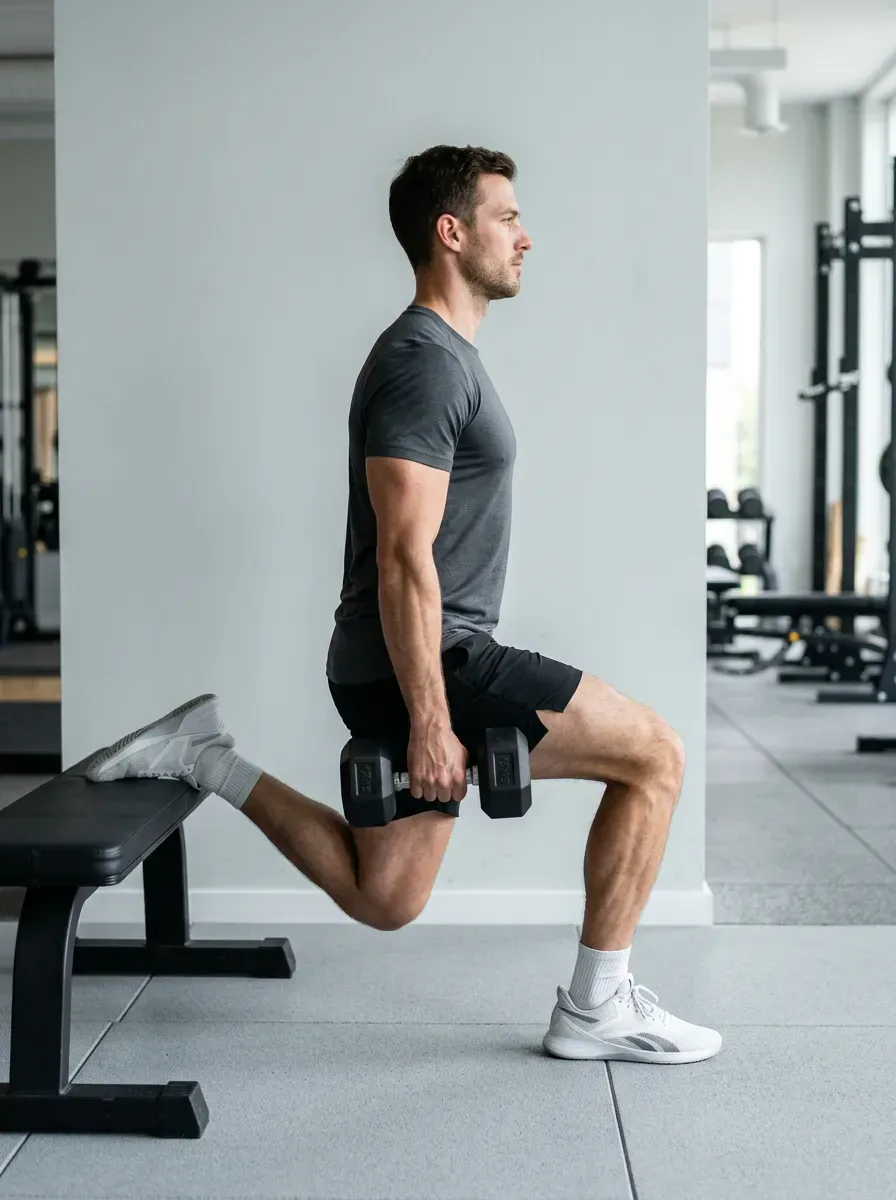 2
2Descend straight down
Lower straight down rather than forward, letting the rear knee travel toward the floor. Keep the torso upright and the front foot flat throughout.
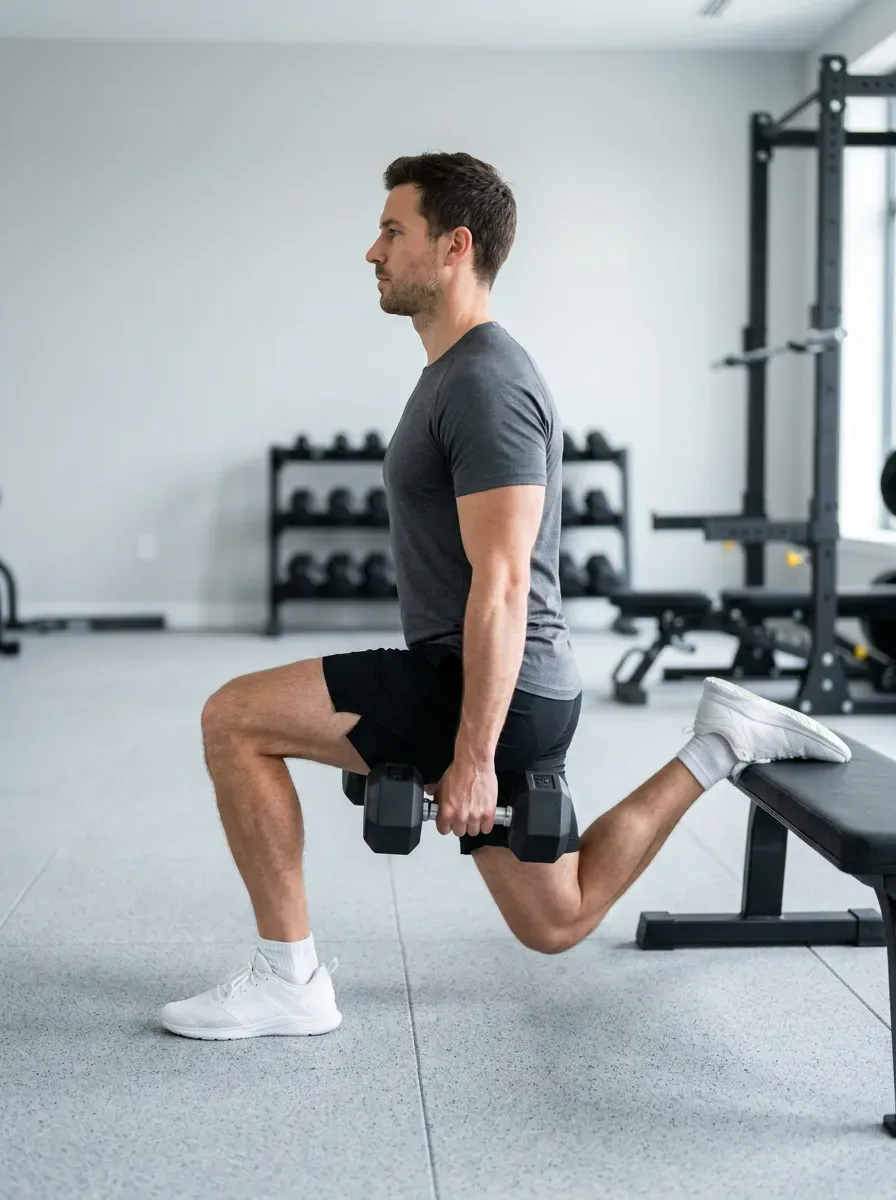 3
3Reach depth and drive up
Descend until the front thigh is roughly parallel to the floor, then drive up through the front heel. The rear leg balances; it does not push.
Common mistakes
Front foot placed too close
Fix: Step further forward. If your front knee travels far past your toes and your heel lifts, the stance is too short.
Pushing off the rear leg
Fix: The rear leg is a kickstand for balance. Drive through the front heel and you will feel the difference immediately.
Rear foot placed too high
Fix: Roughly knee height is right. Too high forces excessive hip extension and makes the position uncomfortable for most people.
Rushing the reps
Fix: This is a balance-limited exercise. Controlled tempo produces a better stimulus and far fewer wobbles.
Variations and progressions
Bodyweight version
The right starting point. Master the balance and depth before adding load.
Front-rack or goblet loaded
Holding the weight in front increases the upright torso demand and core involvement.
Deficit split squat
Front foot on a small platform for extra range. Only once the standard version is comfortable.
Static split squat
Rear foot on the floor rather than a bench. Easier to balance and a good stepping stone.
Quick answer: the Bulgarian split squat trains the quads and glutes one leg at a time. Rest 2.5 to 4 minutes for heavy work and 90 to 150 seconds for hypertrophy, measured after you have completed both legs.
Why they feel harder than the weight suggests
A pair of 20kg dumbbells should not be difficult. In a Bulgarian split squat, they are — and the reason is that you are stacking three demands at once: a long single-leg range of motion, a balance requirement, and a stretched hip flexor on the trailing leg.
That combination means the limiting factor is rarely raw leg strength. It is usually stability and fatigue tolerance, which is why the exercise is such an effective revealer of imbalances. If one side is noticeably worse, you have found something a barbell squat was hiding.
The unilateral rest trap
Here is something most programs get wrong. When your plan says “3 sets of 10, rest 2 minutes,” on a unilateral exercise that means six working sets, not three, and roughly double the time under tension.
Two consequences follow. First, budget realistically — a session with two unilateral movements takes far longer than the set count implies, as the workout duration planner will show. Second, take your rest after both legs, not between them, so each leg gets a genuinely equal recovery window.
Programming them
As a main lower-body lift, 3 to 4 sets of 6 to 10 per leg with 2.5 to 3 minutes. As an accessory after squats, 2 to 3 sets of 10 to 12 with 90 seconds is plenty, since your legs are already warm and fatigued.
They are also an excellent option during a break from heavy bilateral squatting, because they load the quads hard with a fraction of the spinal loading. For how they compare to other lower-body movements, see the exercise rest lookup.