Quick answer: pair opposing movements such as a press with a row, rest 30 to 60 seconds between them, then 90 seconds to 2 minutes after the pair. Each muscle gets far longer to recover than the clock suggests, because it rests while you train its opposite.
The Master Protocol: Antagonist Superset Rest Times Guide
In the world of strength training, there is no such thing as a free lunch. You usually have to trade time for results. But Antagonist Supersets are the closest thing to a “cheat code” in exercise science.
If you’ve been looking for an antagonist superset rest times guide, the key is understanding how to pair opposing muscles to exploit a biological phenomenon called Reciprocal Inhibition.
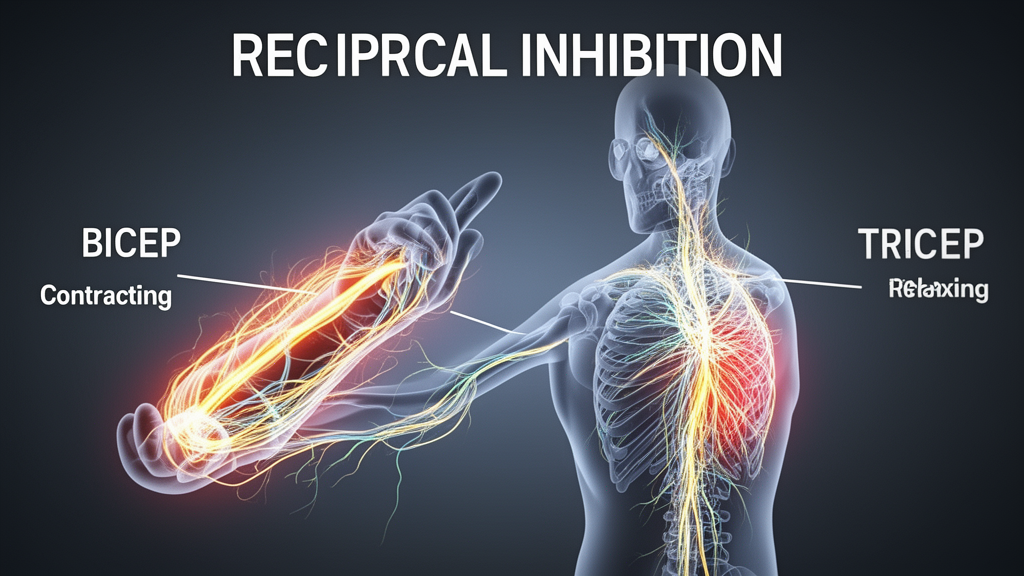
The Science of Reciprocal Inhibition
Your body is built to move efficiently. To allow your bicep to contract with maximum force during a curl, your brain sends an “off” signal to your tricep to relax completely. This prevents the tricep from creating “counter-tension” that would fight the movement.
Research has shown that by briefly activating an antagonist muscle immediately before the agonist, you may actually increase the subsequent force production of the primary muscle. For example:
- Chest, often referred to as Push, vs. Back, often referred to as Pull: Performing a set of Rows before Bench Press primes the nervous system and ensures the back is relaxed and “out of the way” for the press.
- Quads vs. Hamstrings: A set of leg curls can actually make your leg extensions feel “snappier” and more explosive.
By using this guide, you aren’t just saving time; you are potentially lifting heavier weights by “silencing” the opposing muscles.
The Reciprocal Inhibition Advantage
Your body is smart. To allow your bicep to contract with maximum force, your brain sends a signal to your tricep to relax completely. This prevents the tricep from creating “counter-tension” that would fight the movement.
Research has suggested that by pre-fatiguing an antagonist muscle, you might actually increase the force production of the agonist muscle in the next set.
For example: Performing a set of heavy Rows immediately before a set of Bench Press may result in a stronger Bench Press. Your back muscles are more relaxed, and your nervous system is primed.
How to Set Up Your Rest
The beauty of Antagonist Supersets is in the rest periods.
The Protocol:
- Exercise A: Bench Press with 8 reps.
- Transition: 0-30 seconds.
- Exercise B: Barbell Row with 8 reps.
- Rest: 2 to 3 minutes.
- Repeat.
By the time you get back to the Bench Press, your chest has had about 4-5 minutes of total recovery, which includes the duration of the Row set plus the 3-minute rest. This is far more recovery than a standard 2-minute rest between straight sets, yet you have done twice as much work.
The Limits: Systemic Fatigue
While your muscles are resting during the opposing set, your Cardiovascular System and Spinal Erectors are not.
This is why you should be careful with “Systemic” Antagonist Supersets.
- Good Pairing: Dumbbell Bench and Lat Pulldowns, due to their low systemic demand.
- Bad Pairing: Squats and Deadlifts, owing to their extreme systemic and spinal demand.
Pairing two massive compound lifts together will often result in your heart and lungs failing before your muscles do.
Summary
Antagonist Supersets are the ultimate tool for the athlete who is time-crunched.
- Faster workouts.
- Higher workout density.
- Better muscle recovery.
- Potential strength increase via Reciprocal Inhibition.
Use our Rest Timer to manage your inter-set rest. Keep your transitions fast and your rest periods disciplined.
Comparing lifts? The rest by exercise lookup shows the rest range for every major movement side by side.