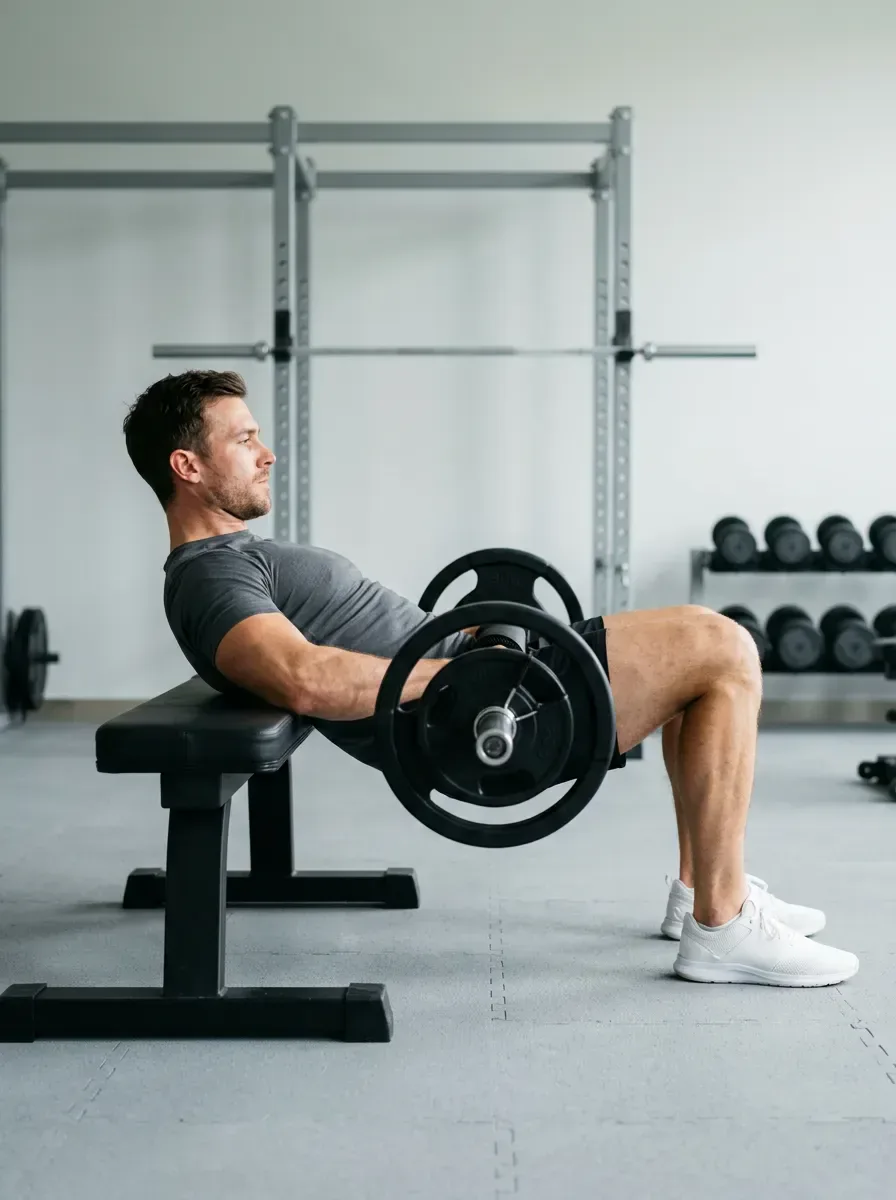
Lat Pulldown at a glance
Beginner- Primary muscles
- Lats
- Equipment
- Cable pulldown machine
- Rest for strength
- 90s to 2.5 min
- Rest for hypertrophy
- 60 to 120s
Also works: Biceps, Rear deltoids, Mid-back
How to perform the lat pulldown

 1
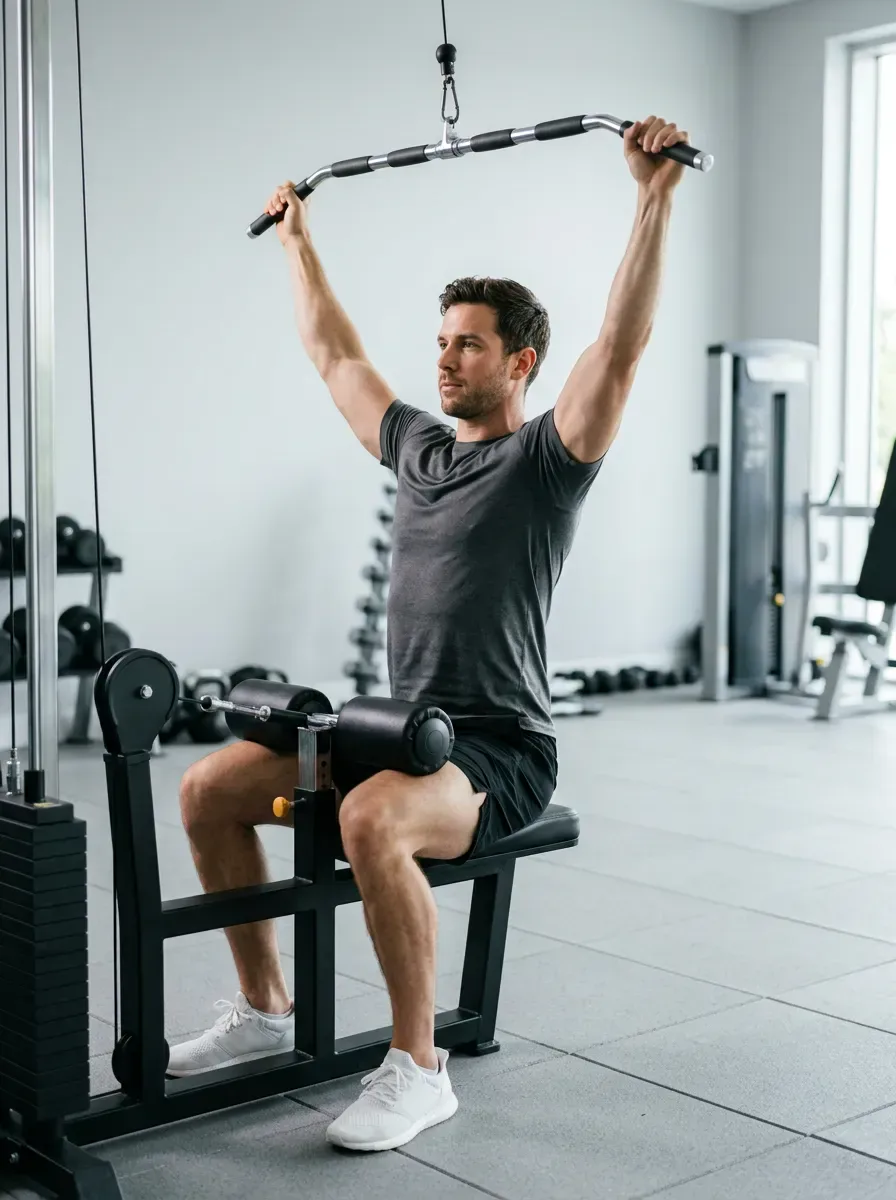
1Set up and reach
Set the thigh pad snugly so you stay seated. Take a grip slightly wider than shoulder width, sit tall, and let your arms reach fully overhead so the lats stretch.
 2
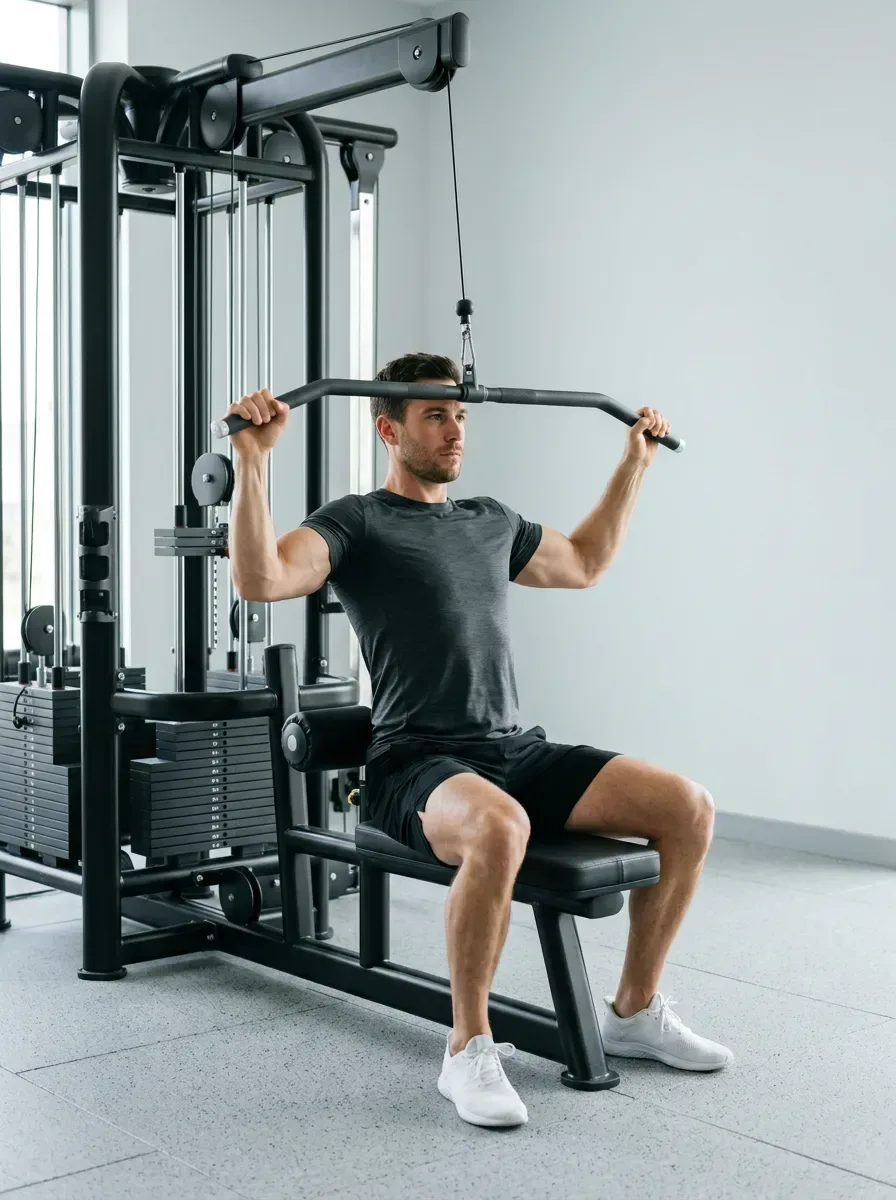
2Pull with the elbows
Lean back very slightly, then drive your elbows down toward your sides. The hands are hooks; the elbows do the work. Keep the chest tall as the bar descends.
 3
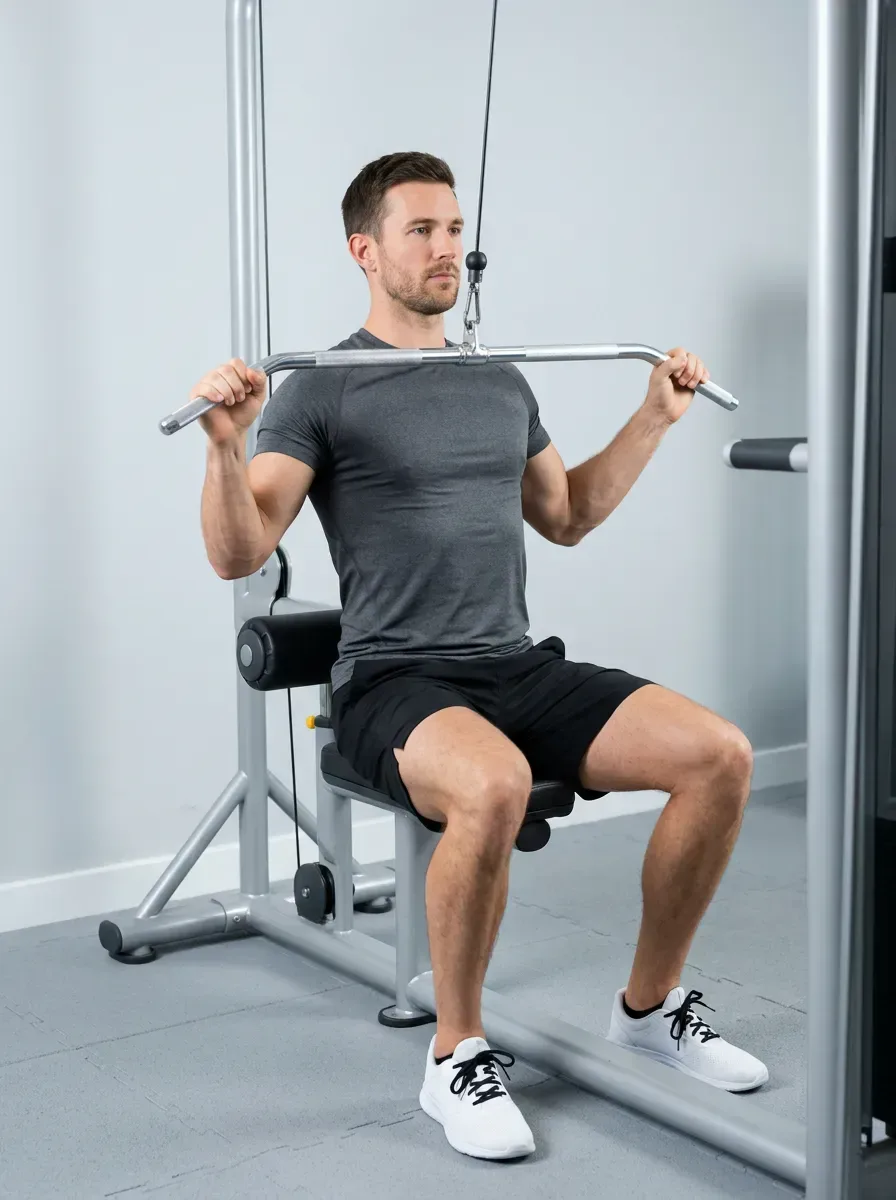
3Finish at the collarbone
Bring the bar to your upper chest, squeeze the shoulder blades down and together, then control the bar back up to a full stretch. Do not let it yank your shoulders up.
Common mistakes
Swinging the torso to move the stack
Fix: Limit the backward lean to about 15 degrees and keep it constant. If you are rocking, the weight is too heavy.
Pulling behind the neck
Fix: Pull to the front, to your collarbone. Behind-the-neck pulldowns force awkward shoulder rotation for no additional benefit.
Letting the weight pull you up
Fix: Control the eccentric over two seconds. The stretch under control is where a large part of the growth stimulus comes from.
Gripping too wide
Fix: A grip slightly wider than shoulder width gives the best range. Very wide grips shorten the movement and stress the shoulders.
Variations and progressions
Neutral grip
Palms facing each other. Usually the most shoulder-friendly option and slightly more biceps-involved.
Underhand pulldown
Supinated grip increases lat and biceps involvement and often allows a bit more weight.
Single-arm pulldown
Trains each side independently and allows a longer range of motion at the bottom.
Pull-up progression
Use pulldowns to build the strength for bodyweight pull-ups, then keep them as volume work afterwards.
Quick answer: the lat pulldown trains the lats with the biceps and mid-back assisting. Rest 60 to 120 seconds for hypertrophy and 90 seconds to 2.5 minutes when working heavy. It is machine-supported and largely local, so it needs less recovery than a barbell row.
Why it deserves a place even if you can do pull-ups
The pulldown is often treated as the beginner’s substitute for a pull-up. That undersells it. Its real advantage is load control: you can select 60% of your working weight for a back-off set, train genuinely close to failure without the risk of dropping off a bar, and add volume late in a session when bodyweight pull-ups would already be impossible.
That makes it a superb volume tool. Many strong lifters do their heavy pulling with weighted chin-ups and then accumulate the rest of their weekly back volume on the pulldown, which is a sensible division of labour.
The elbow cue that changes everything
Most people pull a pulldown with their hands and wonder why their forearms fatigue before their back. The fix is a single mental change: the hands are hooks, the elbows do the work. Think about driving your elbows down toward your back pockets and the lats take over immediately.
Combine that with a controlled two-second negative and a full overhead stretch at the top, and the exercise starts producing results that a heavier, sloppier version never will.
Programming it
For hypertrophy, 8 to 12 reps with 60 to 120 seconds is the standard and works well. For strength-biased work, 6 to 8 reps with a bit more rest. Because the systemic cost is low, the pulldown is an ideal candidate for supersets with a pressing movement, which is covered in the antagonist superset guide.
For where it sits against other pulling movements, see the exercise rest lookup.