Barbell Hip Thrust at a glance
Beginner- Primary muscles
- Glutes
- Equipment
- Barbell and flat bench
- Rest for strength
- 2.5 to 4 min
- Rest for hypertrophy
- 90 to 150s
Also works: Hamstrings, Quads, Core
How to perform the barbell hip thrust
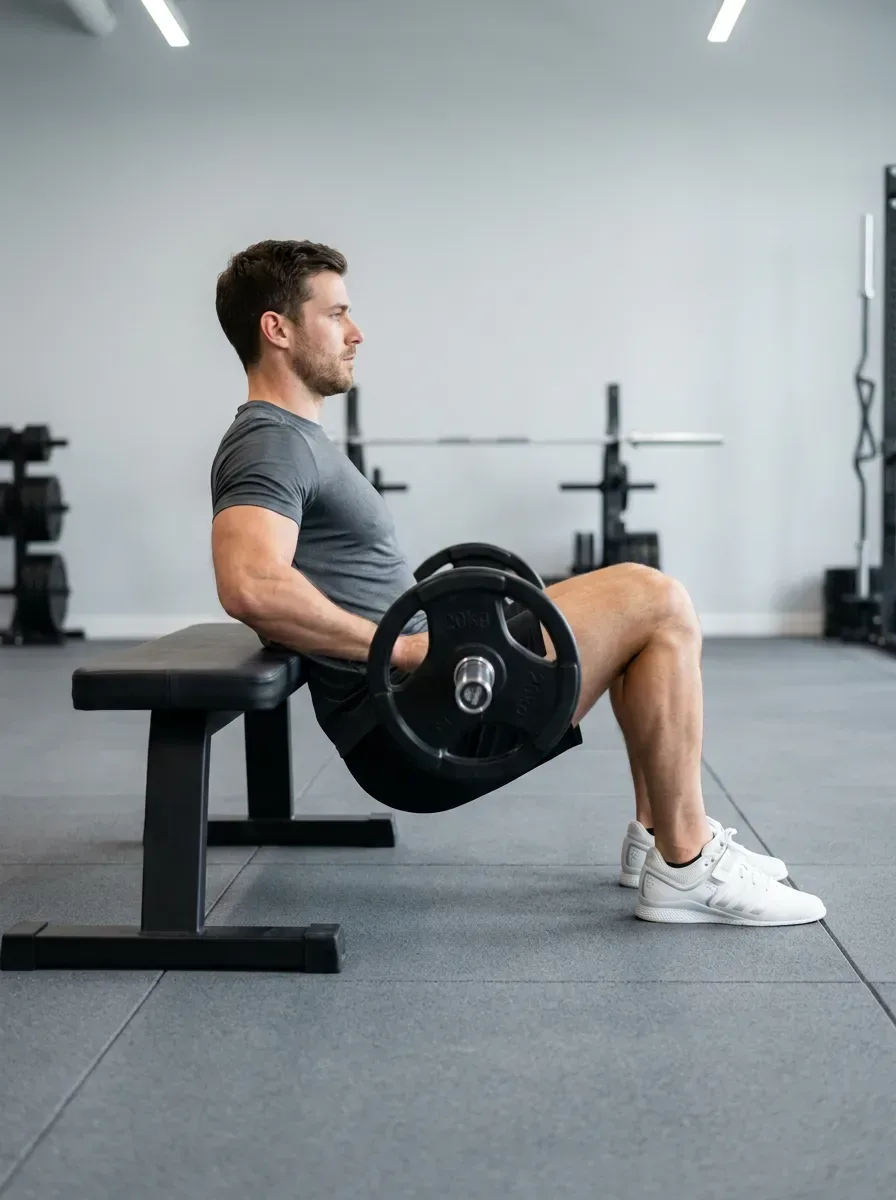 1
1Set your position

Sit on the floor with your upper back against the long edge of a bench, roughly at shoulder-blade height. Roll a padded barbell over your hips, plant your feet flat, and tuck your chin.
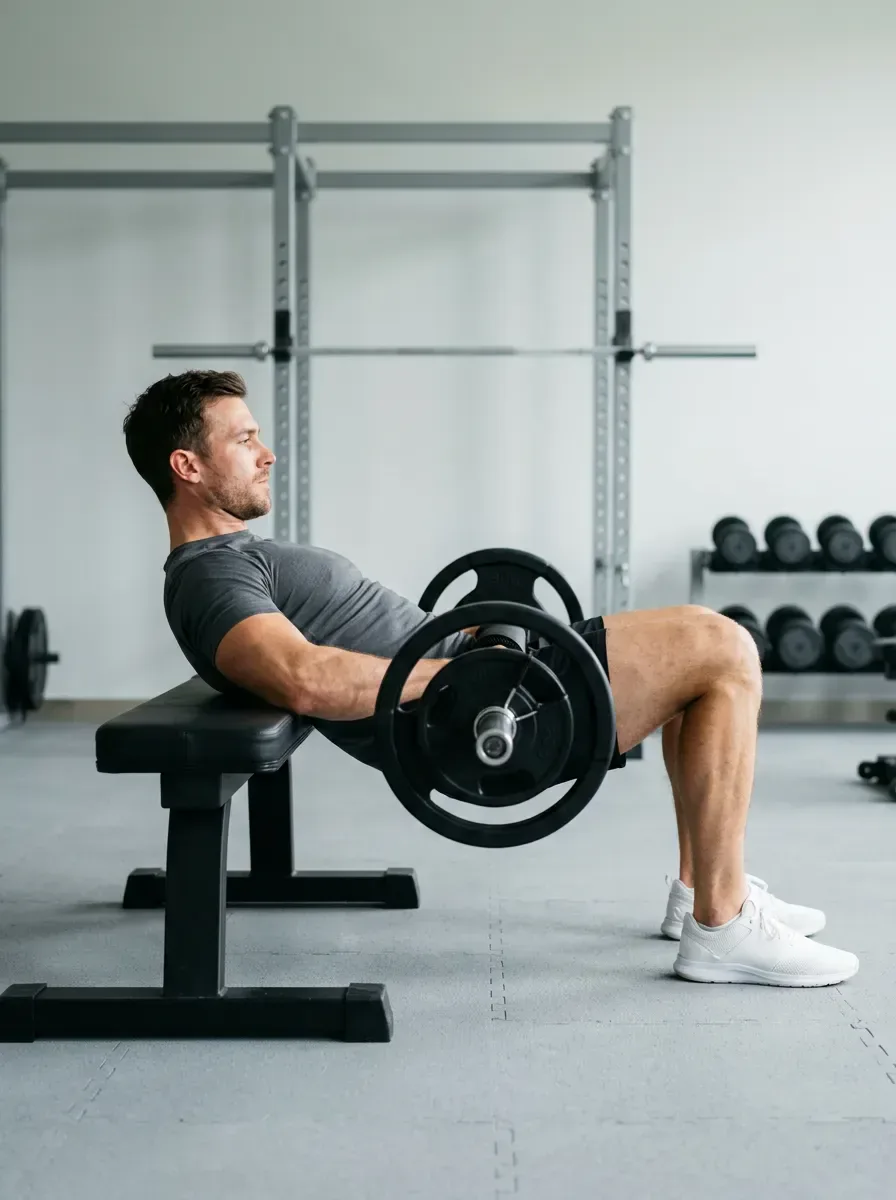 2
2Drive through the heels
Push through your heels and drive your hips upward, keeping your chin tucked and ribs down. The bar should travel straight up, not forward.
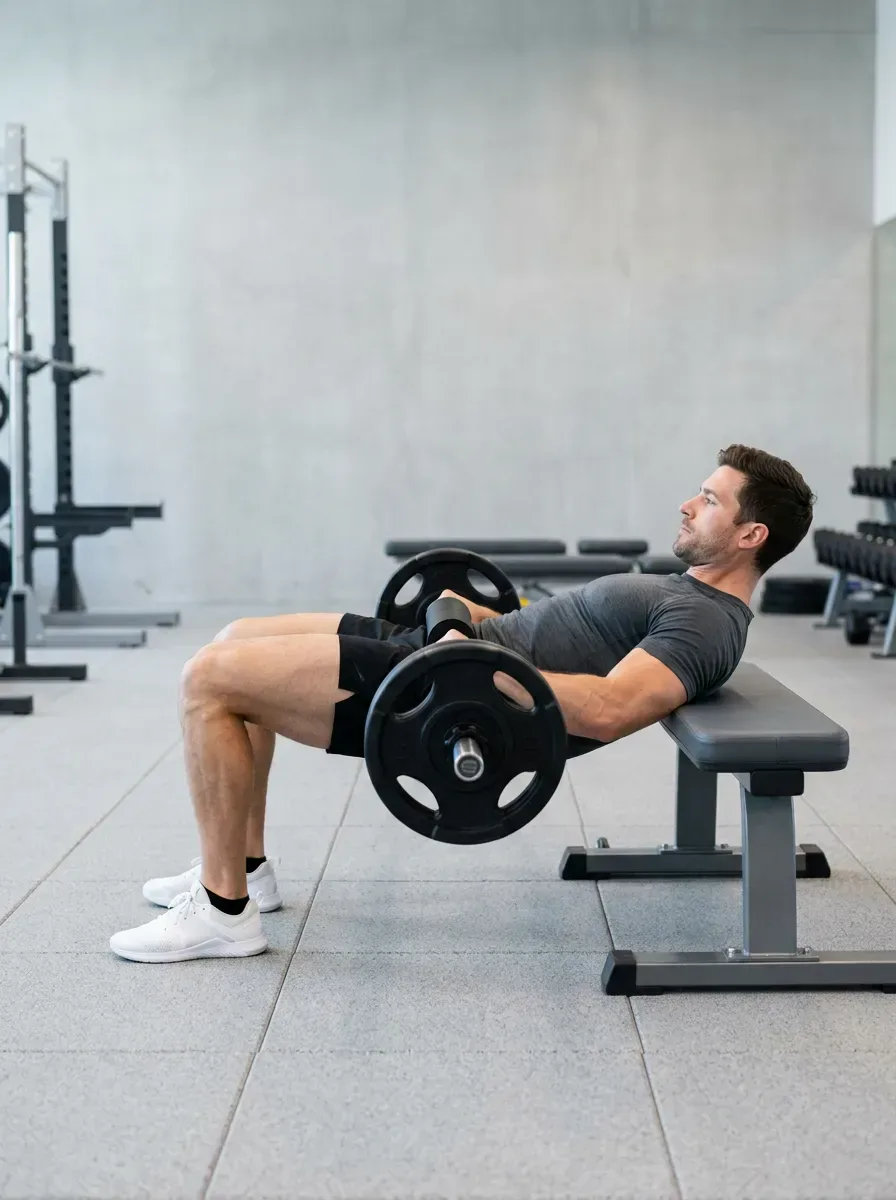 3
3Lock out with the glutes
Finish with your torso and thighs forming a straight horizontal line, shins vertical, glutes hard. Pause for a beat at the top, then lower under control.
Common mistakes
Arching the lower back at the top
Fix: Keep the ribs down and the chin tucked, and finish the rep with a glute squeeze rather than a lumbar arch. If your lower back does the lockout, reduce the weight.
Feet placed too close or too far
Fix: Position your feet so the shins are vertical at the top. Too close makes it quad-dominant; too far shifts the work to the hamstrings.
Half repping
Fix: Reach full hip extension every rep. The top of the movement is where the glutes do their most useful work.
No bar padding
Fix: Use a proper pad or a folded mat. Discomfort will limit your loading long before your glutes do.
Variations and progressions
Single-leg hip thrust
Removes side-to-side compensation and needs far less load. Excellent for addressing imbalances.
Glute bridge
Performed on the floor with a shorter range. A good starting point and a useful high-rep finisher.
B-stance hip thrust
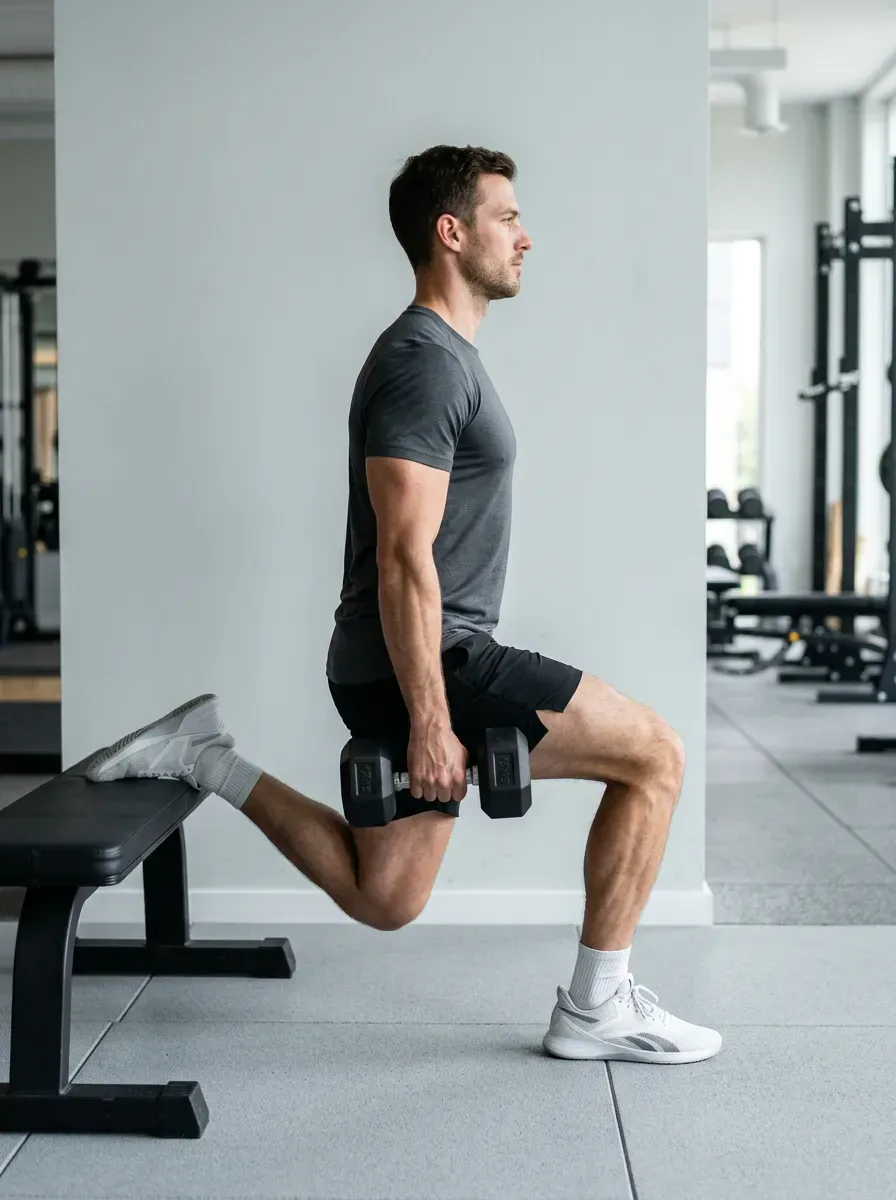
One foot slightly forward taking most of the load, giving a near-unilateral stimulus with more stability.
Machine hip thrust
Removes the setup hassle entirely, which for many lifters means it actually gets done consistently.
Quick answer: the hip thrust is the most direct glute loading exercise available. Rest 2.5 to 4 minutes for heavy strength work and 90 to 150 seconds for hypertrophy sets.
What the hip thrust does that squats do not
Squats and deadlifts train the glutes hard in a stretched position, under a deep hip bend. What they do not do is load the glutes at full hip extension, because at the top of a squat the movement is essentially over and the resistance is vertical.
The hip thrust inverts that. Resistance is horizontal relative to your hips, so tension peaks exactly where a squat’s disappears. That is the entire reason the exercise exists and why it earned a place in serious programs rather than remaining a machine-circuit curiosity.
The lockout is the whole exercise
If there is one thing to take from this page, it is that full hip extension with the glutes, not the lower back, is the rep. A hip thrust performed to three-quarter height with a lumbar arch at the top trains almost nothing you were aiming for and irritates your back in the process.
Chin tucked, ribs down, shins vertical, pause at the top. Get those four things right and the exercise is remarkably hard to mess up.
Why rest is shorter than you would expect
Hip thrusts often use very heavy loads — many lifters thrust more than they squat — which makes people assume they need squat-length rest. They generally do not. The range of motion is short, the trunk is supported by the bench, and there is no balance or bracing demand comparable to a free squat, so the systemic cost per set is lower.
Two to three minutes handles most hypertrophy work. Reserve the longer end for genuinely maximal sets. Compare it against other lower-body movements in the exercise rest lookup, or let the rest recommender account for your set number and effort.