The overhead press is brutally honest. If your rest is too short, your bar speed dies, your elbows drift, and the set turns into a grind long before your legs or lungs feel tired.
That is why lifters often ask why the press stalls after the first hard set even when the weight looked manageable on paper.
Why the Overhead Press Falls Off So Quickly
The overhead press combines local shoulder fatigue, triceps fatigue, and neural demand in a lift with very little momentum. Unlike a squat or deadlift, you cannot hide a weak recovery window with body English for long.
Three things usually cause the drop-off.
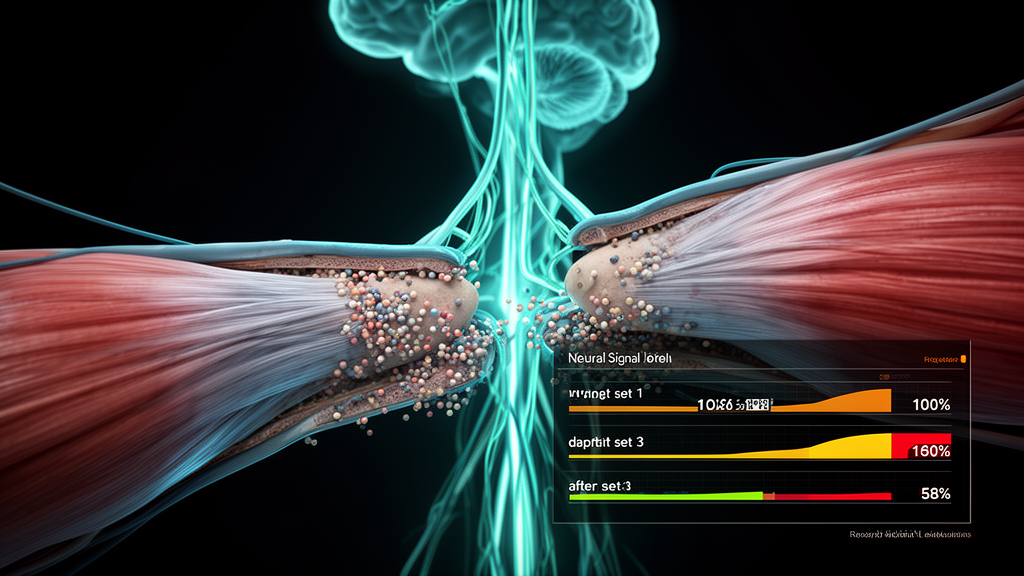
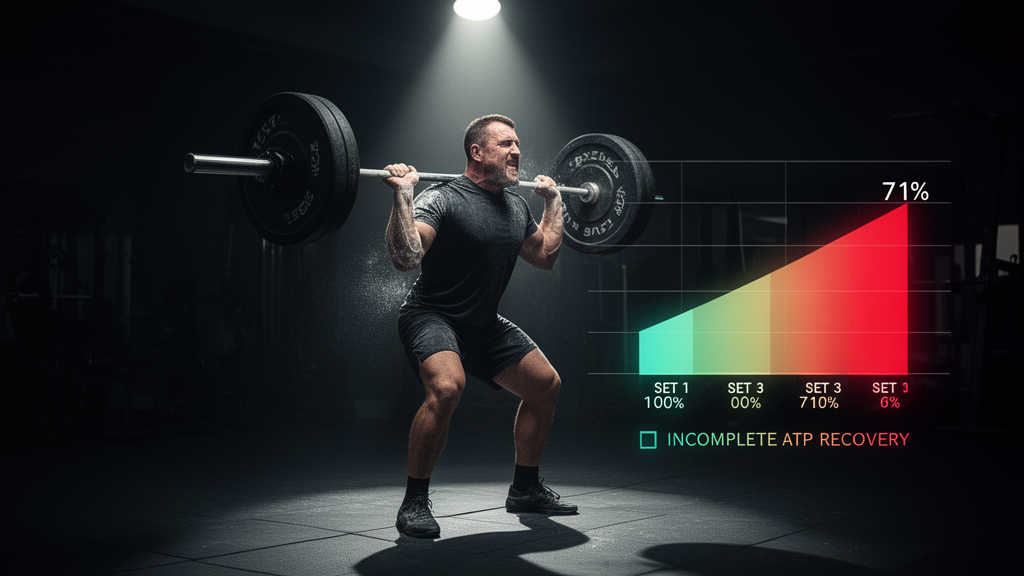
- ATP recovery is incomplete. Heavy sets that last 10 to 20 seconds still rely heavily on the ATP-PC system.
- The lift has a small margin for technical drift. When bracing or bar path slips, the rep slows immediately.
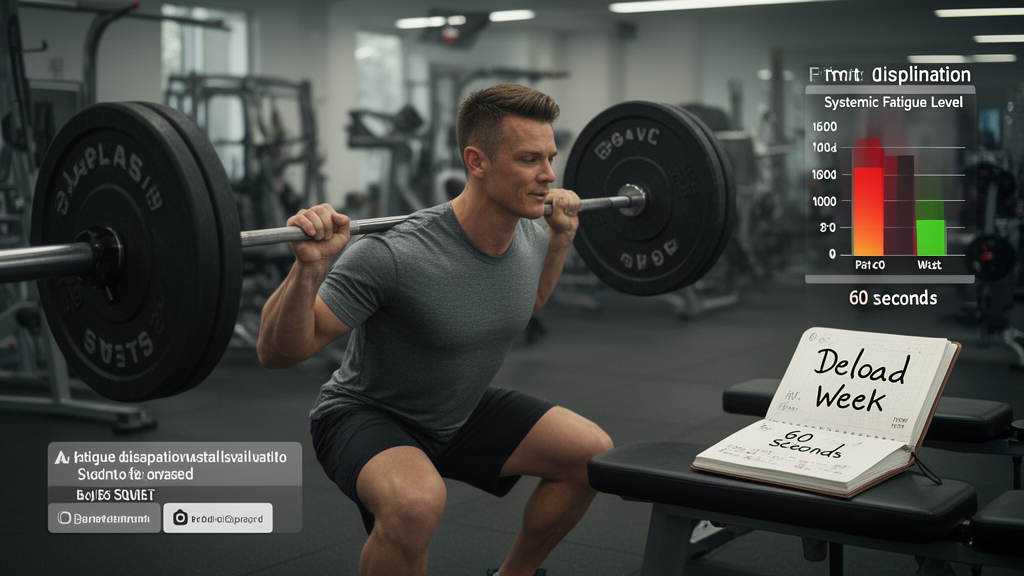
- Upper-body compounds accumulate local fatigue fast. Delts and triceps do not feel recovered just because your breathing normalized.
The Best Rest Window for Pressing Strength
For strength-focused overhead press work, the useful range is usually 2 to 3 minutes.
- Use 2 minutes for moderate sets in the 5 to 8 rep range.
- Use 3 minutes when the set is heavy enough that bar speed is the main priority.
- Use 60 to 90 seconds only when the goal is hypertrophy and you accept some rep-quality drop.
This is why the overhead press rest periods guide and the strength versus hypertrophy article both push lifters away from guessing.
What a Bad Rest Choice Looks Like
If your first set feels crisp and the second set feels like a completely different exercise, your rest was probably the problem.
Look for these signs:
- The first rep moves slowly even though the weight is familiar.
- Your ribcage flares because the brace is not fully reset.
- Lockout takes much longer than the press from the shoulders.
- Rep count drops by two or more reps without a clear programming reason.
That pattern usually means you carried the next set in before ATP and neural readiness caught up.
A Better Session Structure
A practical overhead press session works well with three phases.
Phase 1: Warm up quickly
Use the strategy from warm-up set rest. Move fast through the light weights so you build rhythm without draining your session.
Phase 2: Extend rest for the working sets
When the set starts to matter, move to the 2 minute or 3 minute preset. The jump feels long if you are used to bro-style pacing, but it preserves the quality that makes progression possible.
Phase 3: Shorten rest for accessories
After your main press work is done, shoulder raises, dumbbell presses, and triceps work can use shorter countdowns. That is where the timer should shift back toward a hypertrophy bias.
The Product Shortcut
You do not need a separate timer for every phase.
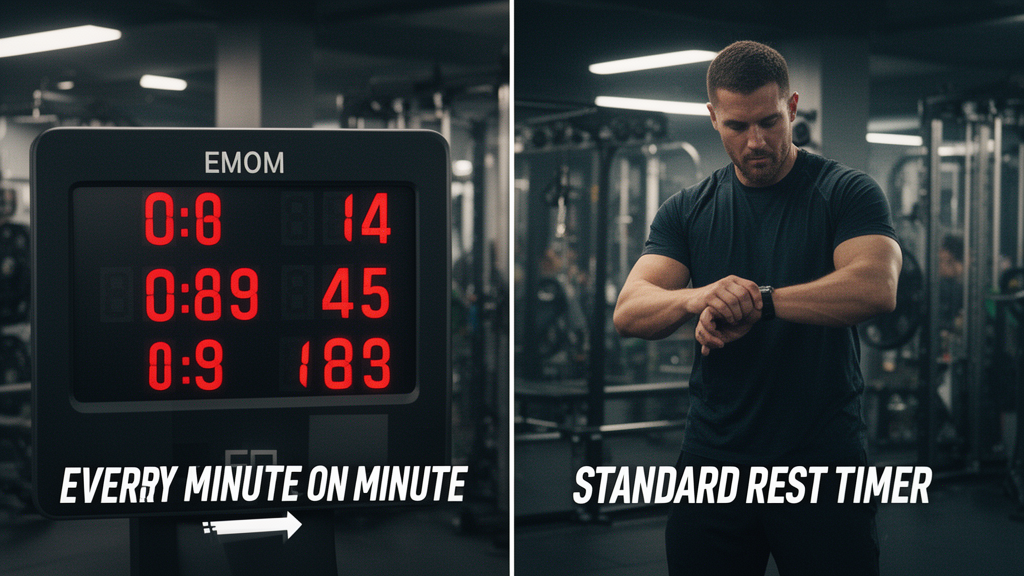
Use the timer quick start to run warm-ups with short rests, then move to the preset breakdown and choose the 2 minute or 3 minute option when the main press begins.
If your press work is based on a recent estimated max, calculate it first with the 1RM calculator. That gives you a cleaner sense of whether the set belongs in a volume-strength range or a true high-intensity range.
Bottom Line
Most overhead press stalls are not mysterious. They come from short rests, rushed setup, and turning a precision lift into an impatient one.
If the goal is strength, recover like strength matters.