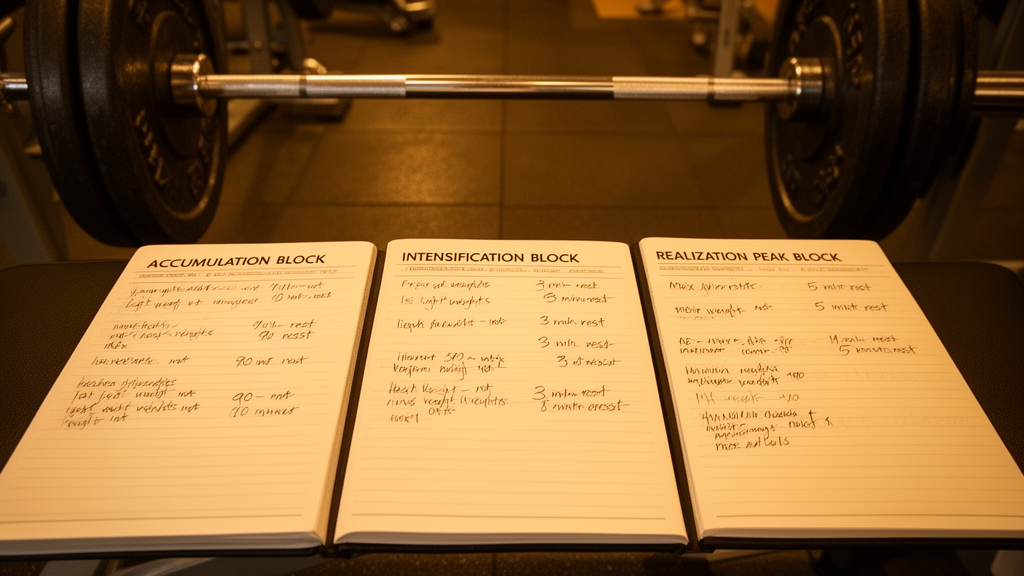
Quick answer: a deload is a planned week of reduced training stress that lets accumulated fatigue clear so your underlying fitness can show up. Take one every 4 to 6 hard weeks, or sooner if performance is sliding and joints ache. Cut volume by roughly half or drop intensity to 60 to 70%, and keep your rest periods long, around 2 to 3 minutes, because shortening rest reintroduces the fatigue you are trying to shed.
When You Need a Deload
Plan deloads rather than waiting for a crash, but know the signals that mean you need one now:
- Performance drops or stalls across several sessions on lifts that were progressing.
- Joints and connective tissue ache persistently rather than just after training.
- Sleep quality, appetite, or motivation to train declines.
- Warm-up weights that normally feel light start feeling heavy.
- You have completed 4 to 8 consecutive hard weeks without a break.
Most programs schedule a deload every 4 to 6 weeks. Newer lifters can often go longer because they generate less absolute fatigue; advanced lifters moving heavy loads usually need them more often.
How to Program the Week
There are three common approaches, and all of them work:
| Approach | What you change | Best for |
|---|---|---|
| Cut volume | Halve your sets, keep the load near normal | Keeping the feel of heavy weight while shedding fatigue |
| Cut intensity | Keep sets, drop load to 60 to 70% of working weight | Joint and connective-tissue relief |
| Cut both, moderately | Reduce sets by a third and load to about 80% | General fatigue after a long block |
Whichever you pick, keep the movements themselves the same. A deload is not a week to learn new exercises, chase novelty, or test maxes.
A deload week is a deliberate reduction in training stress to allow accumulated fatigue to dissipate and underlying fitness adaptations to express themselves. Most athletes understand the intensity and volume adjustments involved — fewer sets, lighter loads, less total work. Fewer athletes consider how rest period duration should change during a deload, and the answer is more nuanced than simply applying the same intervals at a lower load.
During a deload, shorter rest intervals of 60 to 90 seconds are generally appropriate. The reduced intensity means the phosphagen system is not stressed to the same degree, recovery is faster, and the extended rest periods used during heavy training phases are not warranted.
What a Deload Accomplishes
Deload weeks address several distinct recovery needs simultaneously. Systemic fatigue — the diffuse tiredness that accumulates across weeks of progressive overload — dissipates when training stress drops below the recovery threshold. Joint and connective tissue repair proceeds at a faster rate when inflammatory load from heavy training is temporarily reduced. The central nervous system, particularly in athletes who have been training near maximum intensities, gets a meaningful reduction in the neural demand that drives CNS fatigue accumulation.
These are not metabolic issues at the cellular level — they are systemic. The benefit of the deload comes from the reduction in total stress, not from any specific rest interval strategy. However, rest period management still matters because poor choices during a deload can inadvertently maintain fatigue levels rather than allowing them to drop.
How Reduced Intensity Changes Rest Needs
Consider the difference in energy system demand between a maximal training week and a deload. In a normal training block, working at 80 to 90 percent of one-rep max on compound movements depletes phosphocreatine to a degree that requires 2 to 4 minutes for adequate resynthesis. The phosphagen system is the limiting factor, and rest period duration directly governs whether subsequent sets are performed at adequate quality.
During a deload at 50 to 65 percent of one-rep max, the ATP-PC system is only partially depleted with each set. Recovery to functional levels happens in 45 to 90 seconds rather than 2 to 4 minutes. Applying 3-minute rest periods to 60 percent loads is unnecessarily conservative — it extends the session without adding recovery benefit, and it maintains elevated session focus and neural engagement that partially defeats the restorative purpose of the deload.
For reference on how ATP-PC recovery kinetics scale with effort intensity, see rest periods during cutting phases and the science behind strength versus hypertrophy rest periods.
Three Deload Types and Their Rest Adjustments
Volume deload: The most common deload format reduces set count to roughly 50 percent of normal while maintaining intensity at 80 to 85 percent. Because intensity remains high, rest periods should remain in the 2 to 3 minute range for compound movements. The recovery benefit comes from the reduced total set volume, not from shortened rest.
Intensity deload: Sets are maintained at normal volume but loads drop to 50 to 65 percent. This is where shorter rest of 60 to 90 seconds is most appropriate. The metabolic demand per set is low enough that shorter rest is physiologically appropriate and keeps the session brisk without imposing undue fatigue.
Full deload: Both volume and intensity are reduced substantially. Rest periods of 60 seconds are fully adequate for full deloads. The goal is simply to move, maintain movement patterns, and allow recovery. There is no adaptive pressure to manage — the session is restorative in nature.
For more context on how CNS fatigue accumulates across training blocks and what deloads address at the neural level, see CNS fatigue explained.
Why You Should Not Apply Hypertrophy-Style Short Rest to Deloads
A common error is treating the deload as an opportunity to do high-density hypertrophy work — short rest, moderate loads, high pump. This misunderstands the purpose of the deload. The goal is systemic fatigue dissipation, not additional training stimulus. Hypertrophy-optimized short rest with moderate loads still generates meaningful metabolic stress and inflammatory signaling. It maintains fatigue rather than reducing it.
The deload is not a modified training week — it is a recovery tool. Rest management should reflect that by keeping sessions short, unpressured, and low in density.
Practical Guide
For most athletes, the 60-second preset is the correct starting point for deload week training. It keeps sessions moving, is appropriate for the reduced intensity, and eliminates the extended idle time that comes from applying heavy-block rest periods to light-block loads. If your deload involves true maximum-intensity work as in a volume deload, retain your normal strength rest intervals only for those sets.
Deloads fit inside a larger plan, which is covered in block periodization and rest periods.