Quick answer: keep rest short on warm-up sets, roughly 30 to 60 seconds, so you build rhythm and body temperature without draining the session. Start extending rest as you approach your working weight, and take a full 2 to 3 minutes before your first heavy set.
The Science: How Long to Rest Between Warm Up Sets Powerlifting
Many lifters treat their warm-ups like their working sets. They do a set with the empty bar, then sit on their phone for 5 minutes. By the time they reach their heavy working sets, their focus is fading and their core temperature is dropping.
If you are wondering how long to rest between warm up sets powerlifting requires a specific approach that balances preparation with fatigue management.
The Energy Conservation Strategy
Your warm-up sets are not training sets; they are Potentiation sets. The goal is to “wake up” the nervous system without draining your metabolic battery.
A proper energy conservation strategy involves manipulating rest based on the weight on the bar:
- Tissue Temperature with Light Weight: Rest 30 to 45 seconds. You want to keep the “fire” burning. Your heart rate should stay slightly elevated to ensure blood flow to the joints.
- Neural Priming with Medium Weight: Rest 60 seconds. You are practicing the movement pattern. Full ATP recovery is not needed because the load is sub-maximal.
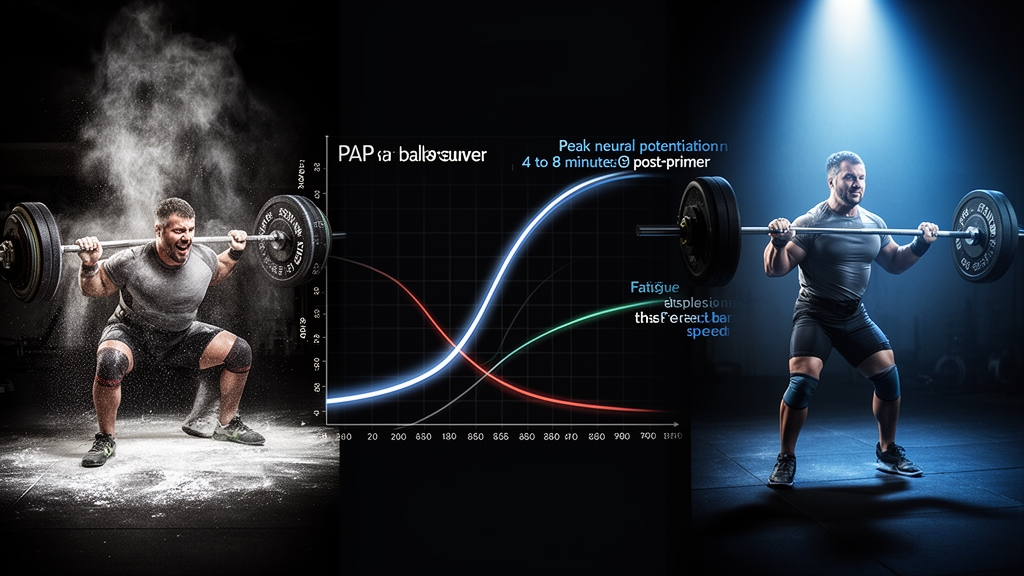
- The Primer Set which is the last set before working sets: Rest 2 to 3 minutes. This set should feel fast and crisp. You take a longer rest here to ensure that all the “neural wake-up” is banked, but the fatigue is cleared before your first 100% effort set.
By moving quickly through the early sets, you conserve mental energy and glucose for when it matters most: the heavy iron.
The “Fast Rest” Strategy
Because warm-up sets are sub-maximal, which is usually below 70 percent of your 1RM, you do not need full ATP replenishment. In fact, resting too long between warm-ups can cause your body temperature to drop and your focus to drift.
Recommendation: 30 to 60 Seconds
As you move through your warm-up sets:
- Empty Bar: Rest 30 seconds.
- 50% Load: Rest 45 seconds.
- 70% Load: Rest 60 seconds.
- Final Primer Set at 90 percent of working weight: Rest 2 minutes.
Why This Works
Moving quickly through the light weights builds Post-Activation Potentiation known as PAP. It creates a state of neural arousal without the heavy metabolic cost.
By the time you reach your first working set, you are physically warm, mentally sharp, and your heart rate is slightly elevated—exactly where you want to be.
The Final Transition
The most important rest period is the one between your last warm-up set and your first working set.
This is where you switch gears.
- Action: Take a full 3 to 5 minutes here.
- Goal: You want absolute freshness for your top set. All the “speed” of the warm-up is now banked. Now you need the “power” of full recovery.
Summary
Don’t let your warm-up turn into your workout.
- Move fast through the light weights.
- Keep rest periods under 60 seconds.
- Take a big break before the heavy iron.
Our Rest Timer allows you to toggle between short and long intervals easily. Use the short settings to blast through your warm-ups and the long settings to crush your working sets.
If you want the complete session workflow, follow the timer quick start. If you want to understand why the last primer set matters so much, read the guide to the post activation potentiation rest window.
Working out which plates to put on the bar for each warm-up jump is easier with the barbell plate calculator, which shows the exact plates per side for any target weight.