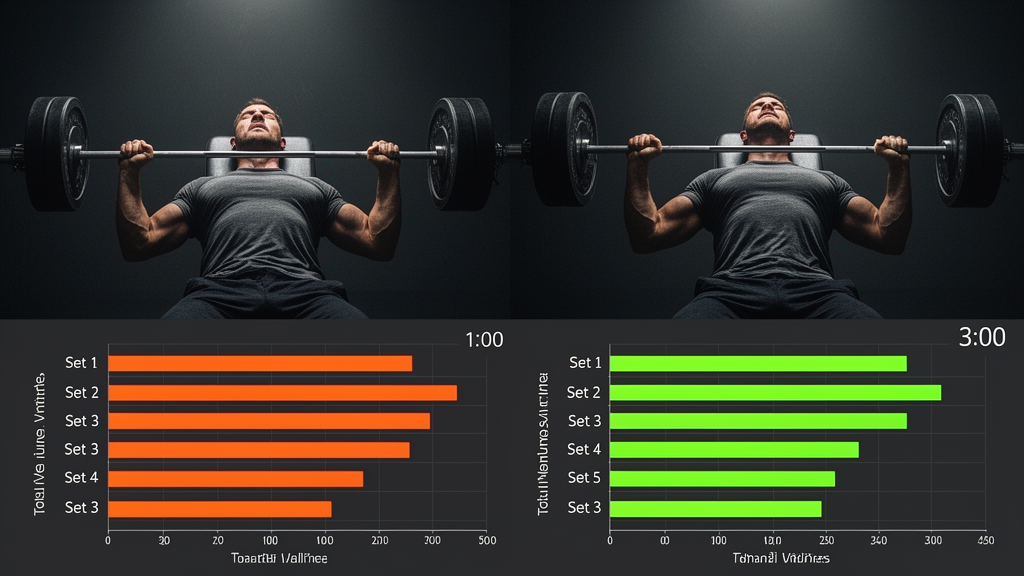
Quick answer: yes for hypertrophy and conditioning work, no for heavy strength sets. Light walking clears lactate faster than standing still, which helps when you are chasing volume. Before a near-maximal set, stay still instead and let your nervous system settle.
Light Walking Does Clear Lactate Faster
The short answer is yes — light walking during rest intervals clears lactate faster than sitting or standing completely still. This is not gym folklore. It is a well-established finding from exercise physiology research comparing active recovery to passive recovery between high-intensity efforts.
But the benefit is conditional. Whether faster lactate clearance actually helps your next set depends entirely on what type of work you are doing. For some training goals, walking between sets is a clear advantage. For others, it actively undermines the quality of what follows.
The Mechanism Behind Active Recovery
During high-intensity exercise, lactate accumulates in working muscle tissue and spills into the bloodstream. Lactate itself is not the cause of muscle failure — the associated hydrogen ion accumulation and inorganic phosphate buildup are the primary culprits — but elevated lactate is a useful proxy for the metabolic state that limits performance.
Light aerobic activity during rest — walking at a slow, unhurried pace — activates the oxidative energy system in the working muscles and in adjacent tissues. The heart and slow-twitch muscle fibers in the legs are particularly effective at oxidizing lactate and using it as fuel. This process, called lactate shuttling, accelerates clearance from the blood and working muscle tissue when some oxidative demand is present.
Passive sitting provides no oxidative stimulus. Lactate and metabolic byproducts clear via the blood stream and diffusion, which is slower. Multiple studies show active recovery at 30 to 40% of maximum heart rate clears blood lactate roughly twice as fast as complete rest.
The detailed mechanism and supporting research are covered in the article on lactate clearance and active recovery.
When Walking Between Sets Helps
Walking between sets provides a meaningful advantage when metabolic fatigue dominates the limiting factor in your training.
This applies to high-rep isolation work — sets of 15 to 20 reps on leg extensions, dumbbell curls, cable flyes. In these contexts, the burn and heaviness that limits performance is primarily the accumulated metabolic byproducts, not phosphocreatine depletion. Getting that metabolic state cleared faster means the next set starts with cleaner muscle chemistry and better capacity for sustained contraction.
Conditioning blocks and circuit-style training are another strong use case. If you are moving through a sequence of exercises at moderate intensity with the goal of cardiovascular adaptation or body composition work, slow walking between stations keeps the oxidative system engaged and accelerates recovery within a session.
For athletes training lactate threshold — the point at which lactate accumulation outpaces clearance — active rest between high-intensity intervals is a core training strategy. See the dedicated guide on lactate threshold training for context on this application.
When Walking Between Sets Hurts
For heavy compound strength work, walking between sets is counterproductive.
Near-maximal effort — sets of 1 to 5 reps at 85% or more of one-rep max — has a different primary limiting factor. Here, the concern is not lactate but neural and phosphocreatine readiness. The CNS needs to reach a state of appropriate arousal and motor unit priming to produce maximum force. The phosphocreatine system needs near-complete restoration.
Walking disrupts both. The slow, rhythmic movement of casual walking shifts the nervous system toward a parasympathetic, low-arousal state — the opposite of the focused, high-arousal state that produces maximal force. Research on arousal and performance shows that psychomotor activation declines with sustained low-intensity movement.
For heavy sets, post-activation potentiation and the priming state built during the final reps of the previous set contribute to readiness for the next one. Moving around at low intensity after a near-max deadlift interrupts this state rather than preserving it.
The neural dimension of this distinction is covered in the article on neural vs metabolic fatigue.
The Optimal Approach by Training Type
The right between-set behavior depends on what limits your next set:
For hypertrophy and conditioning work — 8 to 20 rep ranges, isolation movements, metabolic circuits — slow walking at a pace that feels effortless provides genuine recovery benefit. Keep the pace so easy that you could hold a conversation without effort. The goal is oxidative stimulation, not additional exercise.
For heavy compound strength work — 1 to 5 rep ranges, near-maximal loads, powerlifting-style programming — remain seated or stand quietly. Use the rest interval to control breathing, mentally rehearse the next set, and allow neural arousal to stabilize at an optimal level rather than drain away.
The rest timer presets give you the right time window for both scenarios. How you spend that window determines whether you arrive at the next set physically and neurally prepared.