Snatch at a glance
Advanced- Primary muscles
- Full body
- Equipment
- Barbell
- Rest for strength
- 3 to 5 min
- Rest for hypertrophy
- 3 to 5 min
Also works: Quads, Glutes, Traps, Shoulders, Core
How to perform the snatch

 1
1Set the start position
Take a wide grip with the bar over mid-foot, hips down, chest up, shoulders slightly over the bar and arms straight. Every snatch is decided here.
 2
2Extend and pull under
Drive the floor away, then extend the hips, knees and ankles explosively with the bar close to the body before pulling yourself under it.
 3
3Catch overhead
Receive the bar locked out overhead in a deep squat, with the bar over the middle of your feet and an active shoulder position, then stand up.
Common mistakes
Pulling early with the arms
Fix: The arms stay straight until full extension. Early arm bend kills the power from the legs and hips.
The bar drifting away from the body
Fix: Keep it brushing the thighs and hips. Any forward loop and the catch is gone.
Training it fatigued
Fix: The snatch is a skill before it is a strength lift. Once bar path degrades, the session is over.
Soft overhead lockout
Fix: Punch up hard into the bar and hold an active shoulder. A passive catch is how shoulders get hurt.
Variations and progressions
Power snatch
Caught above parallel. Less mobility demand and useful for developing speed.
Hang snatch
Starting from the hip removes the floor phase and simplifies the timing.
Snatch balance
Trains the speed and confidence of receiving the bar overhead.
Overhead squat
The foundational position drill. If this is weak, the snatch catch will be too.
Quick answer: rest 3 to 5 minutes between working sets of snatch and clean and jerk, and 5 to 8 minutes before heavy or maximal singles. These lifts are limited by technique and nervous-system output rather than muscular endurance, so rushing them degrades bar path before it degrades strength.
Olympic lifters rest far longer between sets than most strength athletes. In national-level programs, 5 to 8 minutes between heavy snatch and clean and jerk attempts is the norm, not the exception. To an outsider, this looks excessive for a movement that takes 2 to 3 seconds. The science explains why those long rest periods are not optional — they are a technical necessity.
Why Olympic Lifts Demand More Rest Than Comparable Squats
A back squat at 90% of one-rep max and a snatch at 90% of one-rep max produce different recovery demands despite similar relative intensities. The squat is a stable, bilaterally symmetric movement with a well-defined motor pattern. The snatch requires an explosive pull through multiple positional transitions, an overhead catch in a deep squat, and precise timing across dozens of interconnected muscle groups — all within approximately 1 to 2 seconds.
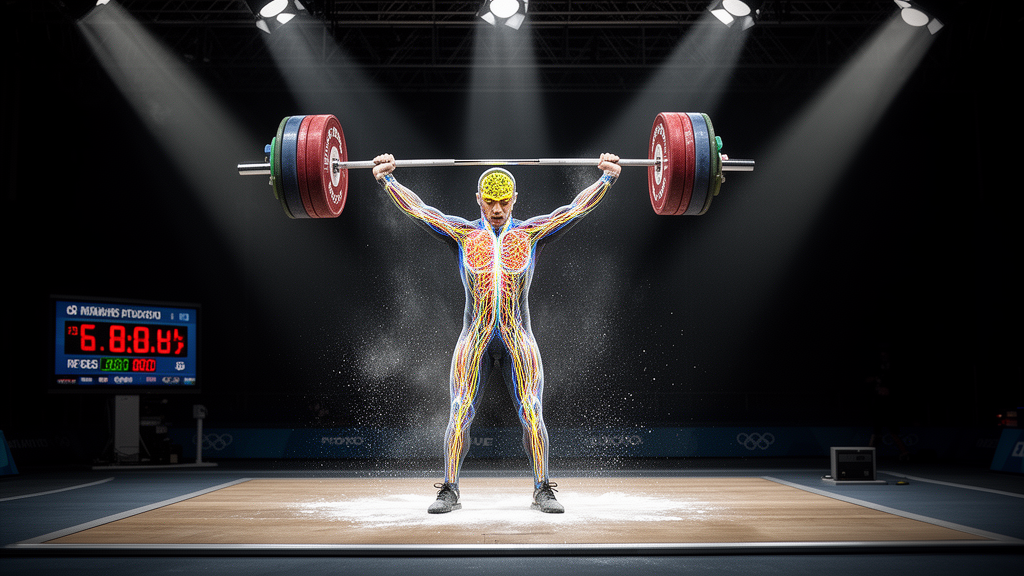
When CNS fatigue accumulates, the first thing to deteriorate is not raw strength. It is motor precision. A lifter may retain enough muscular output to complete a snatch, but if the bar path deviates by a few centimeters, the lift fails regardless of strength. This is the defining characteristic of the Olympic lifts: technique breakdown from neural fatigue causes failure long before muscular failure arrives.
For a deeper understanding of the neural component, the article on CNS fatigue explained covers the physiology in detail.
Snatch Versus Clean and Jerk Rest Needs
The snatch and the clean and jerk have slightly different rest requirements even though both are maximally CNS-demanding.
The snatch is performed in a single continuous movement with very high velocity and demands exceptional shoulder mobility, hip mobility, and overhead stability. Even partial fatigue in the stabilizing muscles of the upper back and shoulder complex causes forward bar drift or a collapsed catch position. Athletes typically rest 4 to 6 minutes between moderate snatch sets and 5 to 8 minutes between maximal attempts.
The clean and jerk involves two distinct phases: the clean to the front rack and the jerk overhead. Each phase can create its own fatigue profile. The clean is a near-maximal lower body and pull effort; the jerk is a short explosive drive requiring full neural output. When a lifter is fatigued, the jerk tends to fail first because it requires the highest motor precision in the shortest time window. Elite coaches often observe that a missed jerk after a successful clean is a reliable sign that rest was too short before the attempt. Rest between heavy clean and jerk sets ranges from 5 to 8 minutes in competition-prep blocks.
Training Phase Adjustments
Rest periods in Olympic weightlifting programming vary substantially by training phase.
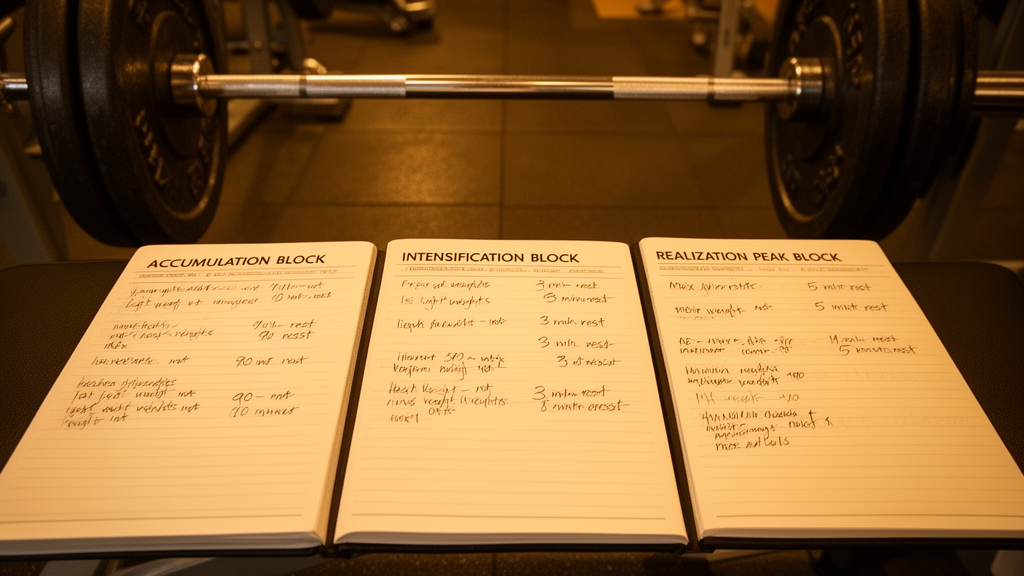
During off-season technical development blocks, athletes work at 70 to 80% of one-rep max with more repetitions per set. Rest periods of 3 to 4 minutes are adequate at these intensities because motor precision demands are lower and the athlete is reinforcing movement patterns rather than testing maximal output.
As competition approaches and intensities climb to 90 to 100%, rest periods lengthen to match the recovery demands of each attempt. The final weeks before a competition often include single-attempt sets with 6 to 8 minutes between them — mirroring competition conditions where attempts are separated by the full rotation of the flight. Athletes who train with artificially short rest and then compete with full rest sometimes find the long recovery disorienting; building that pattern into training prevents this.
What Elite National Programs Specify
Different national programs have different philosophies about rest, but all of them enforce long rest on heavy days. Bulgarian-influenced programs, which emphasize daily maximal single attempts, rely on the lifter’s autoregulation — rest continues until the athlete feels completely ready, which in practice means 5 to 10 minutes. Chinese programming, known for high volume and precise periodization, specifies rest by percentage: lighter sets use 3 minutes, near-maximal sets use 5 to 6 minutes, and true maximal attempts may use 8 to 10 minutes. American programs generally prescribe minimum rest of 3 minutes for technique work and 5 minutes for competition sets.
The role of phosphocreatine availability in these long rest requirements is covered in the article on ATP-PC system recovery.
The Injury-Rest Connection
The statistical reality in competitive weightlifting is that most missed lifts and most technique-related injuries occur in the final sets of a session or when rest was cut short. This is not coincidence. Neural fatigue causes the motor program to execute imprecisely, which means forces are absorbed in suboptimal joint positions. The shoulder and wrist are particularly vulnerable during the catch phase when fatigue compromises timing.
Coaches at the national level will end a training session before all planned sets are completed if they observe consistent technique degradation — recognizing that the neural cost of additional fatigued sets exceeds any training stimulus they could provide.
For competition-day pacing and rest management between flights, the powerlifting meet timer guide covers comparable principles that apply to any competitive lifting environment.
Loading a bar in kilos for percentage work is quicker with the barbell plate calculator, which handles both kg and lb plate sets.
Comparing lifts? The rest by exercise lookup shows the rest range for every major movement side by side.