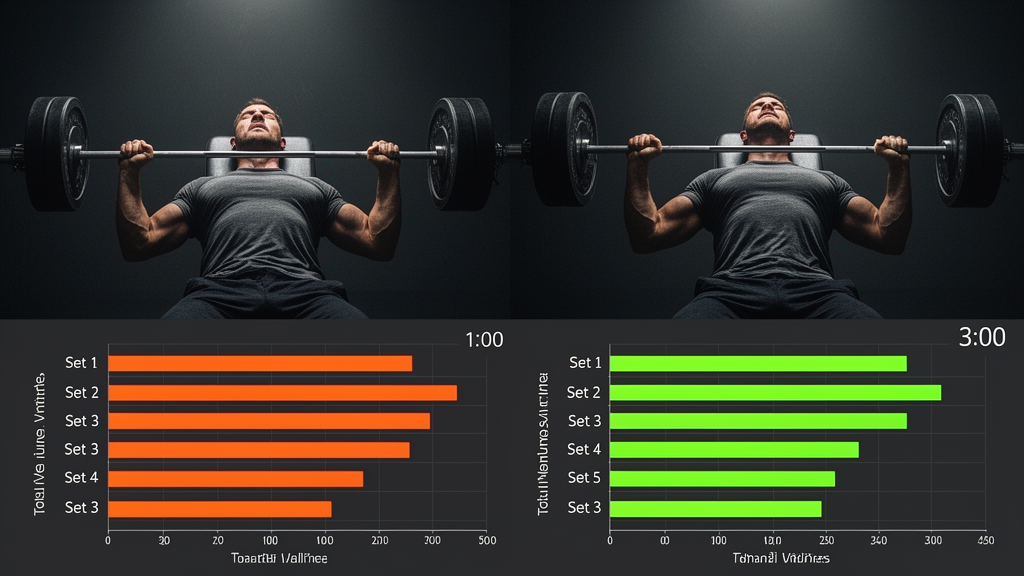
Quick answer: the research consistently shows longer rest of 3 minutes or more produces greater strength gains than short rest, while hypertrophy is similar across 60 seconds to 3 minutes once total volume is equated. The practical takeaway is to rest long enough to protect the volume you planned.
The question of how long to rest between sets has been examined in controlled laboratory settings for more than two decades. What has emerged from that body of work is a consistent and actionable picture: longer rest intervals produce superior strength outcomes across virtually all study designs, and the advantage for hypertrophy — once assumed to favor short rest — is also shifting toward moderate and longer durations. This review examines six landmark papers and translates their findings into practical programming recommendations.
de Salles et al. 2009: The Foundational Framework
The 2009 review by de Salles and colleagues published in the Journal of Strength and Conditioning Research remains the most widely cited starting point in the field. The authors surveyed the literature on inter-set rest intervals and concluded that strength and power adaptations require rest periods of at least 3 to 5 minutes to allow near-complete phosphocreatine resynthesis. For hypertrophy-focused training, they found evidence that 1 to 2 minutes produced sufficient metabolic stress while maintaining adequate volume. This paper established the two-tier framework that most coaches still use today: longer rest for strength, shorter rest for size.
Schoenfeld et al. 2016: The Landmark Randomized Controlled Trial
The 2016 study by Brad Schoenfeld and colleagues is the most frequently referenced RCT in this space. Twenty-one trained men were randomly assigned to either 1-minute or 3-minute rest intervals across an 8-week resistance training program. The 3-minute group achieved significantly greater gains in both upper and lower body strength as well as greater hypertrophy in the elbow flexors and quadriceps. The finding challenged the then-common belief that short rest was preferable for muscle growth due to higher hormonal response. Volume-matched comparisons showed that completing the same total work simply takes longer when rest is shorter — and that the quality of each set deteriorates when insufficient rest is taken.
For practical guidance on the hypertrophy-specific findings from that study, see the dedicated article on resting 3 minutes for hypertrophy.
Ralston et al. 2017: Meta-Analytic Confirmation for Strength
A 2017 meta-analysis by Ralston and colleagues synthesized data across multiple studies and confirmed that longer rest intervals consistently produced superior strength outcomes. The pooled effect sizes favored rest periods above 2 minutes for lower-body compound movements and above 90 seconds for upper-body lifts. The authors noted that the magnitude of the advantage was greatest in trained individuals compared with novices, suggesting that as lifters develop more refined neuromuscular demands, rest quality becomes proportionally more critical. The practical implication is that beginners can tolerate shorter rest with less performance degradation, but experienced lifters attempting to drive strength progress should be rigorous about rest duration.
For context on why 1-minute rest falls short for strength goals, see the analysis at 1-minute rest for strength.
Grgic et al. 2018: Short Rest Still Produces Hypertrophy — at Lower Volumes
Grgic and colleagues contributed an important nuance in 2018. Their review found that short rest intervals can still produce meaningful hypertrophy, but that this outcome depends on whether total training volume is equated. When volume is matched — meaning more sets are added to compensate for the performance decline from short rest — the hypertrophy difference between short and long rest shrinks considerably. When volume is not matched, as occurs in most real-world programming, longer rest wins because more total mechanical work is completed per session. The take-away is that short rest is not irreversibly harmful for hypertrophy, but it requires deliberate volume compensation to produce equivalent outcomes.
2020 to 2024: Volume-Equated Designs and Diminishing Gaps
Several studies published between 2020 and 2024 refined the picture further by designing protocols where short-rest and long-rest groups performed strictly equated volumes. Under these conditions, the hypertrophy gap narrows substantially, though it does not disappear entirely. Proposed mechanisms for the residual advantage of longer rest include superior motor unit recruitment during each set, reduced technique degradation under less fatigue, and better inter-set neural recovery allowing higher-quality motor output. The strength gap under volume-equated conditions remains larger than the hypertrophy gap, reinforcing the foundational recommendation that strength training demands longer rest regardless of volume strategy.
The full physiology behind strength versus hypertrophy rest differences is covered at rest periods: strength vs hypertrophy.
Summary of Key Studies
| Study | Year | Design | Key Finding | Recommendation |
|---|---|---|---|---|
| de Salles et al. | 2009 | Literature review | Strength needs 3-5 min; hypertrophy 1-2 min | Tier rest by goal |
| Schoenfeld et al. | 2016 | RCT, 8 weeks, n=21 | 3 min superior for both strength and size | Use 3 min as default |
| Ralston et al. | 2017 | Meta-analysis | Longer rest consistently better for strength | 2+ min for compounds |
| Grgic et al. | 2018 | Systematic review | Short rest viable for hypertrophy if volume equated | Compensate with more sets |
| Multiple authors | 2020-24 | Volume-equated RCTs | Gap narrows but persists for strength | Do not shorten strength rest |
Practical Recommendations by Goal
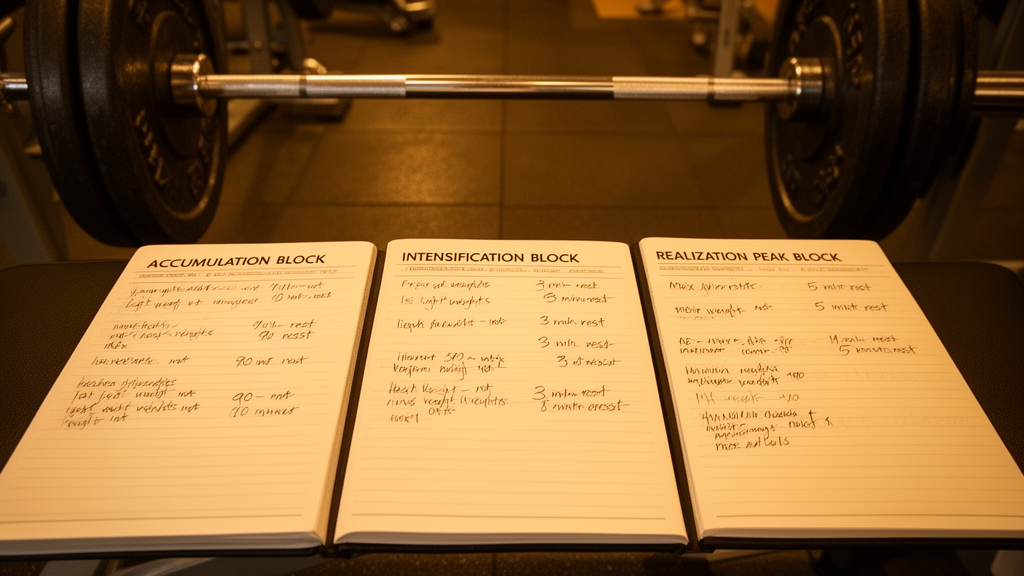
For maximum strength development — working at 80% of one-rep max or above — the evidence supports 3 to 5 minutes between sets. For hypertrophy work at 60 to 80% with moderate rep ranges, 90 seconds to 3 minutes covers the majority of trained individuals. For power and explosive work, full phosphocreatine resynthesis requires 3 to 5 minutes. The science page on this site synthesizes these recommendations with the physiological mechanisms underlying each threshold.