Quick answer: caffeine can help you tolerate slightly shorter rest by reducing perceived exertion, but it does not speed up the underlying ATP-PC recovery. Do not let it convince you to cut rest on heavy sets, and be aware it raises heart rate, which can make you feel less recovered than you are.
Caffeine is taken before nearly every serious training session by a significant portion of strength athletes. It sharpens focus, increases arousal, and makes the first few sets feel effortless. But there is a common and costly misuse of that effect: relying on how you feel between sets to decide when to start the next one. When you are caffeinated, how you feel is a systematically unreliable signal.
Understanding why requires a short tour of adenosine — the neurochemical at the heart of fatigue perception.
Adenosine: The Tiredness Signal That Accumulates With Work
Adenosine is a byproduct of cellular energy metabolism. Every time ATP is broken down during muscular effort, adenosine accumulates in tissues including the brain. Specialized receptors in the central nervous system bind adenosine and, when sufficiently activated, produce the characteristic sensations of fatigue: reduced motivation, slower reaction time, decreased perceived capacity.
This is not merely subjective. Adenosine accumulation correlates meaningfully with actual physiological depletion. The signal is imperfect, but it is directionally accurate — more adenosine generally means more real fatigue.
Under normal conditions, resting between sets allows partial recovery of phosphocreatine, partial lactate clearance, and partial restoration of neurotransmitter availability. As these systems recover, the rate of new adenosine production slows and the accumulated signal diminishes. The result is a genuine sensation of readiness that roughly tracks the underlying biology.
How Caffeine Disrupts the Fatigue Signal
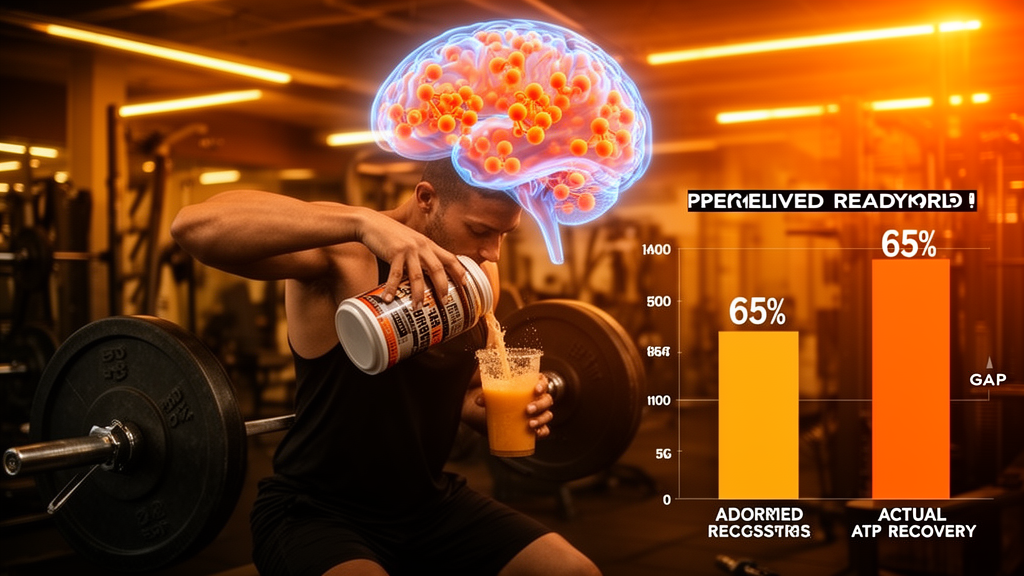
Caffeine is a competitive antagonist at adenosine receptors. It does not remove adenosine from circulation or prevent its production — it simply occupies the receptor binding sites so adenosine cannot attach. The adenosine is still there, still accumulating, but the receiver is blocked.
This means that on caffeine, you feel less fatigued at any given moment than your physiology actually is. Your phosphocreatine may be at 60 percent recovery. Your neuromuscular junction may be running on depleted acetylcholine. Your lactate levels may still be elevated. But the signal that would normally tell you all of this — adenosine-mediated fatigue — is suppressed.
The practical consequence is that caffeinated athletes systematically underestimate how much rest they need when relying on perceived readiness.
The Danger of Feel-Based Rest Under Caffeine
When you train without caffeine and wait until you feel ready, your feel is a rough proxy for genuine recovery. It overestimates recovery sometimes and underestimates it others, but the average is close to the physiological truth.
When caffeinated, that proxy is biased. You will consistently feel more ready than you are. This produces two negative outcomes: first, you start sets before adequate recovery, which reduces per-set performance and undermines training quality. Second, you accumulate a fatigue debt across the session that you may not notice until the final sets — or the following day.
This is discussed in more detail in the context of CNS fatigue and the distinction between neural and metabolic fatigue.
What This Means Practically: Use the Timer, Not Your Gut
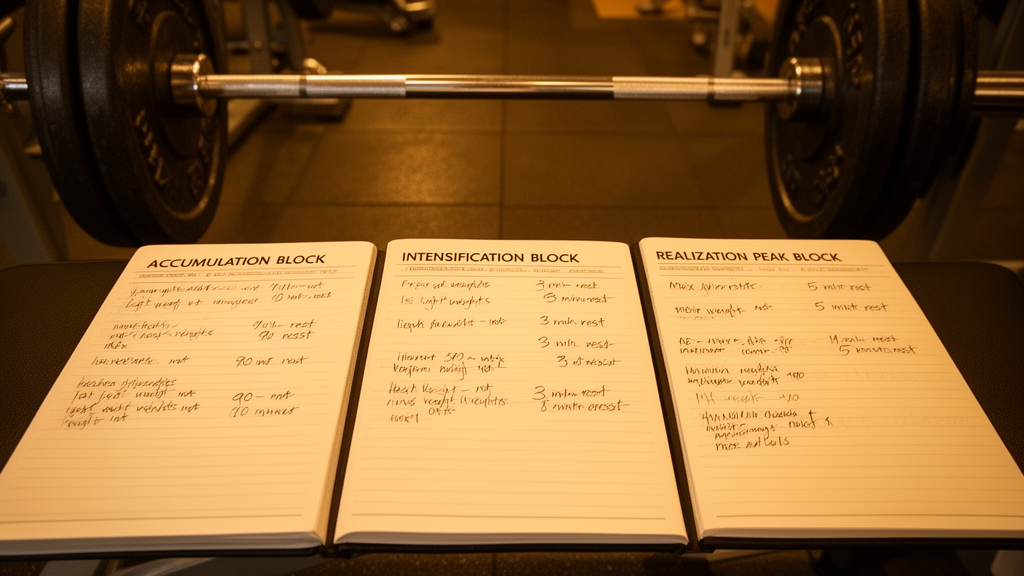
The most important takeaway is structural: when you take a pre-workout product or consume caffeine before training, you must rely on a timer rather than perceived readiness to govern rest intervals. Your subjective sense of recovery is not trustworthy in a caffeinated state.
This is exactly the use case that objective rest timing solves. The biochemistry of PCr resynthesis and neural recovery does not change based on how you feel. ATP recovery kinetics follow the same exponential curve whether you are alert or exhausted. The timer reflects that reality; your perception does not.
For a fast reference on which preset to start with, see the timer quick start guide.
The Genuine Benefit of Caffeine for Set Quality
Caffeine does provide real performance benefits within the set itself. Elevated arousal, reduced rate of perceived exertion during the set, and improved neuromuscular recruitment are all documented effects of caffeine at doses of 3 to 6 milligrams per kilogram of body weight. The issue is not using caffeine — it is misusing the subjective readiness signal it produces.
Used correctly, caffeine makes your working sets higher quality. Used incorrectly as a guide for rest duration, it causes you to compress rest below what your physiology requires and erodes the quality of subsequent sets.
The correct integration of caffeine and rest period management is straightforward: take caffeine for its within-set benefits, and use an external timer to govern inter-set rest regardless of how ready you feel.