Most timer apps look the same at first glance. They count down, beep, and get out of the way.
That is enough for cooking pasta. It is not enough for training.
Quick answer: the best rest timer is the one that matches your rest to your goal and gets out of your way. For most lifters that is either the rest timer built into a workout tracker you already use, which starts automatically after each set, or a focused science-based timer with preset ranges for strength, hypertrophy, and endurance. A plain phone stopwatch works if your rest never changes, but it slows you down the moment it does. The comparison below breaks down which type fits which lifter.
Rest Timer Options Compared
| Option | Best for | Strengths | Trade-offs |
|---|---|---|---|
| Phone stopwatch | One fixed rest all session | Already on your phone, zero setup | Manual restart every set, no recovery context, easy to forget |
| Workout tracker with built-in timer | Lifters who log every set | Starts automatically after a logged set, one app for everything | Rest logic is often a single number, not goal-based |
| Dedicated interval timer app | HIIT, EMOM, circuit work | Precise work-to-rest intervals, audio cues | Built for intervals, less suited to variable strength rest |
| Science-based web timer | Lifters who want rest matched to recovery | Preset ranges by goal, recovery context, no install | You start it yourself rather than auto-logging sets |
If you are comparing the best rest timer app options, the real question is not whether the app can count seconds. The real question is whether it helps you make better decisions between sets.
The Four Features That Actually Matter
1. Presets that match a real training goal
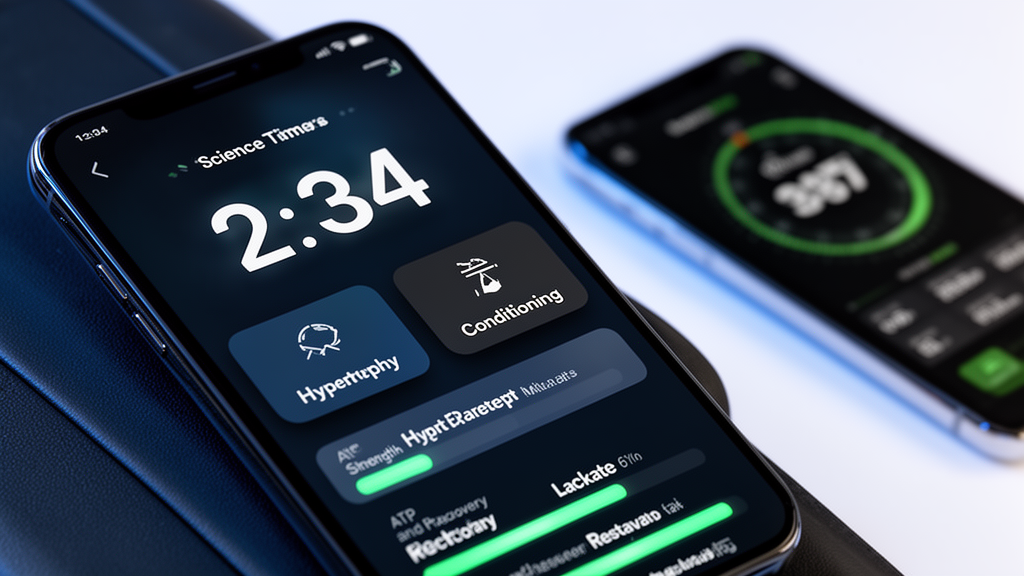
An app should help you switch between strength, hypertrophy, and conditioning without rebuilding the timer every session.
That is why a science-based preset model matters more than a blank countdown wheel. If you want to understand what those presets should look like, review the preset breakdown.
2. Recovery context, not just a number
A timer becomes more useful when it reminds you what the countdown is for.
Heavy sets need fuller ATP and neural recovery. Dense hypertrophy work benefits from shorter rest and more residual metabolic stress. A good tool should make that distinction clear.
3. Fast switching during a live session
Real training is not one block of identical work. Warm-ups, top sets, back-off sets, and accessories all ask for different pacing.
That is why the best app is the one you can change quickly without losing focus between sets.
4. A workflow that fits the gym
If the interface is noisy, slow, or packed with friction, you will stop using it. The best rest timer app does not just look polished. It supports the decisions you make when you are tired and in a hurry.
Stopwatch Versus Science-Based Timer
A standard stopwatch only answers one question.
How much time has passed?
A better training timer helps answer two more.
- What kind of recovery am I waiting for?
- Should the next set use the same countdown?
That extra context is what separates a basic utility from a product that improves training flow.
What to Choose for Different Lifters
Strength-focused lifters
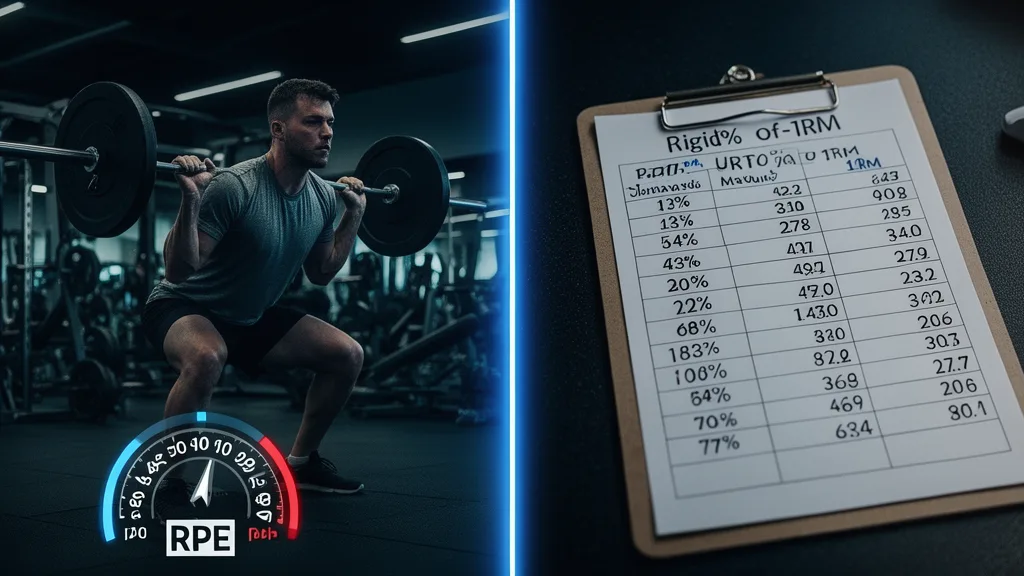
Choose a timer that makes longer recovery easy, especially if you work above 85 percent intensity. The 1RM calculator can help you determine when that threshold is showing up more often than you realize.
Hypertrophy-focused lifters
Choose a timer that makes 60 to 90 second work repeatable without forcing you to rebuild intervals every block.
Busy gym lifters
Choose a timer with fast preset switching, clear cues, and minimal taps. If you lose thirty seconds to the interface after every set, the timer is working against you.
Why We Built Ours the Way We Did
The goal of Rest Timer Science is not to bury lifters in settings. It is to make the core choices obvious.
- open the timer
- choose the preset that matches the block
- watch the recovery markers
- change the interval when the workout changes
That is the same workflow described in the timer quick start. It keeps the tool practical while still respecting the actual physiology behind the wait.
Bottom Line
The best rest timer app is the one that helps you preserve performance, training density, and focus at the same time.
If the app only counts down, it is a stopwatch. If it helps you match recovery to the goal of the next set, it is a useful training tool.
You can test that workflow immediately on the homepage.