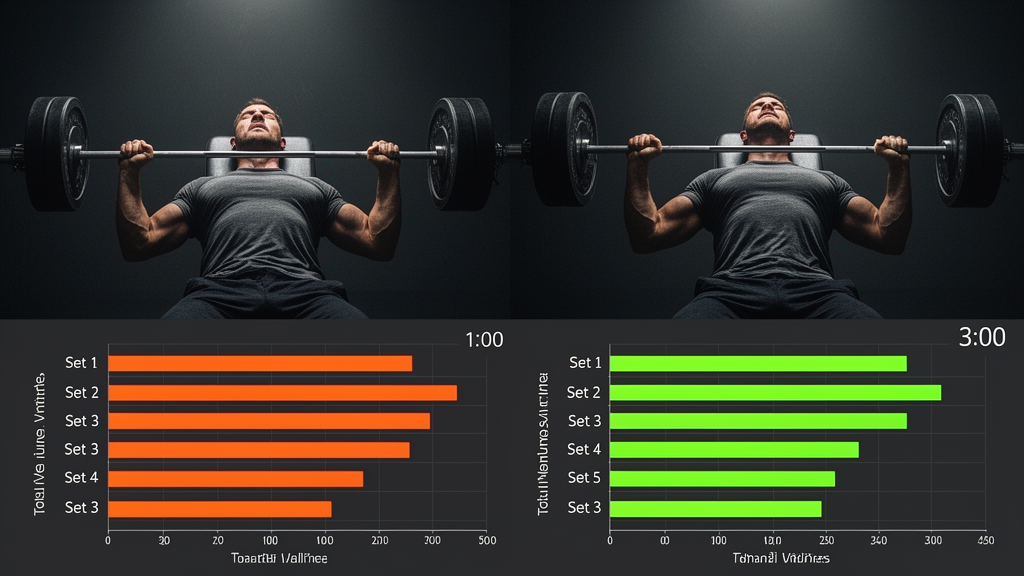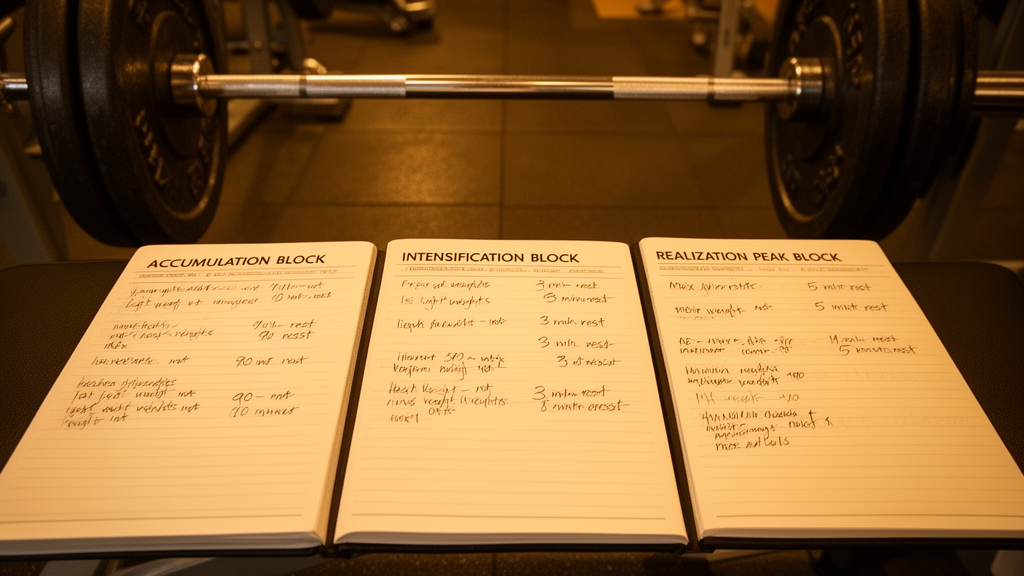
Quick answer: the physiology does not change at home, but the temptations do. Rest 3 to 5 minutes on heavy lifts and 60 to 120 seconds on hypertrophy work, and use a timer, because household distractions stretch rest far more than gym ones do.
Home gym training offers real advantages: no commute, no waiting for equipment, no social self-consciousness. But it introduces a training environment where one of the most consistent determinants of session quality — rest period discipline — is systematically undermined. The absence of the commercial gym social ecosystem removes cues that keep rest periods tight without the athlete even noticing. Understanding this effect and compensating for it deliberately is the single most important habit for home gym trainees who want to maintain commercial gym-level session quality.
The Social Pacing Effect
In a commercial gym, athletes train alongside other people. The sight of others working at their stations, the general atmosphere of purposeful activity, and the mild social pressure of being in a shared training space all contribute to an ambient urgency. Lifters in commercial gyms typically start their next set sooner after the clock runs down than they would if training alone, simply because the environment keeps arousal and intention elevated.
This is not a trivial effect. Studies on social facilitation — the phenomenon where the presence of others improves performance on well-practiced tasks — show that simple observation by others increases effort on strength tasks. The reverse effect applies to rest: when no one is watching and there is no social environment to maintain pace with, the natural tendency is for rest periods to lengthen passively.
Home gym trainees who do not use a timer routinely report rest periods of 5 to 10 minutes between sets that they perceive as 2 to 3 minutes. The perceptual distortion is genuine; time moves differently when there is no external pacing structure.
Common Home Gym Rest Errors
The distraction opportunities in a home gym are fundamentally different from those in a commercial gym. A phone notification in a commercial gym is one distraction among many competing stimuli; in a home gym, it may be the most stimulating thing in the room. Athletes who check their phone between sets at home commonly spend 3 to 7 minutes on the device before returning to the barbell without awareness of the elapsed time.
Household interruptions represent a category of disruption that simply does not occur in a commercial gym. A family member asking a question, a delivery at the door, a dog demanding attention — each of these can add 2 to 5 minutes to a rest period that was already running.
The absence of environmental urgency compounds both effects. In a commercial gym, seeing the squat rack idle for 8 minutes creates mild social discomfort. At home, the rack waiting 8 minutes produces no external signal of any kind.
The phone distraction problem between sets is covered in greater depth at phone use between sets.
How Unintended Long Rest Affects Training Outcomes
A rest period of 8 minutes instead of 3 minutes does not produce the same training effect as a correctly paced session. Phosphocreatine recovers fully at 3 minutes and does not continue recovering at 8 minutes — so the extra 5 minutes provides no additional physiological recovery. But it does produce several negative effects.
Session duration extends substantially, often making the total training time prohibitive for consistency. The cardiovascular conditioning that persists between sets in a correctly paced session is absent. For hypertrophy-focused work, the metabolic stress and hormonal environment that shorter rest periods maintain between sets is entirely absent — the session drifts toward the physiological profile of a strength session even if the programming specified hypertrophy parameters. And the cumulative mental engagement of a well-paced session — which supports focus and technique quality — dissipates when the session becomes a series of isolated brief efforts separated by long gaps of inactivity.
The Solution: A Timer Running Before the Set Is Done
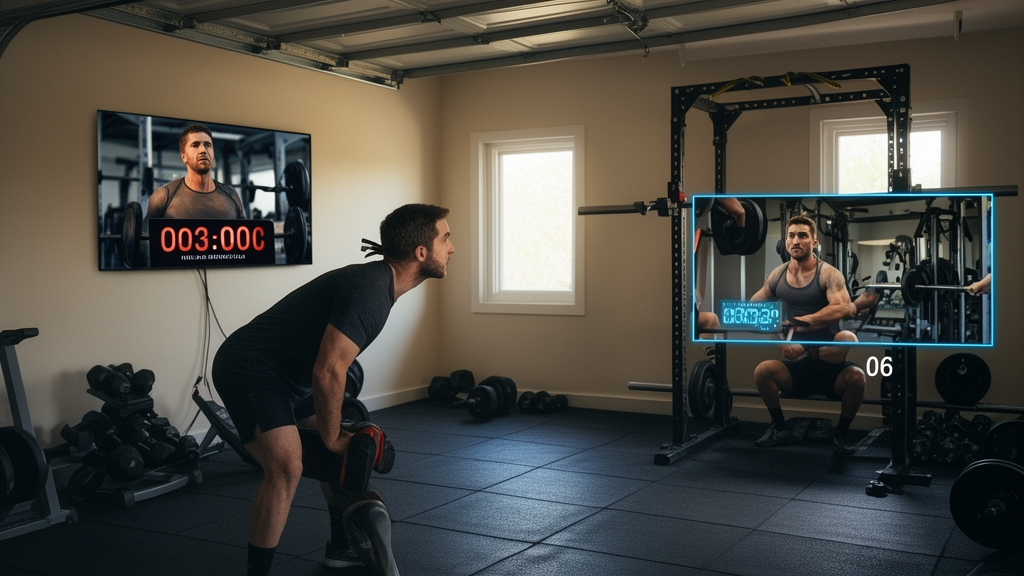
The most effective intervention for home gym rest management is starting the timer before the current set ends — during the last 1 to 2 reps — so it is already running when the set finishes. This eliminates the brief delay between set completion and timer start that, in a home gym environment, can expand into minutes.
A dedicated rest timer on a phone, propped visibly in the training space, provides the external pacing structure that the commercial gym environment provides implicitly. The timer serves as a substitute for social facilitation: when it sounds, it creates an obligation to start regardless of whether the environment provides any other urgency cue.
The variable rest period timer approach, which adjusts rest by set based on performance, works particularly well in the home gym because it makes rest periods an active decision rather than a passive outcome of attention management.
For a quick setup guide to using the timer at home, the timer quick start page walks through setup in under two minutes.
Equipment Constraints and Rest Strategy
Home gyms typically have limited equipment compared with commercial facilities — often a single barbell, a set of adjustable dumbbells, a power rack, and pull-up equipment. This constraint can actually support rest discipline by reducing equipment transition time. In a commercial gym, walking from the squat rack to a cable machine can consume 1 to 2 minutes. In a home gym, the next exercise is 2 steps away.
Limited equipment also changes superset possibilities. Antagonist supersets — which allow one muscle group to rest while another works — are highly efficient in a home gym where switching between barbell bench press and barbell row requires only changing plates. This approach maintains session pace and manages rest for each muscle group simultaneously.
For athletes training with limited implements such as bands or dumbbells only, the rest period guidance remains the same as for barbell training: match rest to the intensity tier. A dumbbell set at a high effort level requires the same rest as an equivalent barbell set.
Building a Consistent Home Gym Training Habit
The home gym training habit is fragile in its early stages because the environmental cues that support gym attendance — commuting, arriving, changing — are absent. The timer serves a secondary function beyond rest management: it structures the session and creates a ritual that separates training from the rest of home activity. Starting the timer marks the beginning of a set; the countdown marks the interval as active training time rather than domestic time.
Athletes who report the strongest home gym consistency typically share one practice: the timer is the first thing started and the last thing stopped in every session.