Weighted Pull-Up at a glance
Advanced- Primary muscles
- Lats, Mid-back
- Equipment
- Pull-up bar and dip belt
- Rest for strength
- 3 to 4 min
- Rest for hypertrophy
- 90s to 2 min
Also works: Biceps, Core, Grip
How to perform the weighted pull-up
 1

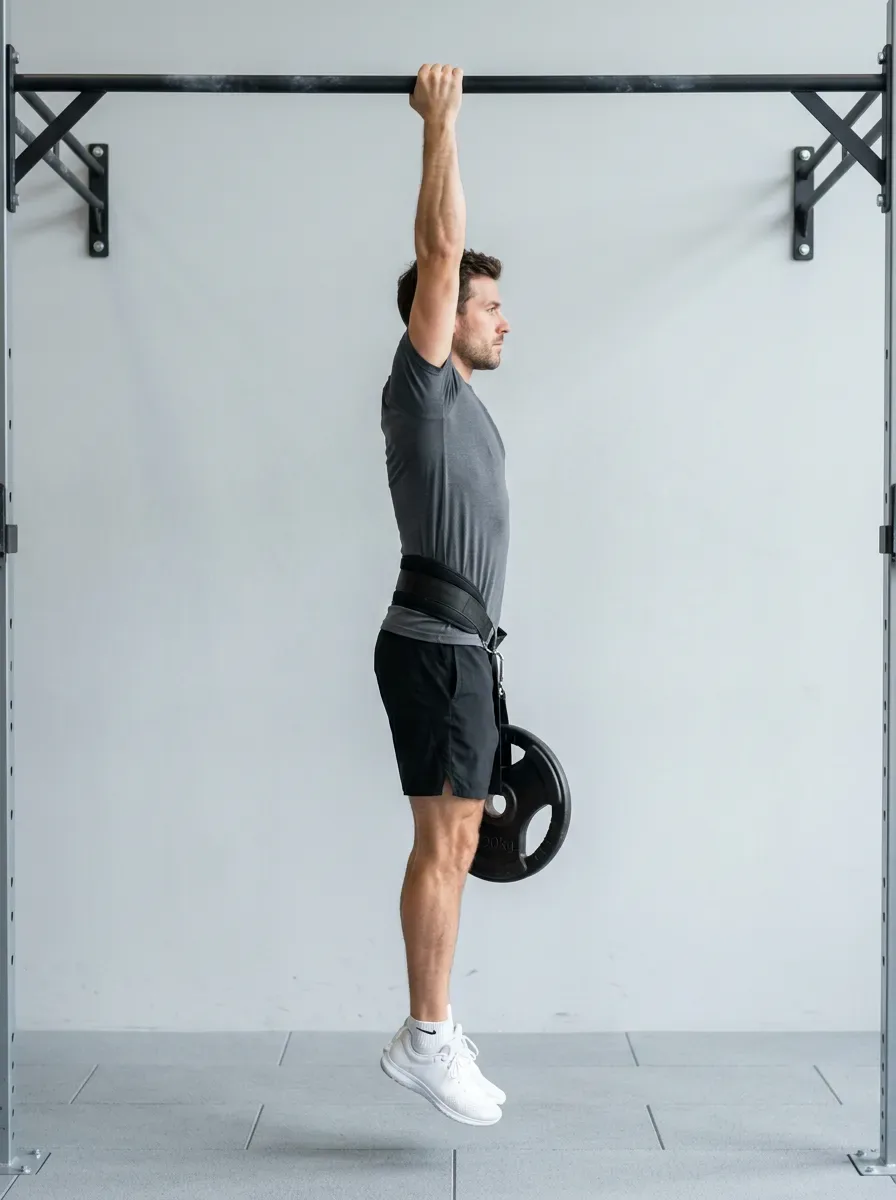
1Hang with the weight attached
Attach a plate to a dip belt, take an overhand grip just outside shoulder width, and hang with arms straight and shoulders pulled down.
 2
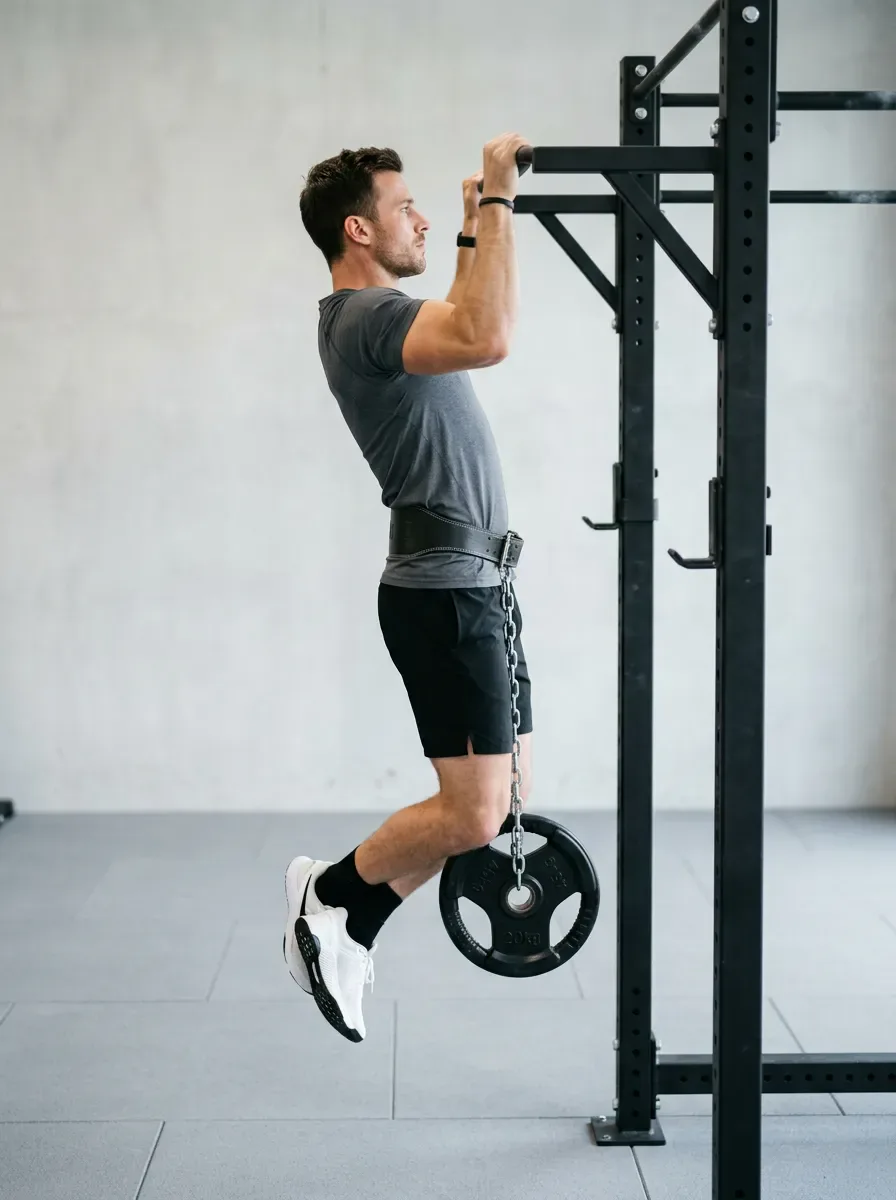
2Pull with the elbows
Drive the elbows down and back, keeping the body still. Resist the urge to swing, which is far more tempting with added load.
 3
3Clear the bar and control down
Pull until your chin clears the bar with the chest tall, then lower under control all the way back to a full hang.
Common mistakes
Adding weight before the bodyweight version is clean
Fix: Get 10 to 12 controlled full-range bodyweight reps first. Load exposes every technique flaw.
Kipping to complete reps
Fix: Keep the body still. If you need momentum, reduce the added weight.
Half reps from the middle
Fix: Full dead hang at the bottom every rep. Partial reps make the numbers meaningless.
Ignoring grip fatigue
Fix: Grip usually fails first under load. Straps are legitimate when the back, not the hands, is the target.
Variations and progressions
Weighted chin-up
Underhand grip with more biceps involvement, usually allowing slightly more load.
Neutral grip weighted pull-up
Often the most shoulder-friendly loaded option.
Band-assisted pull-up
For building toward the first unassisted rep.
Weighted negative
Jump to the top with load and lower slowly. Builds strength beyond your concentric ability.
Quick answer: rest 3 to 4 minutes between heavy weighted pull-up sets and 90 seconds to 2 minutes for hypertrophy work. Grip and forearm fatigue often limits the set before the lats do, and grip recovers on its own slower timeline.
Most people treat pull-ups as a warmup or a finisher. They do a set, wait 60 seconds, and go again.
But when you strap 45 pounds to your waist, the pull-up stops being a “bodyweight exercise.” It becomes a maximal strength movement.
If you are stuck at the same weight for months, your rest periods are likely the culprit.
The Science: How Long to Rest Between Weighted Pull Ups?
The weighted pull-up recruits the latissimus dorsi, the biceps, the rear delts, and the entire core musculature. It is the upper-body equivalent of a squat.
When you add external load, you shift the energy demand from the glycolytic system for endurance to the ATP-PC system for power. This requires a fundamental shift in your rest strategy.
1. Neural Drive & Scapular Recruitment
Unlike a lat pulldown, where your torso is fixed, a pull-up requires massive neural drive to coordinate your scapular stabilizers while hanging in space. If your CNS is fatigued, you lose that “tightness” in the scapula. The result? You pull with your biceps instead of your back, and your strength plateaus.
2. Grip Recovery and the Forearm Flexors
One of the main reasons people ask how long to rest between weighted pull ups is due to grip failure. Your forearm flexors have a high percentage of fast-twitch fibers but a limited capacity for glycolytic clearance. Resting 3-4 minutes ensures that your hands aren’t the limiting factor for your back development.
3. ATP Replenishment
Full phosphocreatine restoration is required for the “explosive” start from a dead-hang. As we cover in our ATP Recovery Guide, it takes roughly 3 minutes to reach 98% fuel availability.
The Golden Rule: Treat it Like a Bench Press
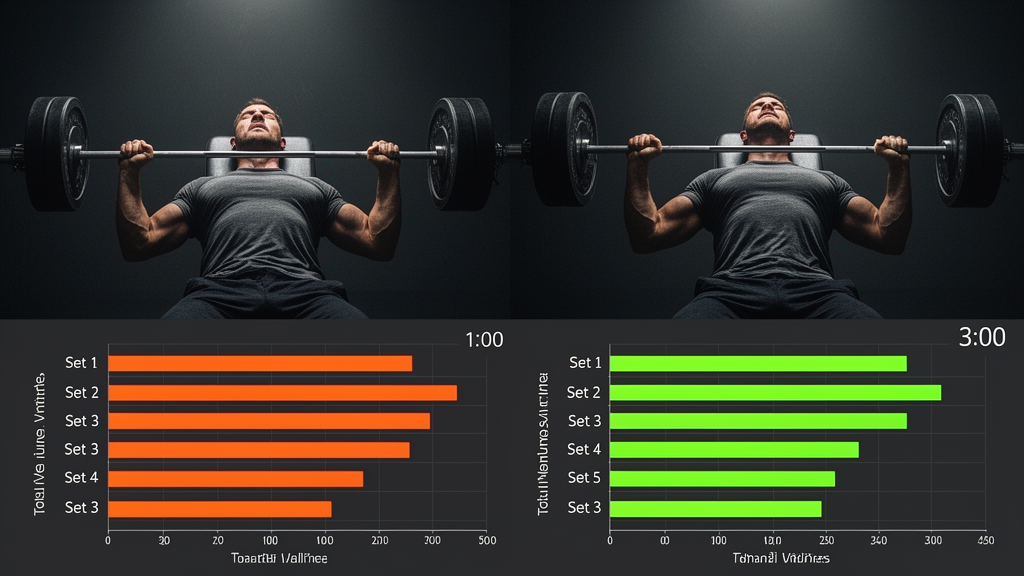
You would not bench press your 5-rep max with only 60 seconds of rest. Do not do it for pull-ups.
Target rest window: 3 to 4 Minutes
Programming for the Weighted Pull-Up
If you want to reach the elite standard of pulling +50% of your bodyweight, structure your workout like this:
- Exercise 1: Weighted Pull-Ups with 5 sets of 3 to 5 reps.
- Exercise 2: Chest Supported Rows with 3 sets of 8 to 12 reps.
- Rest: 90 Seconds.
- Focus: Squeeze and pump.
By front-loading the heavy work with long rest, you stimulate the high-threshold motor units that drive strength.
A Note on “Greasing the Groove”
There is an exception. The “Grease the Groove” method involves doing sub-maximal sets throughout the day with long breaks of hours rather than minutes. This is purely for neural practice.
But for a dedicated gym session where you want to break down muscle tissue and signal growth? Rest long. Lift heavy.
Comparing lifts? The rest by exercise lookup shows the rest range for every major movement side by side.