Back Squat at a glance
Intermediate- Primary muscles
- Quads, Glutes
- Equipment
- Barbell and squat rack
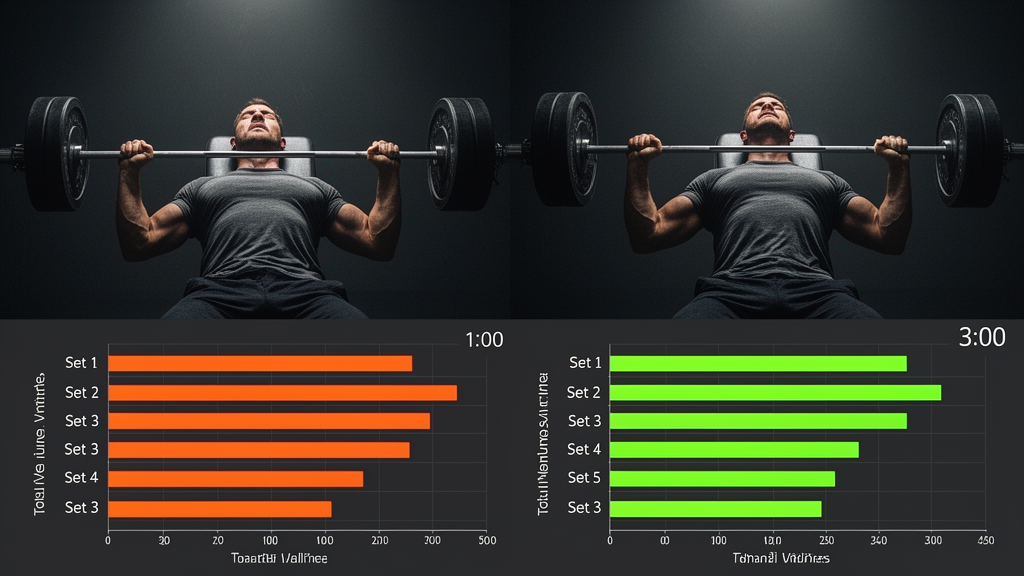
- Rest for strength
- 3 to 5 min
- Rest for hypertrophy
- 2 to 3 min
Also works: Hamstrings, Core, Lower back, Adductors
How to perform the back squat
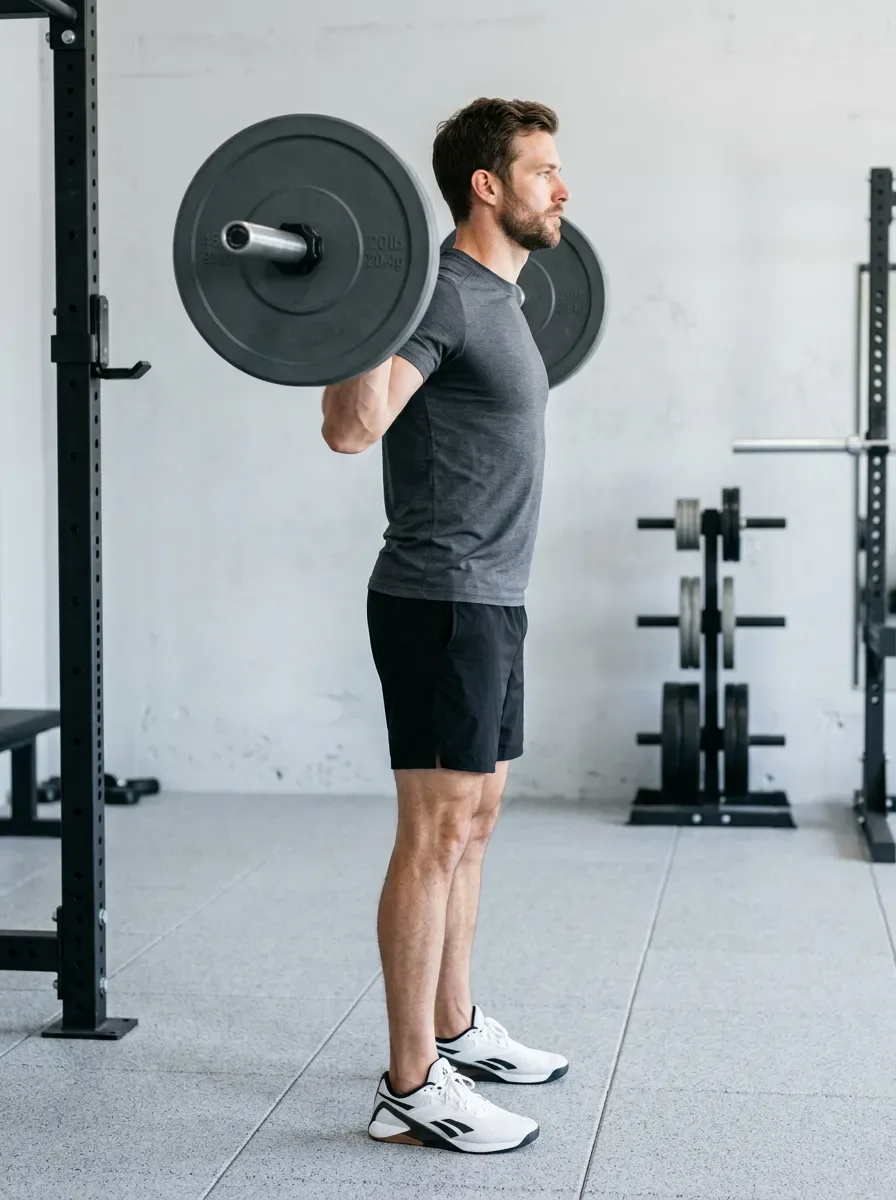 1

1Unrack and set your stance
Set the bar across your upper back, not your neck. Step back into a stance around shoulder width with the toes turned slightly out, brace hard, and take a big breath before the first rep.
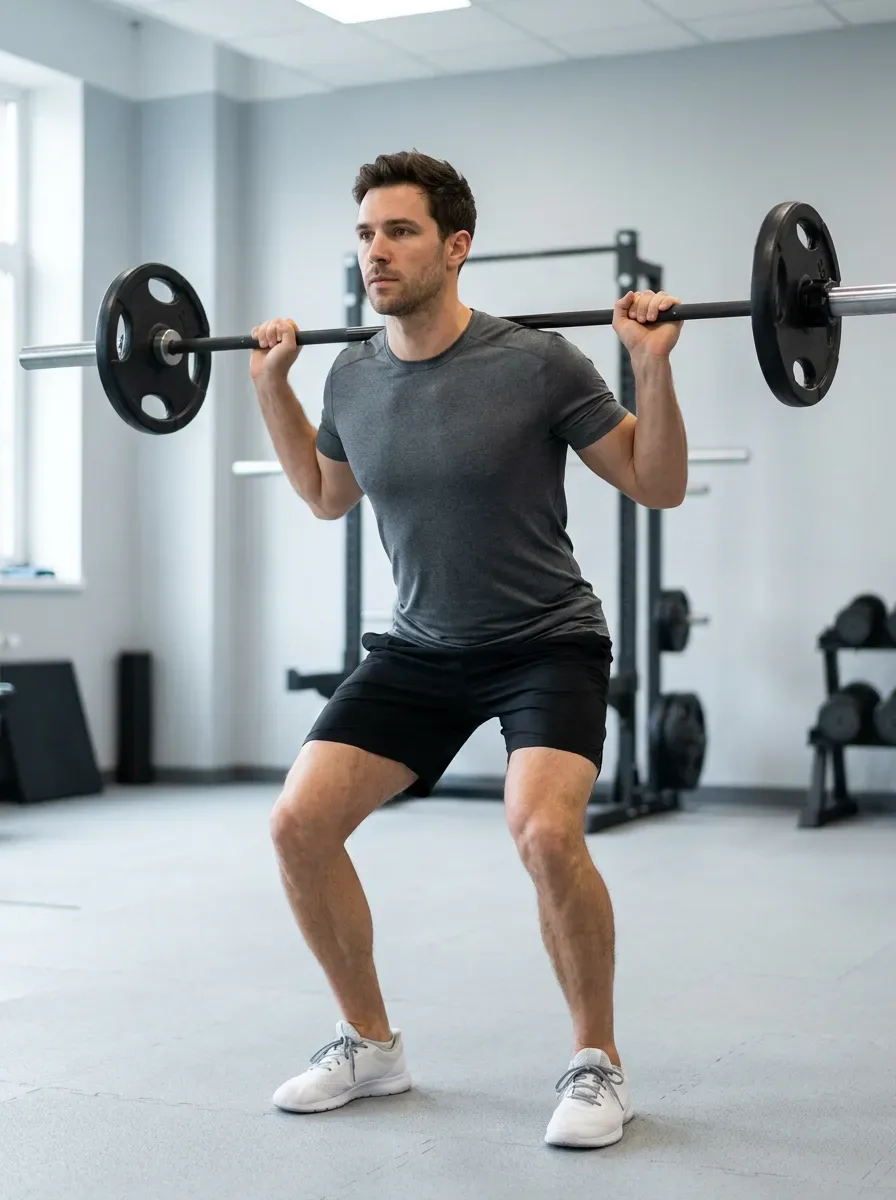 2
2Break at the hips and knees together
Sit down and back at the same time, keeping the chest up and the bar tracking over the middle of your foot. Control the descent rather than dropping into it.
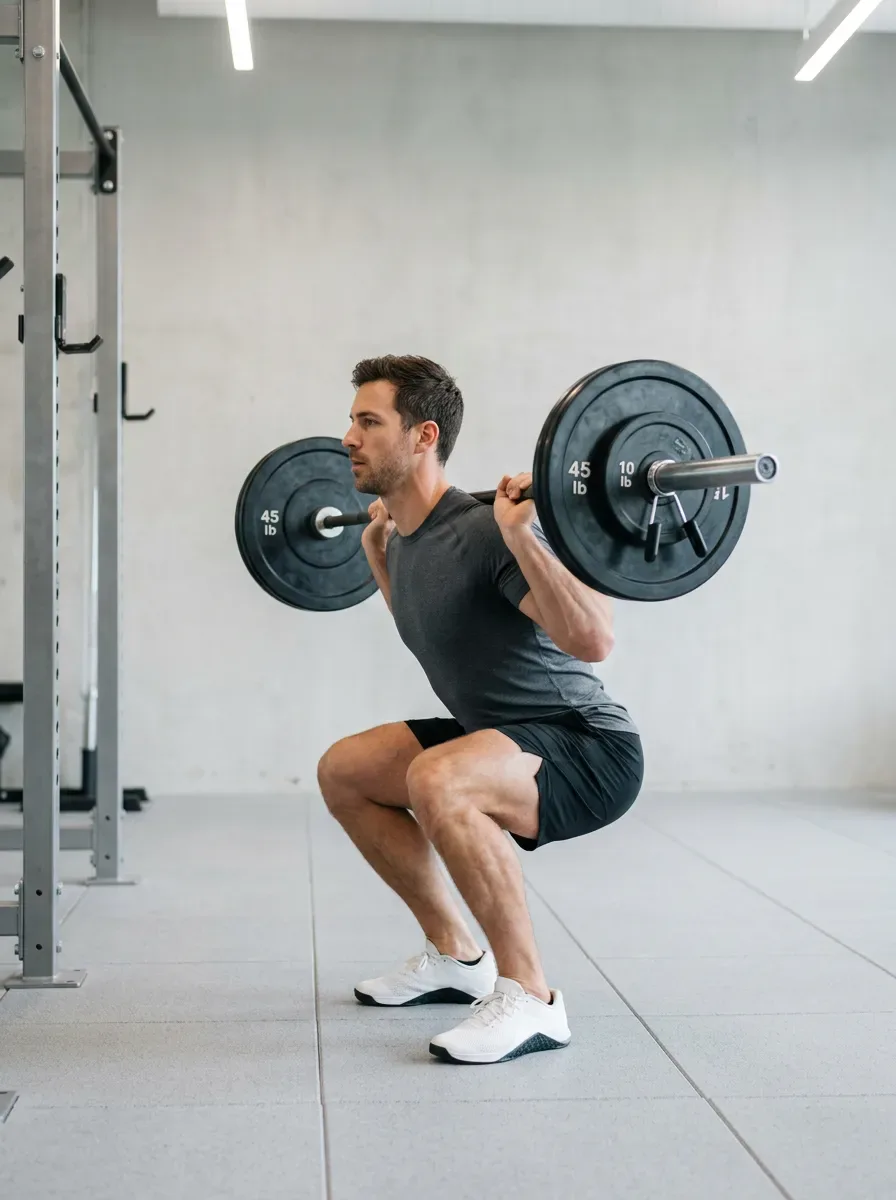 3
3Hit depth and drive up
Descend until your thighs are at least parallel, keeping a flat back and knees tracking over the toes. Drive up through the whole foot without letting the hips shoot back first.
Common mistakes
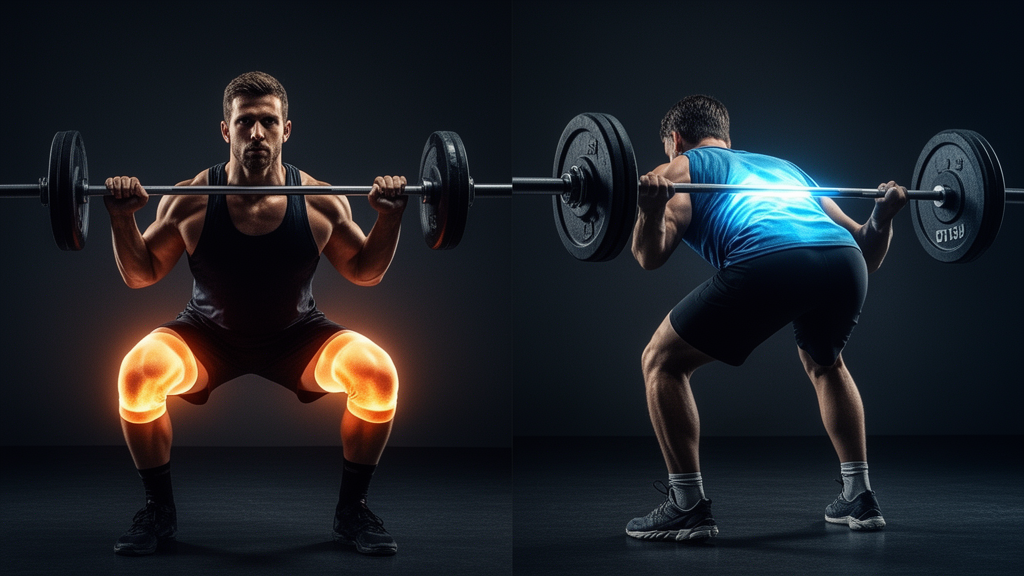
Hips rising faster than the chest
Fix: That turns the squat into a good morning. Drive your upper back into the bar and lead the ascent with the chest.
Knees caving inward
Fix: Push the knees out to track over the toes. Caving usually means the load is too heavy or the glutes are not engaging.
Cutting depth short
Fix: Aim for thighs at least parallel. Consistent depth is what makes your numbers comparable session to session.
Losing the brace mid rep
Fix: Take and hold your breath at the top of each rep and brace against it. Exhaling at the bottom collapses your position.
Variations and progressions
Front squat
Bar in the front rack, far more upright and quad-dominant, with the upper back as the limiter.
Pause squat
A two-second pause at the bottom removes the stretch reflex and builds strength out of the hole.
Box squat
Sitting to a box standardises depth and teaches sitting back into the hips.
Safety bar squat
Easier on the shoulders and slightly more upper-back demanding. Useful when shoulder mobility limits bar position.
Quick answer: rest 3 to 5 minutes between heavy squat sets for strength and 2 to 3 minutes for hypertrophy work. Squats recruit more muscle mass than almost any other lift, so both your legs and your nervous system need longer than an isolation movement to be ready for a quality next set.
The Science: How Long to Rest Between Squat Sets for Growth
You rack the bar after a grueling set of squats. Your legs are burning and you are gasping for air. This sensation is your body’s signal that it needs a specific recovery window. If you’ve been wondering how long to rest between squat sets for growth, the answer lies in the balance between systemic clearance and local muscle tension.
Compound Movement Gas Exchange
The squat is a “metabolic monster.” Because it recruits the largest muscle groups in your body simultaneously, including the quads, glutes, and adductors, it places a massive demand on your heart and lungs.
- Oxygen Debt: During a heavy set, your muscles consume oxygen faster than your heart can deliver it. This creates an “Oxygen Debt.”
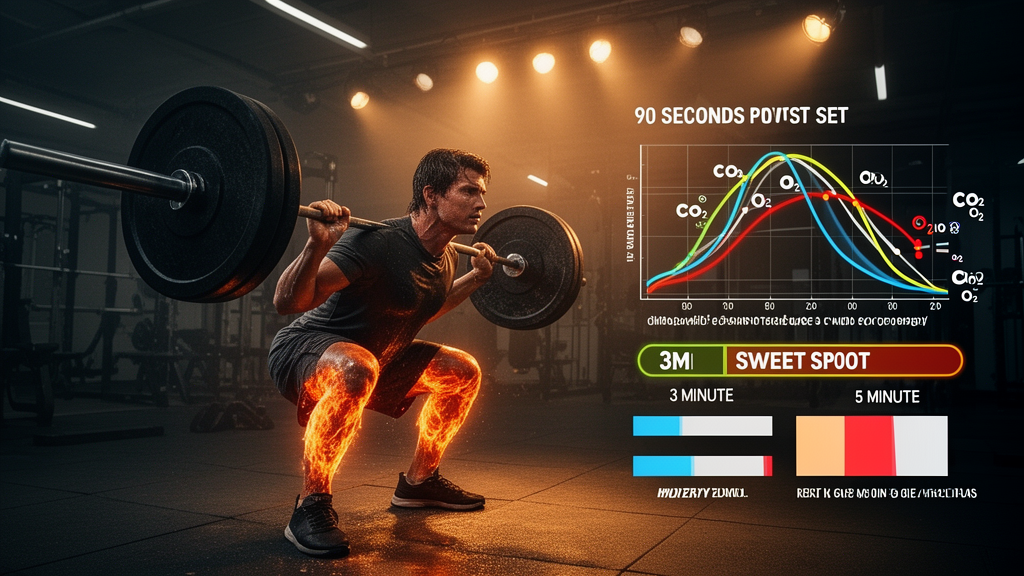
- Gas Exchange: For about 2-3 minutes after the set, your lungs are working at maximum capacity to exchange CO2 for O2. If you start your next set while still in “respiratory distress,” your cardiovascular system will fail before your legs do.
- The Hypertrophy Window: For pure growth, research suggests 3 minutes is the “Sweet Spot.” It is long enough for gas exchange to stabilize so your lungs aren’t the limiting factor, but short enough to keep the muscle tissue swamped in growth-signaling metabolites.
3 Minutes: The Hypertrophy Sweet Spot
Resting for 3 minutes clears just enough fatigue to perform high-quality work while keeping metabolic stress high.
If your goal is muscle growth, you want this accumulation of metabolites. It triggers a cascade of hormonal responses that signal your muscles to grow.
At the 3-minute mark, your breathing has stabilized. Your heart rate has come down. But your muscles still hold some of that chemical stress. This is perfect for sets of 8 to 12 reps.
5 Minutes: The Strength Standard
If your goal is absolute strength, 3 minutes is not enough.
To lift your true one-rep max or hit a heavy triple, you need your muscle environment to be completely neutral. You need those hydrogen ions to be fully flushed out.
Research shows that complete clearance of metabolic waste products can take 5 minutes or more after a maximal effort set of squats.
Resting 5 minutes ensures every muscle fiber fires at 100% capacity without the interference of acidity.
The Active Recovery Hack
You can speed up this process. Do not just sit on a bench and scroll through social media.
Perform light activity such as walking or shaking out your legs. This “active recovery” keeps the blood pump working. It helps flush metabolites out of the muscle tissue faster than passive sitting.
Visualize Your Clearance
It is impossible to feel exactly when your pH levels have returned to normal. You might feel ready, but your biology is still recovering.
Our Rest Timer visualizes this invisible process. The Dynamic Recovery Model accounts for the longer clearance times required by compound movements like the squat.
Do not let hidden fatigue rob you of a personal best.
Bar position changes the demand too, as covered in front squat vs back squat rest, and machine work follows its own rules in leg press rest for mass.
Comparing lifts? The rest by exercise lookup shows the rest range for every major movement side by side.