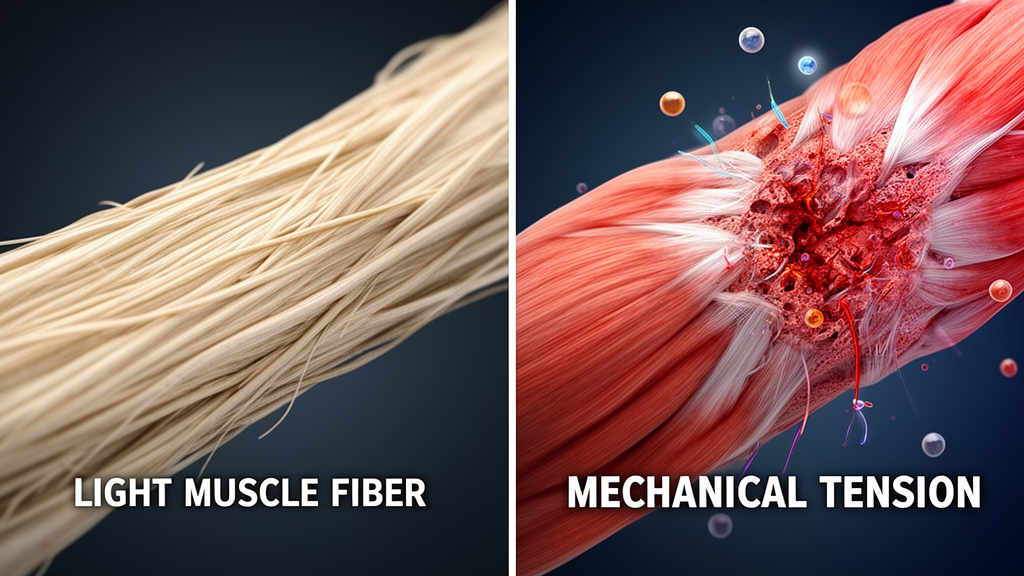
Leg Press at a glance
Beginner- Primary muscles
- Quads, Glutes
- Equipment
- Leg press machine
- Rest for strength
- 2 to 3 min
- Rest for hypertrophy
- 90s to 2 min
Also works: Hamstrings, Adductors
How to perform the leg press
 1

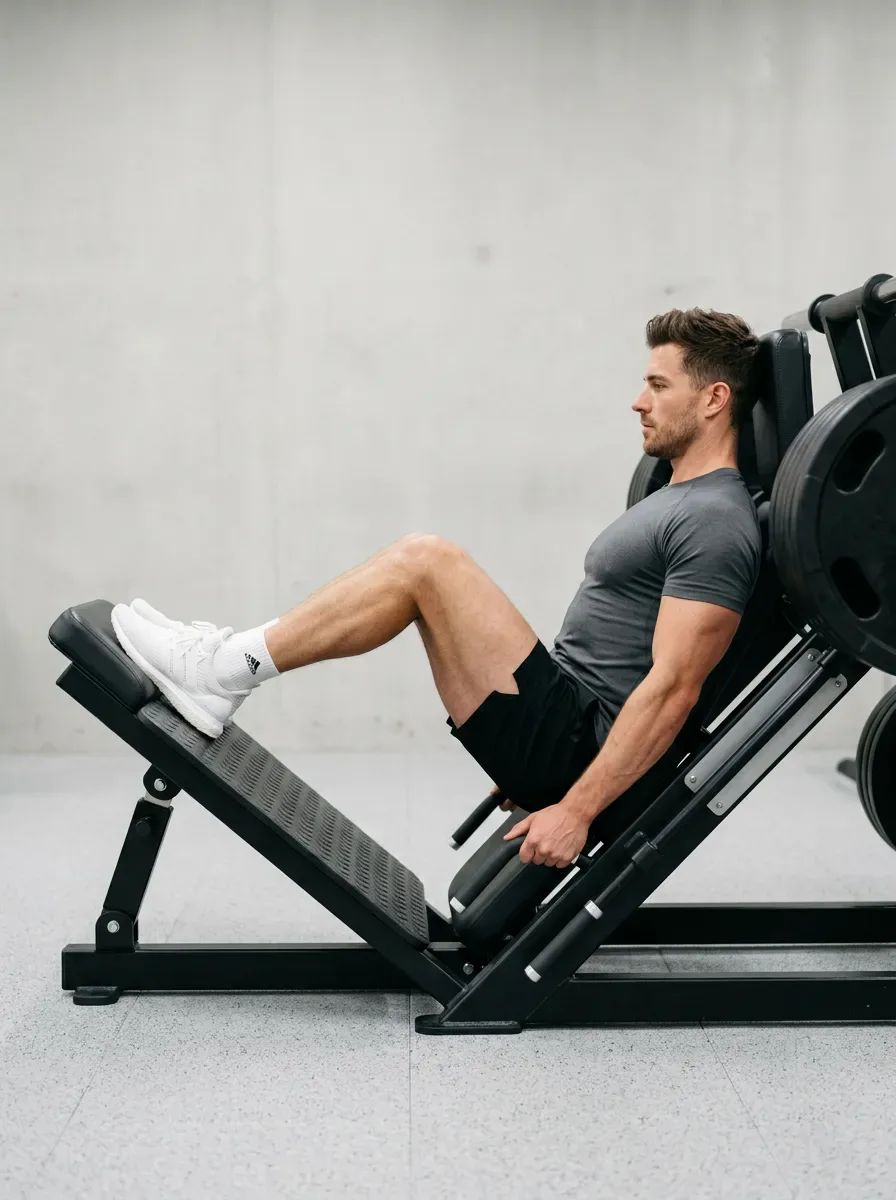
1Set your foot position
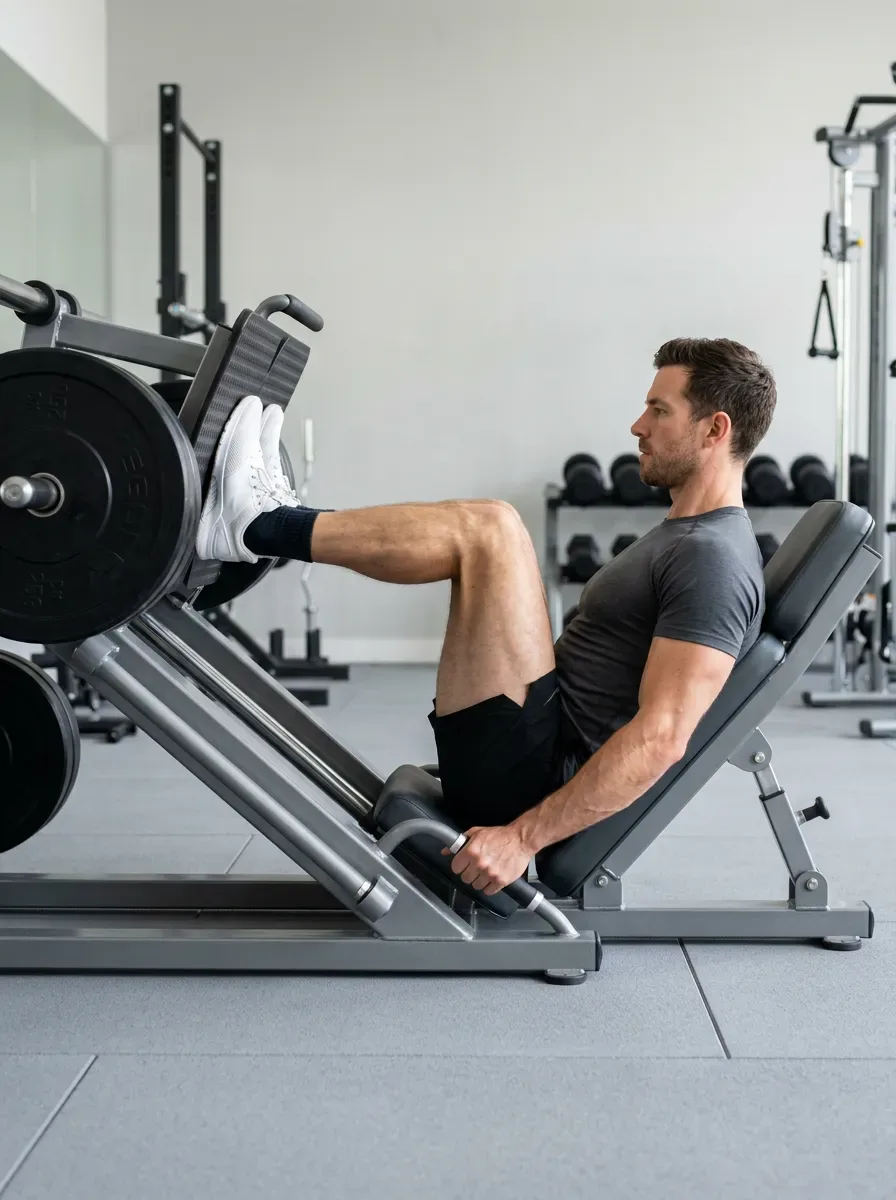
Sit with your back and hips flat against the pad. Place your feet shoulder width on the platform and press out until your legs are almost straight without locking the knees.
 2
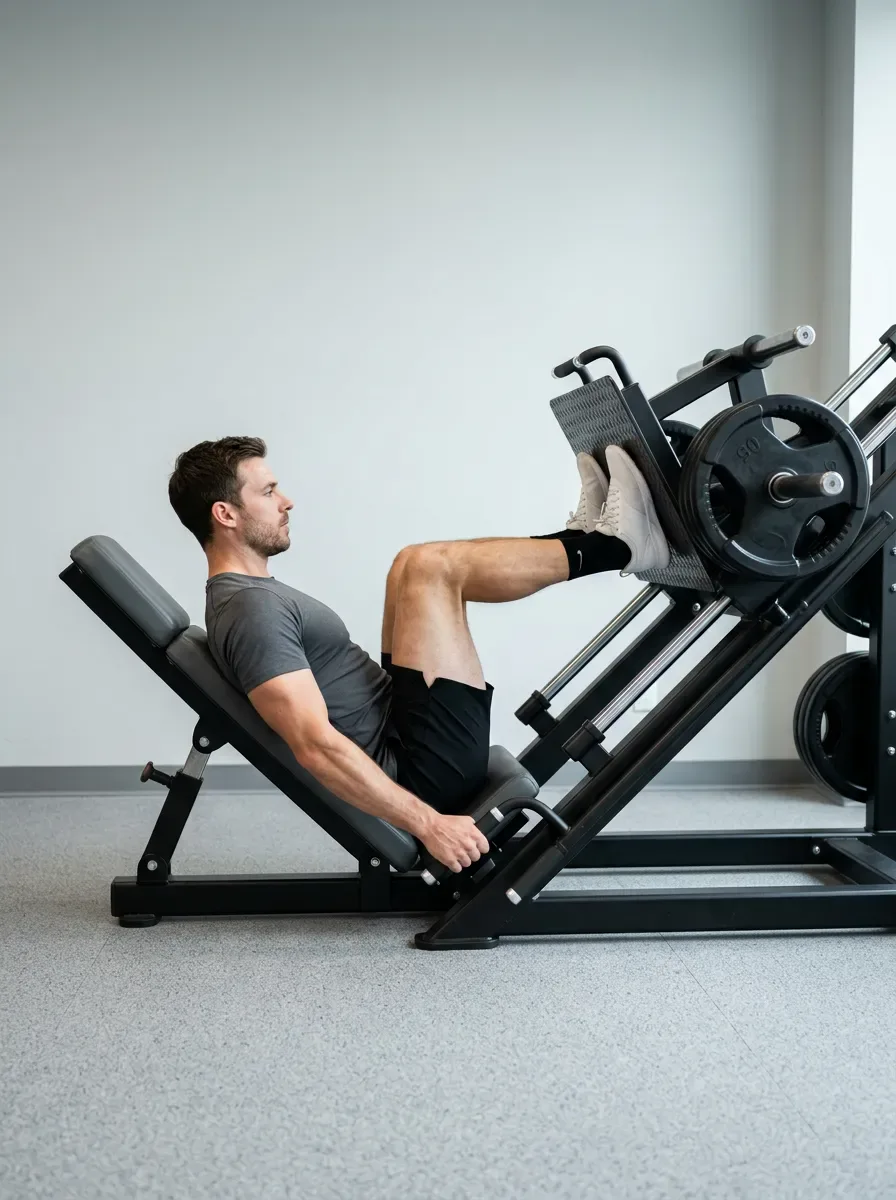
2Lower under control
Bend the knees and let the platform travel toward your chest. Take two seconds down and keep your lower back flat against the pad.
 3
3Stop before the hips lift
Descend until your knees reach roughly 90 degrees or until your lower back is about to round off the pad, then drive back through the whole foot.
Common mistakes
Letting the lower back round off the pad
Fix: Stop the descent before the hips curl up. That rounding under load is the main injury risk on this machine.
Locking the knees hard at the top
Fix: Stop just short of lockout to keep tension on the muscle and load off the joint.
Placing the hands on the knees
Fix: Hold the handles. Pushing on your knees hides how much you can actually press.
Loading far beyond your control
Fix: The machine allows enormous loads with a short range. Use a range you can control rather than a plate count.
Variations and progressions
High foot placement
Feet higher on the platform shifts emphasis toward the glutes and hamstrings.
Low foot placement
Feet lower increases quad involvement, but watch heel lift.
Single-leg press
Addresses side-to-side differences and reduces the spinal loading further.
Hack squat
A more squat-like machine pattern with a similar supported-trunk advantage.
Quick answer: rest 90 seconds to 2 minutes between leg press sets for muscle growth, and 2 to 3 minutes when going heavy. The machine supports your trunk and removes the balance demand, so it needs less recovery than a squat at a comparable effort.
The Leg Press is not just a “lazy squat.” It is a precision tool for building massive quadriceps.
Because it removes the need for balance and core stability, it allows you to take your leg muscles to a place that squats often cannot: Total failure.
However, this unique advantage means your rest strategy must change.
The Science: Leg Press Rest Periods for Mass
Because the leg press removes the need for balance and core stability, it allows you to take your leg muscles to a place that squats often cannot: Total local failure.
However, this unique advantage means your rest strategy must change. Unlike a compound lift where you wait for your heart rate to drop, with the leg press, you are waiting for the “burn” to settle just enough to survive another high-rep bout.
Machine vs Free Weight Recovery Differences
One of the key machine vs free weight recovery differences is the lack of “Systemic Fatigue.”
- Free Weights such as Squats: Your spine is loaded, your core is bracing, and your CNS is firing at 100% just to keep you upright. This drains your “internal battery” fast. You need 3-5 minutes of rest primarily for your nervous system, even if your legs feel okay.
- Machines such as the Leg Press: Your back is supported by a pad. You are safe. This eliminates the postural demand on the spinal erectors. Because the CNS isn’t being “fried” by the stabilization requirement, you can afford shorter rest periods to maximize local metabolic stress.
The Strategy: Chase Sarcoplasmic Hypertrophy
Since safety and balance are less of a concern, your goal on the leg press should be Metabolic Accumulation. You want to flood the quads with blood and lactate. You want to create a hypoxic or low oxygen environment that signals the muscle to grow via sarcoplasmic hypertrophy.
Optimal Rest: 90 Seconds
Resting 90 seconds or even 60 seconds keeps the muscle saturated with metabolites.
- Set 1: 15 reps where it is hard.
- Rest: 90 Seconds
- Set 2: 12 reps where it is harder.
- Rest: 90 Seconds
- Set 3: 10 reps ending in absolute failure.
If you rested 3 minutes, you would likely get 15 reps again, but you would lose the cumulative metabolic stress that drives sarcoplasmic hypertrophy.
Advanced Techniques: Drop Sets
Because the leg press is easy to load/unload, it is perfect for Drop Sets.
- Perform a set to failure.
- Immediately strip a plate off.
- Continue to failure.
- Rest: 0 Seconds.
This technique extends the “time under tension” and creates a massive growth stimulus that is difficult to safely replicate with free weights.
Don’t Be Lazy
Just because you are sitting down does not mean you can relax.
Use your rest period to:
- Stand Up: Do not sit in the machine. Stand up to let blood flow back into the legs.
- Shake it Out: Active recovery helps clear just enough lactate to let you survive the next set.
Summary
- Squats: Train for Strength with a 3 to 5 minute rest.
- Leg Press: Train for Size with a 60 to 90 second rest.
Use our Rest Timer to keep your leg press density high. If you are not watching the clock, you are likely resting too long and letting the “pump” dissipate.
Comparing lifts? The rest by exercise lookup shows the rest range for every major movement side by side.
The broader question of how machines differ from barbells is covered in free weights vs machines.