Quick answer: for strength work there is almost no such thing as resting too long, and 5 minutes is fine. For hypertrophy, resting much beyond 3 minutes lets metabolic stress and the pump dissipate without adding much benefit, and it stretches your session. Two to three minutes is a practical ceiling for growth work.
The Myth: Resting 3 Minutes Between Sets Cold Muscles
We have spent a lot of time on this site advocating for longer rest periods. But many lifters fear the “cool down.” They worry that resting 3 minutes between sets cold muscles will lead to stiffness and injury.
The truth is found in the battle between two physiological forces: Fatigue and Potentiation.
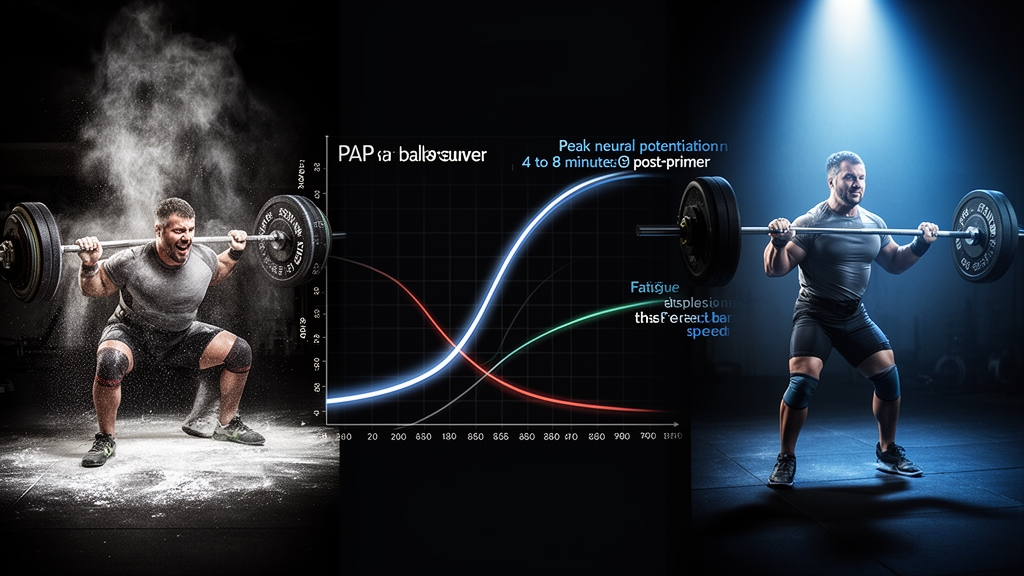
The Potentiation vs. Cooling Curve
To understand the optimal limit, we must look at the “Potentiation vs. Cooling” curve.
- Post-Activation Potentiation known as PAP: When you lift a heavy weight, you prime your nervous system. For a few minutes after the set, your muscles are actually more capable of producing force.
- The Cooling Effect: Physical temperature takes time to drop. In a standard gym at 70 degrees Fahrenheit which is 21 degrees Celsius, it takes roughly 15 to 20 minutes for local muscle temperature to drop significantly enough to affect enzyme activity or tissue viscosity.
The Findings:
Resting 3 to 5 minutes is actually the “sweet spot.” It is long enough for the metabolic fire including lactate and hydrogen ions to subside, but it is far too short for the muscle tissue to “cool down.” In fact, your performance is usually higher at account of the 4-minute mark than the 1-minute mark because the gain in PAP outweighs the negligible loss in heat.
The Cooling Factor
Beyond the nervous system, there is the physical temperature of the muscle tissue.
Warm muscles are more elastic and have faster nerve conduction speeds. If you rest for 15 minutes in a cold gym, your core temperature and local muscle temperature will drop.
- Enzyme Activity Slows: The chemical reactions that produce energy become less efficient.
- Viscosity Increases: Your joints and connective tissues become “stiff,” increasing the risk of a tear when you suddenly try to lift a max load.
The 10-Minute Limit
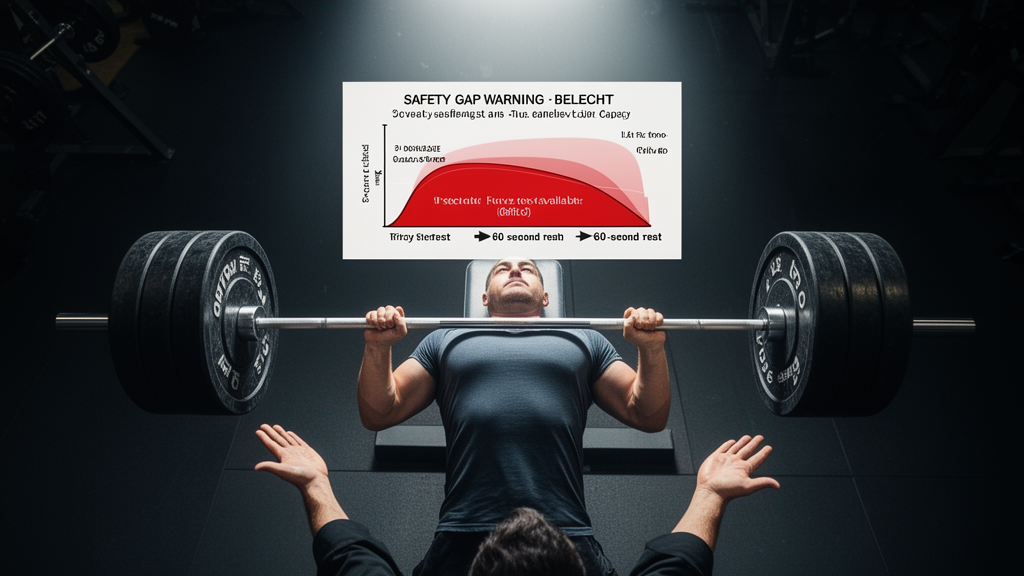
For most athletes in a standard gym environment, 10 minutes is the point of no return.
If you have to wait longer than 10 minutes due to a busy gym or a technical issue, you should not jump back into your top weight. You must perform a “re-warmup” set at 50-70% of your max to raise your temperature and re-prime your nervous system.
When Long Rest is Necessary
In elite powerlifting and Olympic lifting competitions, rest periods can often stretch to 10 or 15 minutes between attempts.
These athletes manage the “cool down” by:
- Staying Active: Pacing the floor, doing light bodyweight movements.
- Staying Warm: Wearing layers of clothing such as tracksuits between sets.
- Mental Arousal: Using music or visualization to keep the nervous system in a “fight” state.
Summary
- 3-5 Minutes: Optimal for most strength work.
- 5-8 Minutes: Safe, provided you stay moving and warm.
- 10+ Minutes: Risky. Re-warmup required.
Use our Rest Timer to keep you in the Golden Window. Don’t let your “long rest” turn into a “cold rest.”
To sanity-check whether your rest actually matches your goal, run it through the rest recommender.
The opposite problem, losing performance early in a session, is covered in why you are weaker on the second set.