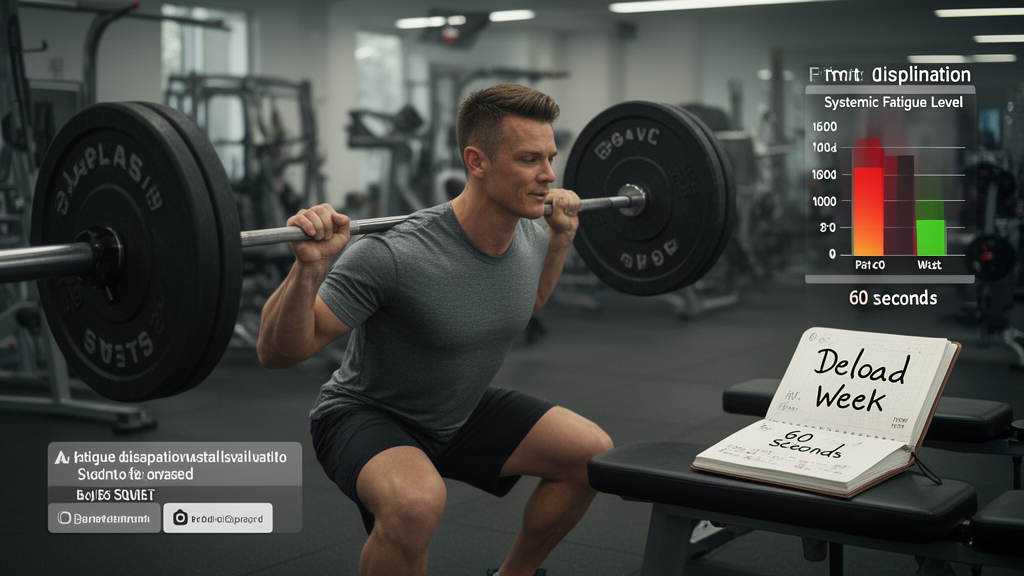
Quick answer: after 40, extend rest on heavy compound lifts to 3 to 5 minutes and prioritize technique over squeezing out extra sets. Connective tissue and vascular recovery both slow with age, so the longer rest protects joints as much as it protects performance.
The Science: Rest Periods for Older Lifters Over 40
If you are a lifter over 40, you have likely noticed that you cannot “bounce back” like you did in your 20s. Your joints might feel stiffer, and your performance drops faster if you rush.
Understanding the specific rest periods for older lifters over 40 is essential for longevity. As we age, our recovery capacity changes at a cellular and systemic level.
1. The Mitochondrial and Vascular Shift
Inside your muscle cells, mitochondria produce the ATP needed for explosive lifts. Research suggest that mitochondrial efficiency declines with age, meaning it takes slightly longer to replenish that “high-test” fuel between sets.
Furthermore, vascular elasticity typically decreases as we age. When you lift heavy, your blood pressure spikes. In younger lifters, the arteries and veins are highly compliant and return to baseline quickly. For older lifters, the cardiovascular system needs more time to regulate blood pressure and flush out metabolic byproducts.
- The Result: You need a longer rest window just to reach the same physiological “baseline” as a younger trainee.
- The Risk: If you rush, you are training with a higher level of systemic inflammation and a lower level of focus.
Protecting the Connective Tissue
The biggest threat to a lifter over 40 is injury. Connective tissues such as tendons and ligaments receive less blood flow than muscles. They also take significantly longer to adapt to heavy loads.
Short rest periods increase the likelihood of technical breakdown. When you are tired, your joints take the brunt of the load instead of your muscles.
Rest is an insurance policy for your joints.
The Over-40 Rest Strategy
1. The 3-Minute Rule for Compounds
For Squats, Deadlifts, and Bench Press, aim for 3 to 5 minutes of rest. This ensures full neural and cardiovascular recovery. It allows you to maintain perfect technique and keep the stress on the muscles, not the joints.
2. Auto-Regulate Your Heart Rate
Wait until your breathing is completely calm. If you are still huffing and puffing, your body is still in a stress state. Do not start the next set until you can breathe comfortably through your nose.
3. Focus on Quality Over Density
In your 20s, you could do “CrossFit-style” density training. After 40, your goal should be high-quality mechanical tension. Fewer sets with more rest is often superior for muscle maintenance and strength than many sets with short rest.
Summary
Training after 40 is about sustainability.
By increasing your rest periods, you:
- Reduce systemic inflammation.
- Ensure full ATP replenishment.
- Maintain the technical integrity of your lifts.
Stay in the game for the long haul. Use our Rest Timer to give your body the respect it deserves.
Population matters for rest prescription, and the same is true of rest periods for women.
Population matters in both directions; the evidence on rest periods for women covers what does and does not differ.