Quick answer: grip fades before your back does on heavy pulling because the forearm muscles are small, work isometrically for the whole set, and recover on their own slower timeline. Straps, mixed grip, or simply resting longer between pulling sets all address it.
You are deadlifting.
- Set 1: 405 lbs. No straps. Easy lock out.
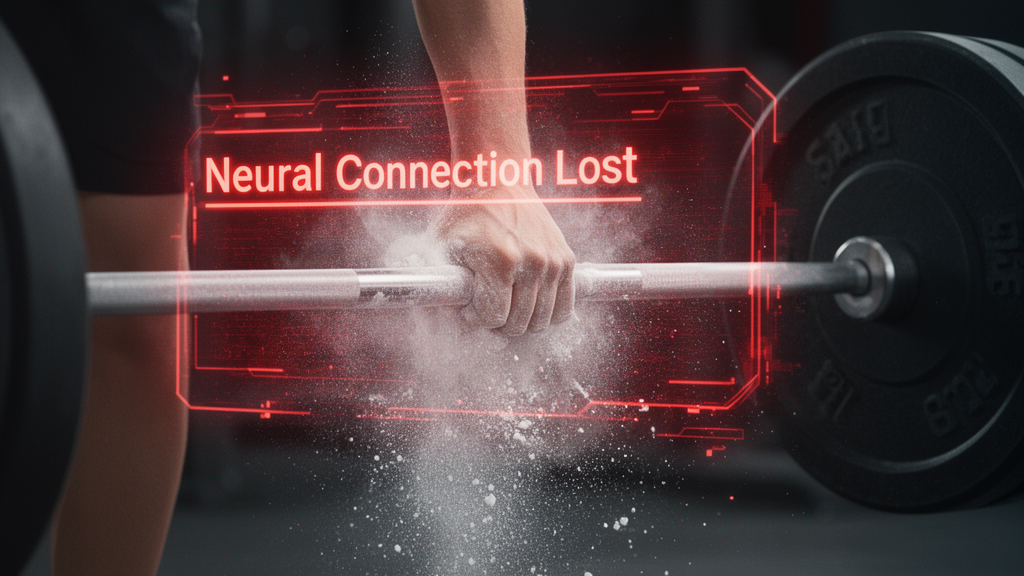
- Set 2: 405 lbs. The bar starts rolling out of your fingers. You miss the rep.
Your back was strong enough. Your legs were strong enough. But your hands quit.
The Primary Cause: Grip Strength Loss CNS Fatigue
It is easy to blame “weak forearms.” But science tells us that grip strength is actually a window into your brain. Grip strength loss cns fatigue is a well-documented phenomenon where your peripheral muscles such as the hands reflect the state of your central system. Read our comprehensive guide on CNS fatigue symptoms and rest periods to understand the full picture of neural recovery.
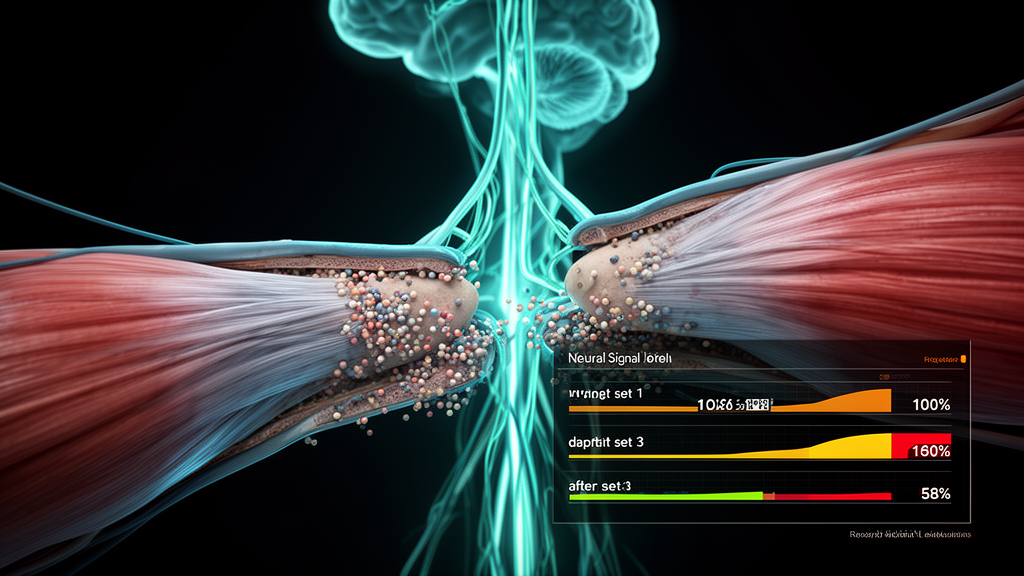
Unlike your quads or glutes, your hand muscles are densely connected to the motor cortex of your brain. This makes them incredibly sensitive to the frequency of neural drive. When your CNS is fatigued, the “signal generator” in your brain cannot maintain the high-frequency firing required for a maximal squeeze.
If your grip is failing mid-session, your nervous system is waving a red flag.
Best Way to Measure CNS Fatigue at Home
You do not need a lab to track your neural recovery. Here are the three most effective ways to gauge your readiness:
- Hand Dynamometer Test: This is the gold standard best way to measure cns fatigue at home. Perform a maximal squeeze first thing in the morning. If your score is 10% or more below your rolling average, your CNS is not fully recovered.
- The Finger Tap Test: Use a mobile app or a timer to see how many times you can tap your index finger on a surface in 10 seconds. Consistency is key here; a significant drop indicates a “noisy” nervous system.
- The Bar Speed Audit: During your warm-up sets, pay attention to the “pop” of the bar. If the weight feels “heavy” or slow despite being a light load, it’s a sign that your neural drive is dampened.
What to Do When Grip Fails
1. Check Your Rest
If you are losing grip, you are likely not resting long enough for neural recovery.
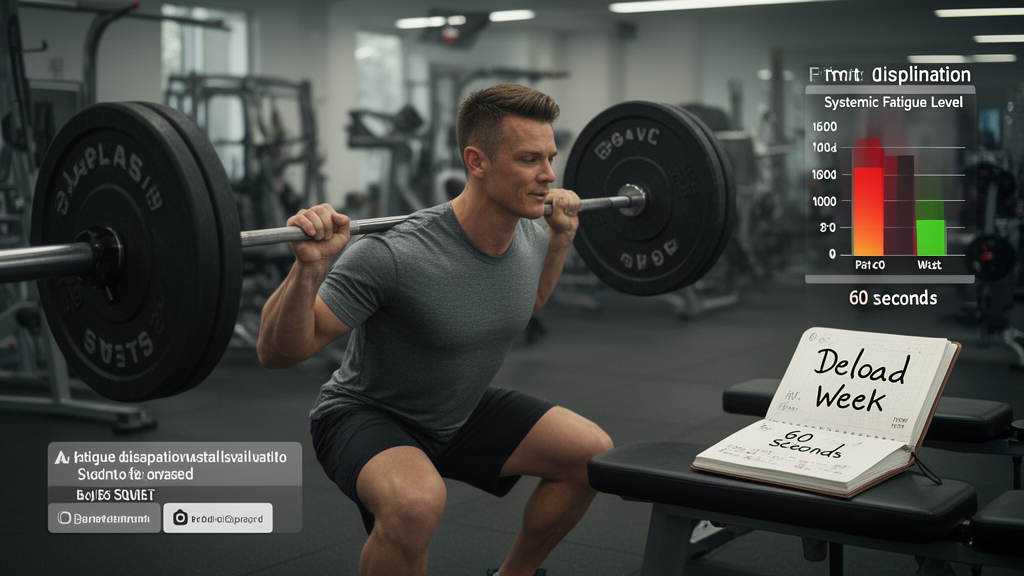
- Solution: Extend rest to 5 minutes. Give the signal generator time to recharge.
2. Use Straps
There is no shame in straps. If your back can pull 500 lbs but your hands can only hold 400 lbs, train your back with 500 lbs.
- Strategy: Use double overhand grip for warmups to build forearm strength. Use straps for working sets to spare the CNS.
3. Stop the Set
If your grip fails even with straps, which is rare but possible, your CNS is fried.
You can use a simple Hand Dynamometer also called a grip tester before your workout to gauge your readiness.
- Morning Test: Squeeze as hard as you can.
- Result: If your grip is 10% weaker than normal, take a light day. Your CNS is not recovered from the last session.
Summary
Do not ignore your hands. They are telling you something important about your systemic fatigue.
If the bar feels thicker, heavier, or slippery-er than usual, check your rest times. You might need another minute.