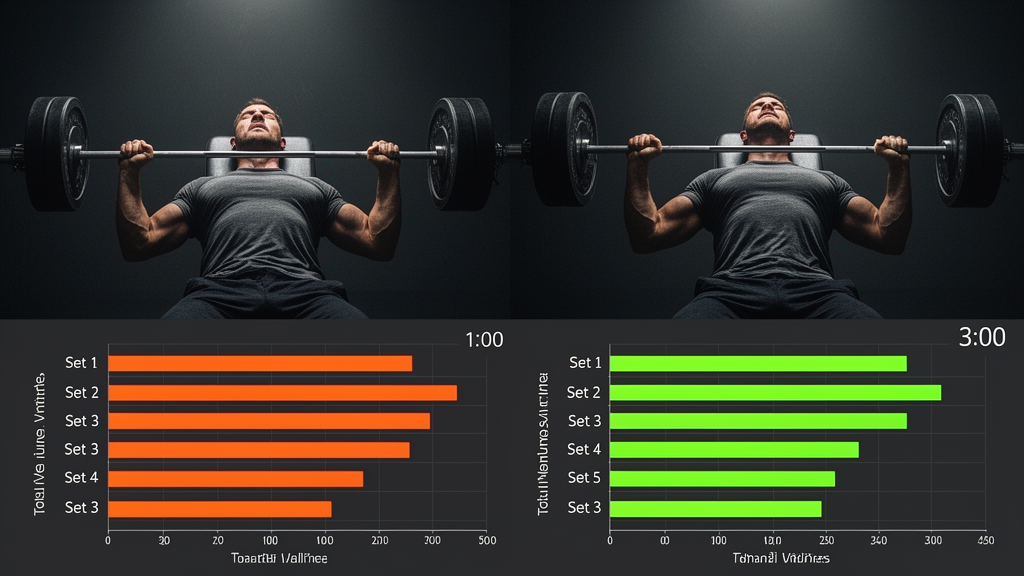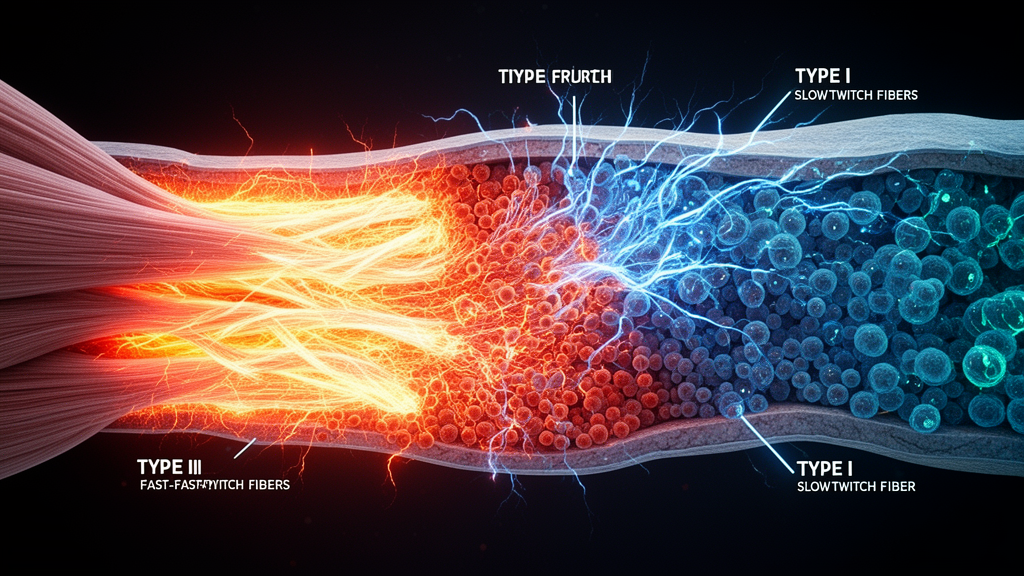
Quick answer: fast-twitch type II fibers produce the most force and fatigue fastest, needing roughly 3 to 5 minutes to recover between maximal efforts. Slow-twitch type I fibers recover in well under a minute. That difference is why heavy strength work needs longer rest than higher-rep endurance work.
You hit a heavy set of squats. Your legs are shaking. You feel the burn. But when you look in the mirror, you wonder why your muscles are not growing as fast as you want.
The answer might not be in your training intensity. It might be in your rest periods.
The Two Fibers: Type I vs Type II
Your skeletal muscles contain two primary fiber types, and they recover at radically different rates.
Type I: The Endurance Engine
Type I fibers, also known as slow-twitch fibers, are designed for sustained, low-intensity effort. They rely primarily on aerobic metabolism and have a rich blood supply.
- Recovery: 30 to 90 seconds.
- Feel: The “burn” you feel during a long run.
Type II: The Powerhouse
Type II fibers, or fast-twitch fibers, are built for explosive, high-force contractions. They use the ATP-PC system and anaerobic glycolysis, producing massive power but generating significant metabolic waste.
- Recovery: 2 to 5 minutes for full restoration.
- Feel: The shaking and weakness after a heavy set of 5 reps.
Why Fast Twitch Fibers Recover Slower
The slow recovery of Type II fibers comes down to three factors.
1. Fuel Depletion
Type II fibers store less glycogen and phosphocreatine than Type I. When you blast them with a heavy set, you deplete these stores almost completely. Replenishing phosphocreatine alone takes 3 to 4 minutes.
2. Metabolic Waste Accumulation
Fast twitch contractions produce high levels of hydrogen ions and lactate. These byproducts create an acidic environment that interferes with muscle contraction. Your body needs time to clear this waste through the bloodstream.
3. Neural Demand
Recruiting Type II fibers requires a high-frequency signal from your motor cortex. This neural “drain” takes longer to recover than the simple metabolic processes of Type I fibers. Your brain needs to “recharge” before it can fire that signal again at 100% capacity.
The Practical Application
For Strength of 1 to 5 reps
If you are training for maximal strength, you are almost exclusively using Type II fibers.
- Rest Required: 3 to 5 minutes.
- Why: You need full phosphocreatine restoration and neural recovery to maintain force production.
For Hypertrophy of 8 to 12 reps
Hypertrophy training uses a mix of Type I and Type II fibers, but the “effective” growth stimulus comes from pushing into the Type II range during the final reps.
- Rest Required: 60 to 120 seconds.
- Why: This balances metabolic stress with sufficient Type II recruitment.
The Hybrid Approach
If you want the best of both worlds, try “Rest-Pause” or “Cluster Sets” to target Type II fibers with shorter total rest times while maintaining intensity.
The 5-Minute Rule
If you are training with weights above 80% of your one-rep max, and you want to grow or get stronger, you should be resting at least 3 to 5 minutes between sets.
Anything less, and you are leaving gains on the table. Your Type II fibers simply cannot recover fast enough to performUse our Rest Timer to enforce these longer rest periods at their best.
. When you are resting for 4 minutes, you are not being lazy. You are letting your fast twitch fibers do what they were built to do: generate maximum force.
Maximize Your Fiber Recruitment
The ATP-PC recovery calculator shows how much of that energy system has come back for any rest time you enter.