Rest Pause Training Science Explained
Most gym-goers live by “Straight Sets”: 10 reps, wait 2 minutes, repeat. While this works, rest pause training science explained shows us a more efficient way to trigger hypertrophy by manipulating blood pH and neural recovery.
The method uses ultra-short rest periods called micro-rests to drag a set deep into the “effective” zone without lowering the level of mechanical tension.
Effective Reps Theory in Bodybuilding
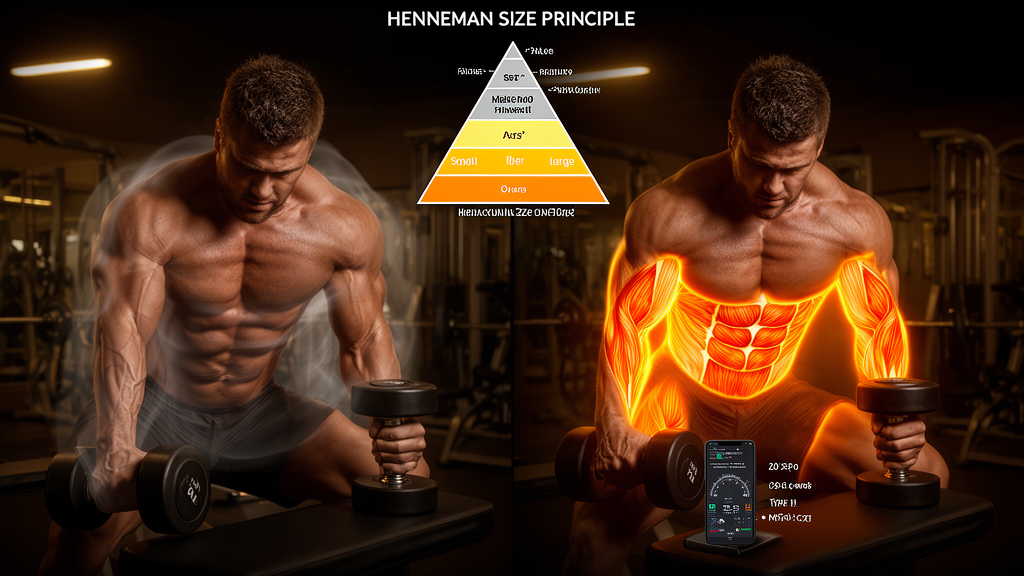
To understand Rest-Pause, you must understand the effective reps theory bodybuilding researchers utilize. In a standard set of 10 reps, the first 5-7 reps are relatively easy. They contribute to volume, but they don’t provide a massive growth stimulus because the lower-threshold motor units are doing all the work.
Only the final “grinding” reps—where the muscle is fatigued and the brain is forced to recruit high-threshold motor units—are truly effective for growth.
Rest-Pause Efficiency Comparison:
- Straight Set of 10 Reps: ~3 Effective Reps which are the last 3.
- Rest-Pause Set:
- Activation Set of 8 reps: 3 Effective Reps.
- Mini-Set 1 of 3 reps: 3 Effective Reps because you start in a fatigued state.
- Mini-Set 2 of 2 reps: 2 Effective Reps.
- Total: 8 Effective Reps in the same amount of “working” time.
The Science: Effective Reps
Why does this work? It comes down to Effective Reps.
In a standard set of 10 reps, the first 7 reps are easy. They don’t stimulate much growth. Only the last 3 reps, specifically those near failure, recruit the high-threshold motor units responsible for growth.
*   Set 1: 8 reps with 3 Effective
*   Set 2: 3 reps where all 3 are Effective because you are already fatigued
*   Set 3: 2 reps where all 2 are Effective
*   **Total:** 8 Effective Reps in one mega-set.
You have essentially tripled the growth stimulus in the same amount of time.
Safety Warnings
Rest-Pause is incredibly taxing.
- Avoid Complex Lifts: Do not Rest-Pause Deadlifts or Squats. Your form will break down, and you will get injured.
- Stick to Machines/Dumbbells: Leg Press, Machine Press, Curls, and Rows are perfect candidates.
- Frequency: You cannot do this every day. One Rest-Pause set per muscle group is often enough.
How to Time It
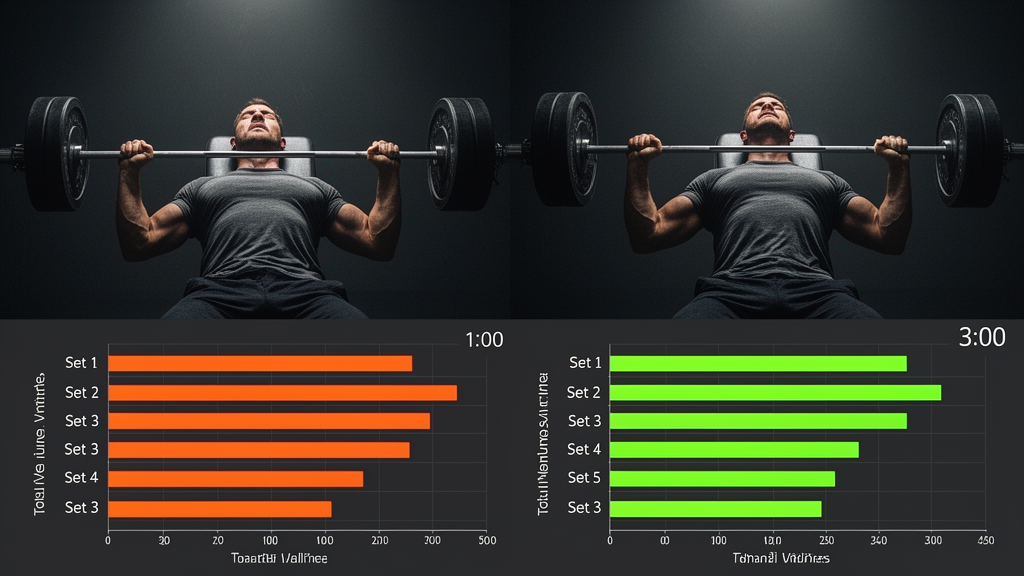
Accuracy is key. If you rest too long such as 60 seconds, it just becomes a separate set. If you rest too little such as 5 seconds, you won’t clear enough lactate to get another rep.
The sweet spot is 20-30 seconds.
Our Rest Timer is perfect for this. Set a custom interval for 20 seconds. When it beeps, you go. No excuses.