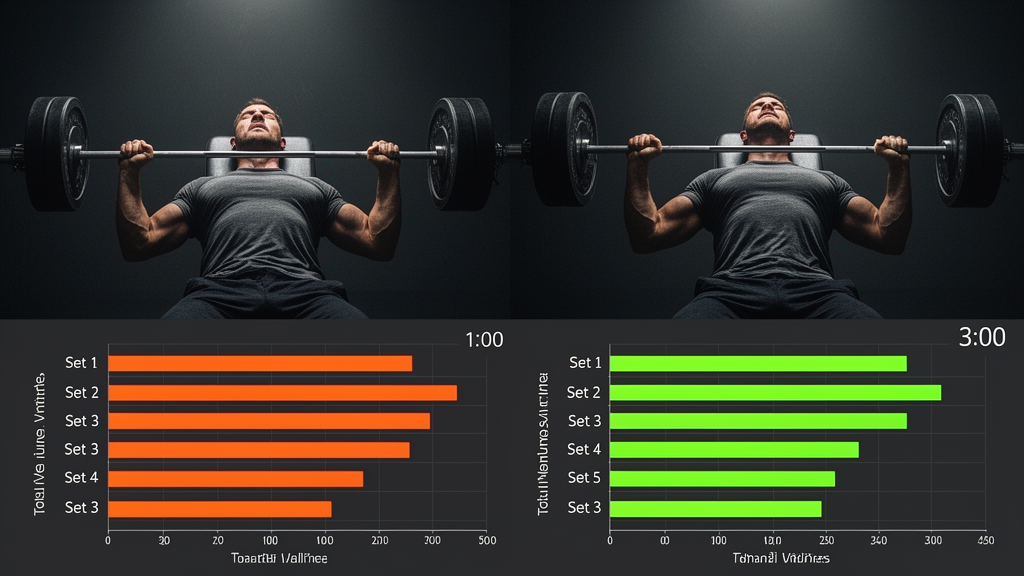
Quick answer: rest-pause means taking a set close to failure, resting just 10 to 20 seconds, then squeezing out more reps, repeating two or three times. That short pause restores enough ATP for a few more high-quality reps without letting the muscle fully recover, which is what makes it so effective for hypertrophy.
The Master Protocol: Rest Pause Training Guide for Volume
You spend an hour in the gym performing dozens of sets, but if we analyze your training log with brutal honesty, you likely performed only a few minutes of work that actually stimulated muscle growth. This rest pause training guide for volume is designed to strip away the “junk” and force every rep to count.
High-Threshold Motor Unit Recruitment
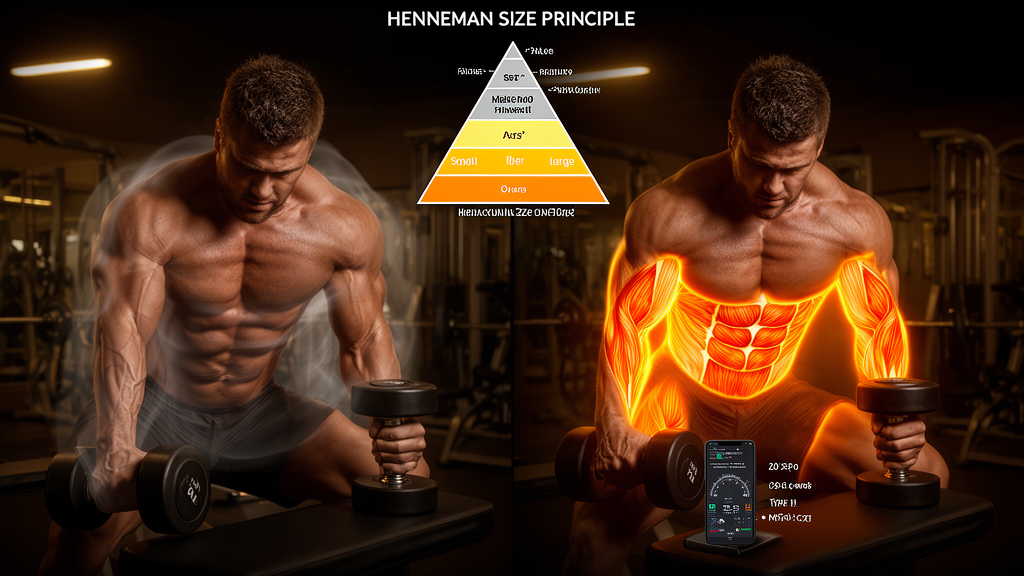
To understand why rest-pause is so effective, you must understand the Henneman Size Principle. Your body is efficient; it recruits the smallest, weakest muscle fibers first. In a traditional set of 12 reps, the first 8 to 9 reps are performed by these low-threshold fibers. You only tap into the growth-prone Type II fibers during the final, grinding reps.
Rest-pause training bypasses this long lead-up:
- Exhaustion of Low-Threshold Fibers: By taking an initial set to technical failure, you “retire” the weak fibers for the rest of the exercise.
- Short Rest Duration of 20 seconds: This window allows just enough ATP replenishment to fire the muscle again, but not enough time for the weak fibers to recover.
- Immediate High-Threshold Engagement: When you pick the weight back up 20 seconds later, your brain is forced to immediately recruit the largest motor units. Every single rep in your “mini-sets” becomes an effective rep, maximizing mechanical tension without the wasted volume of a standard set.
The Physiology of “Effective Reps”
To understand why this method works, you must understand the Henneman Size Principle.
Your body is efficient. When you lift a weight, your brain recruits the smallest, weakest muscle fibers first. As those fibers fatigue, your brain calls upon larger, stronger Type II fibers to help.
In a standard set of 12 reps, the first 8 reps barely recruit your high-threshold motor units. You only tap into the growth-prone fibers during the last few grinding reps.
Rest-Pause training bypasses this warm-up phase.
How It Works
By taking a standard set to failure, you fully fatigue the low-threshold fibers. You then take a very short break. When you pick the weight back up 20 seconds later, those low-threshold fibers are still exhausted.
Your body has no choice. It must immediately recruit the largest, strongest muscle fibers to move the load. Every single rep becomes an “effective rep.”
The Protocol: How to Execute
There are many variations like Doggcrapp or Myo-Reps, but the underlying mechanism remains the same. Here is the standard hypertrophy protocol for 2025.
Step 1: The Activation Set
Choose a weight you can lift for 10 to 12 reps. Perform the set until you cannot complete another rep with good form. This is Technical Failure.
Step 2: The Micro-Rest
Rack the weight. Take exactly 15 to 20 deep breaths. This usually equates to 20 seconds. This duration is critical. It is long enough to clear a small amount of lactate but short enough to prevent the muscle from fully recovering.
Step 3: The Mini-Set
Pick the weight up again. Perform as many reps as possible. You will likely only get 3 to 5 reps. These reps will feel significantly heavier than the first set.
Step 4: Repeat
Rest another 20 seconds. Perform one final mini-set. You may only get 1 or 2 reps here.
The Result: Instead of getting 3 effective reps from one long set, you just achieved 9 or 10 effective reps in a single extended block.
The Science of the Short Rest
Why 20 seconds?
This specific interval targets the Phosphagen System replenishment curve. 20 seconds allows your body to replenish roughly 50% of its ATP stores. This gives you just enough fuel to contract the muscle a few more times, but not enough to lower the metabolic stress.
This is where standard linear timers fail. They treat every second equally.
Our Rest Timer Science tool uses a Quadratic Easing Model to visualize this replenishment. You can see the rapid initial spike in energy restoration followed by the slow taper. For Rest-Pause, you want to catch that curve right as it begins to flatten out.
Best Exercises for Rest-Pause
Not all movements are created equal. This technique requires high intensity and fatigue. Doing this with complex mechanics is dangerous.
✅ The Green Light for Isolation and Machines
- Machine Chest Press: Safe failure point.
- Dumbbell Lateral Raises: High metabolic stress.
- Leg Extensions: Isolate the quad without lower back risk.
- Bicep Curls: Easy to re-rack and go again.
❌ The Red Light for Heavy Compounds
- Barbell Squats: Form breakdown here leads to spinal injury.
- Deadlifts: The lower back fatigues faster than the hamstrings.
- Bent Over Rows: Maintaining torso rigidity becomes impossible.
Safety and How to Time the Pause
Rest-pause is taxing, so apply it selectively.
- Avoid complex lifts. Do not rest-pause deadlifts or squats. Form breaks down under that fatigue and the injury risk is real.
- Stick to machines and dumbbells. Leg press, machine press, curls, and rows are ideal candidates.
- Limit frequency. One rest-pause set per muscle group is usually enough.
Timing accuracy matters. Rest too long, around 60 seconds, and it simply becomes another straight set. Rest too little, around 5 seconds, and you have not cleared enough metabolite to earn another rep. The sweet spot is 20 to 30 seconds.
Summary
Rest-Pause training is not for beginners. It requires the ability to push through pain barriers that most people avoid. However, if you have hit a plateau or have limited time, it is the most potent tool in your arsenal.
You do not need to live in the gym to look like you do. You just need to stop wasting time on easy reps.
Frequently Asked Questions
1. How often should I use Rest-Pause? Use it sparingly. Because it places massive stress on the Central Nervous System, we recommend using it for only one exercise per muscle group per workout. Usually, the final movement of the session works best.
2. Should I lower the weight for the mini-sets? No. Keep the weight the same throughout the entire sequence. The goal is to reduce the rep count naturally due to fatigue, not to make the weight easier to lift.
3. Is this better than drop sets? It is different. Drop sets reduce the weight to keep moving, which recruits different motor units. Rest-Pause keeps the mechanical tension high on the Type II fibers by maintaining the heavy load. For pure strength-hypertrophy hybrid goals, Rest-Pause is generally superior.
Comparing lifts? The rest by exercise lookup shows the rest range for every major movement side by side.