You spent 45 minutes on your compound lifts. Squats, bench press, deadlifts. You are exhausted. You have 15 minutes left. You crank out some curls, some tricep pushdowns, and call it a day.
Here is the problem: you are treating your accessory movements like an afterthought, and your rest times are proving it.
Why Accessory Rest Matters
Accessory movements are not just “finishers.” They are opportunities to:
- Build lagging muscle groups.
- Correct strength imbalances.
- Increase total training volume.
- Improve joint health.
But if you rest only 30 seconds because you are “tired,” you are not giving these muscles what they need to grow.
The Two Types of Accessory Movements
1. Structural Accessories
These support your main lifts. They strengthen weak points and improve technique.
- Examples: Paused squats, pin deadlifts, close-grip bench.
- Goal: Strength and technique.
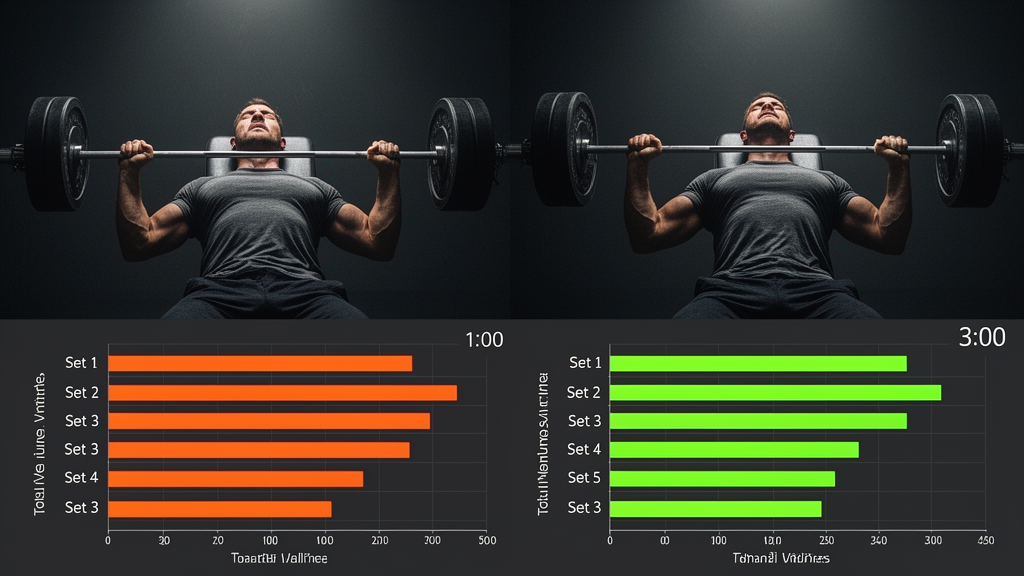
- Rest: 2 to 3 minutes.
2. Hypertrophy Accessories
These build muscle size and improve aesthetics. They target specific muscle groups in isolation.
- Examples: Bicep curls, lateral raises, leg extensions.
- Goal: Muscle growth.
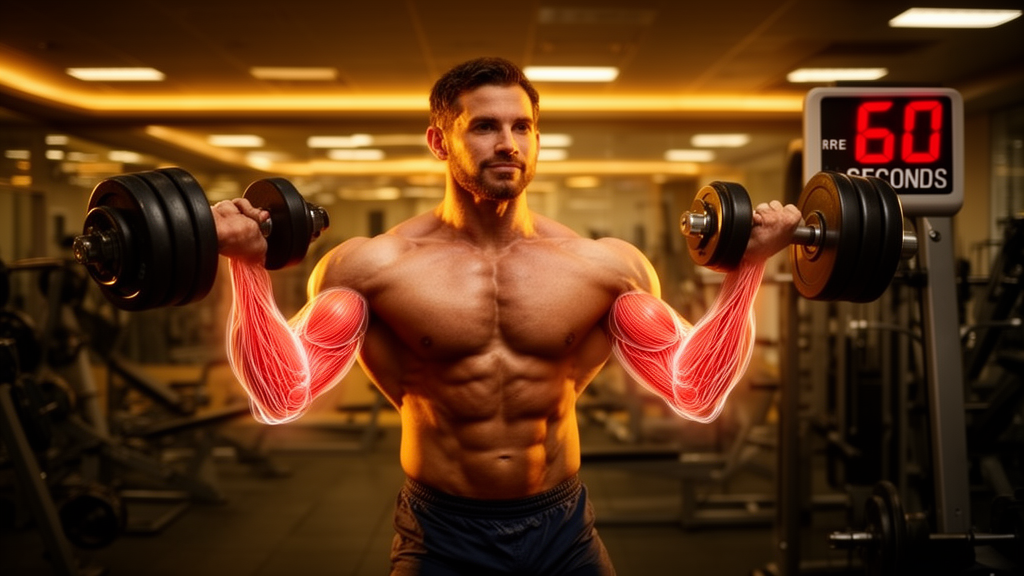
- Rest: 60 to 90 seconds.
The Science of Accessory Rest
For Structural Accessories
Structural accessories often involve heavier weights than pure isolation work. You are still building neural efficiency and positional strength.
- Rest: 2 to 3 minutes.
- Why: You need enough recovery to maintain technique and force production.
For Hypertrophy Accessories
Hypertrophy accessories rely on metabolic stress. The goal is to flood the muscle with blood and create a pump.
- Rest: 60 to 90 seconds.
- Why: This maintains metabolic stress while allowing partial ATP recovery for sustained effort.
Bodybuilding-Specific Guidelines
Arms such as Biceps and Triceps
- Rest: 60 to 75 seconds.
- Why: The arm muscles are small and recover quickly. Short rest maintains the pump and increases time under tension.
- Exercises: Curls, skull crushers, hammer curls.
Shoulders such as Lateral Raises
- Rest: 45 to 60 seconds.
- Why: The deltoids are fatigue-resistant but benefit from higher volume. Short rest allows more sets in less time.
- Exercises: Lateral raises, front raises, reverse flyes.
Legs or Accessory Work
- Rest: 60 to 90 seconds.
- Why: Leg muscles are large and recover slower than arms. Too short rest collapses rep quality.
- Exercises: Leg extensions, leg curls, calf raises.
Back such as Lats and Traps
- Rest: 90 to 120 seconds.
- Why: Back muscles are large and involved in many compound movements. They need more recovery than arms but less than legs.
- Exercises: Pull-ups, rows, lat pulldowns.
The Most Common Mistake
Programming Examples
The “Arm Day” Approach
- Exercise 1: Close-Grip Bench with 4 sets of 8 and a 3 minute rest.
- Exercise 2: Overhead Tricep Extension with 4 sets of 10 and a 75 second rest.
- Exercise 3: Barbell Curl with 4 sets of 10 and a 75 second rest.
- Exercise 4: Hammer Curl with 3 sets of 12 and a 60 second rest.
The “Full Body” Approach
- Exercise 1: Pull-ups with 4 sets of 8 and a 2 minute rest.
- Exercise 2: Dips with 4 sets of 10 and a 2 minute rest.
- Exercise 3: Face Pulls with 3 sets of 15 and a 60 second rest.
- Exercise 4: Bicep Curl with 3 sets of 12 and a 60 second rest.
Summary
Accessory movements deserve respect. Give them appropriate rest based on their purpose: longer for structural work, shorter for pure hypertrophy.
Use our Rest Timer to manage these rest periods precisely. Do not let your accessories become an afterthought. They are the difference between a good physique and a great one.