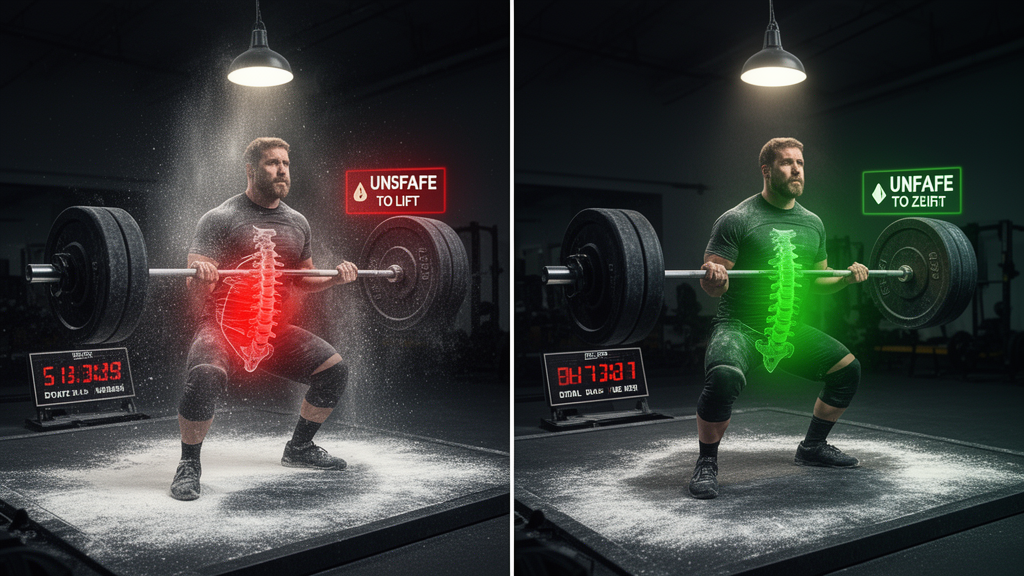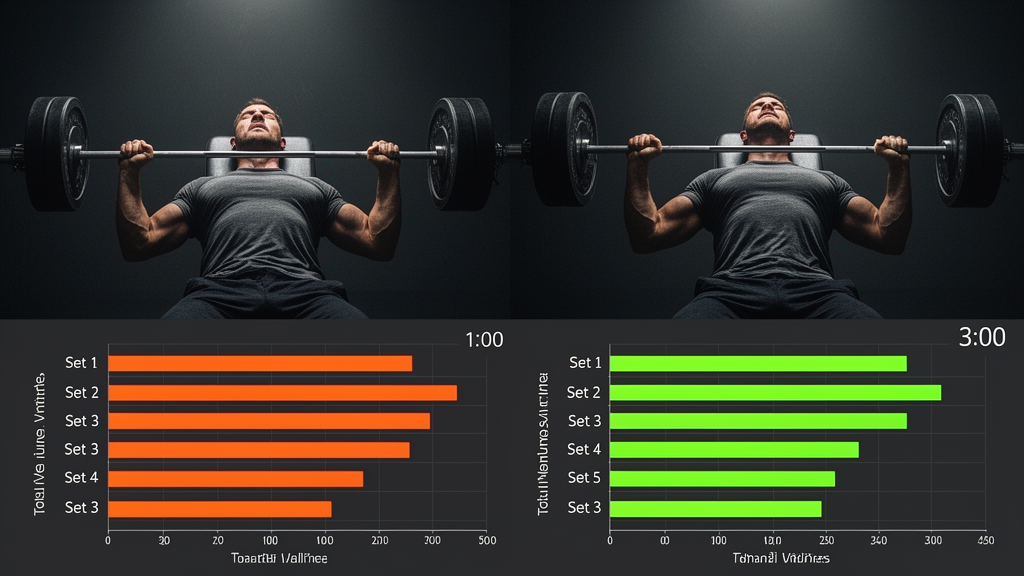
Quick answer: a cluster set breaks one set into mini-sets with 10 to 30 seconds of rest between them, letting you keep bar speed and power high across more total reps at a heavy load. Use them for power and strength work, not for chasing a pump.
The Science: Cluster Sets Rest Intervals for Power
A Cluster Set takes a standard set and breaks it apart. Instead of doing 5 reps continuously, you rack the bar and rest for 10-20 seconds between every single rep.
Understanding your cluster sets rest intervals for power is the key to training for explosive velocity without the debilitating fatigue of a “grinder” set.
Intra Set Rest Periods Benefits
Why would you deliberately break up a set? The intra set rest periods benefits are primarily concentrated in three areas:
- Partial PCr Replenishment: As we know from our ATP Recovery Science, phosphocreatine known as PCr restores exponentially. Even a 15-second “intra-set” rest allows for about 25-30% recovery of your most explosive fuel. This prevents the “slow down” on reps 4 and 5.
- Lactate Buffering: Micro-rests allow the body to briefly buffer hydrogen ions, keeping the muscle pH higher for longer. This prevents the “burning” sensation that often causes technical breakdown.
- Neural Reset: Racking the weight allows the central nervous system to “reset” its motor pattern. Every rep becomes the first rep, ensuring maximum technical precision—which is vital for power athletes.
Breaking the Set
A Cluster Set takes that same set of 5 reps and breaks it apart. Instead of doing them continuously, you rack the bar and rest for 10-20 seconds between every single rep.
Standard Set:
- 5 reps continuous.
- Time: 30 seconds under tension.
- Result: High fatigue, velocity loss on last reps.
Cluster Set:
- 1 rep. Rack. Rest 15s.
- 1 rep. Rack. Rest 15s.
- 1 rep. Rack. Rest 15s.
- 1 rep. Rack. Rest 15s.
- 1 rep. Done.
Why Do It?
1. Maintain Peak Velocity
The 15-second micro-rest allows for partial Phosphocreatine known as PCr replenishment. This means Rep 5 can be just as explosive as Rep 1. You are training your nervous system to fire at 100% capacity on every rep.
2. Maintain Perfect Form
Fatigue causes form breakdown. By resetting between reps, you ensure every rep is technically perfect. This is crucial for complex lifts like Cleans or Snatches.
3. Lift Heavier
Because you are recovering mid-set, you can often use a weight for 5 reps that you could normally only lift for 3. This increases the total tonnage lifted in the workout.
How to Program It
Cluster sets are best for Power and Strength, not hypertrophy.
- Exercise: Squats, Deadlifts, Bench, Olympic Lifts.
- Protocol: 4 sets of 1-1-1-1-1 reps.
- Intra-Set Rest: 15-20 seconds.
- Inter-Set Rest: 3-4 minutes.
The Timer Setup
You need a precision timer for this. You cannot just guess 15 seconds.
Use our Rest Timer in “Interval Mode” or simply watch the seconds tick by. Be disciplined. If you rest too long, such as over 45 seconds, it becomes singles. If you rest too little, such as 5 seconds, it is just a pause squat.
15 seconds. Rack, breathe, unrack, explode.
The same principle drives the long rests used in Olympic weightlifting.
Comparing lifts? The rest by exercise lookup shows the rest range for every major movement side by side.