Quick answer: short rest does not meaningfully increase fat loss. It raises the calorie burn of a session only slightly, and the difference is trivial next to your overall diet. What short rest reliably does is reduce the load you can handle, which risks muscle loss in a deficit. Rest for performance and manage fat loss with nutrition.
The Science: Does Short Rest Burn More Fat Study Results
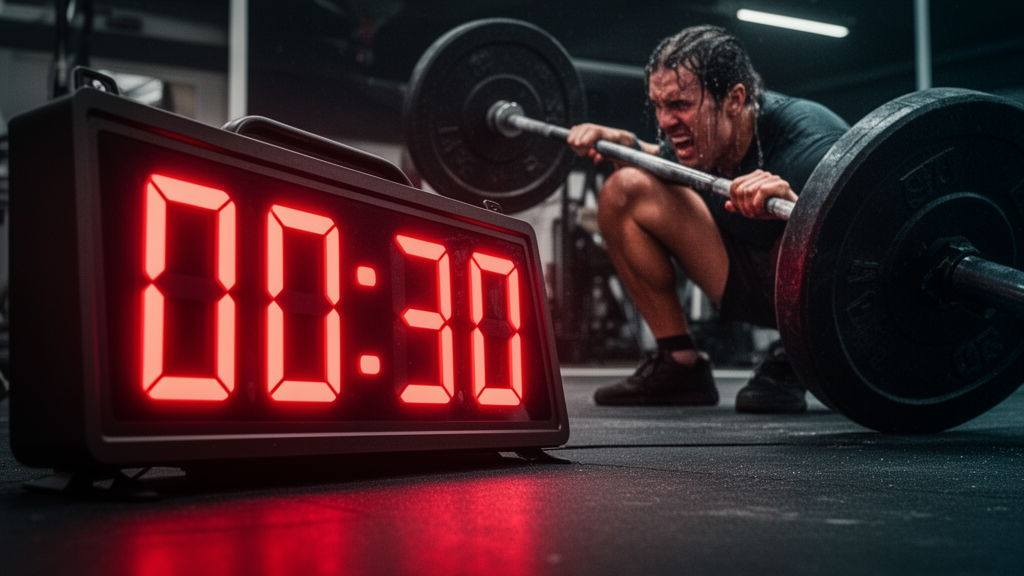
“I’m keeping my rest short to keep my heart rate up and burn more fat.” This is a common refrain in “Body Transformation” programs. But if you look at the actual does short rest burn more fat study data, the results are underwhelming for those seeking long-term body composition changes.
While your heart rate is higher with 30-second rests, the “extra” calorie burn is often less than 100 calories per hour—the equivalent of a single medium apple.
EPOC vs. Work Volume Analysis
To understand why short rest fails as a fat-loss tool, we must look at the trade-off between EPOC and Total Work Volume.
- EPOC also known as Excess Post-exercise Oxygen Consumption: This is the afterburn effect. Short-rest, high-intensity sets increase EPOC, meaning you burn more calories for a few hours after the gym. However, science shows EPOC only accounts for about 6 to 15 percent of the total session burn.
- Work Volume: When you rest for only 30-60 seconds, you are forced to use lighter weights. This reduces the “mechanical tension” signal. Over time, this leads to muscle loss.
The Catch-22:
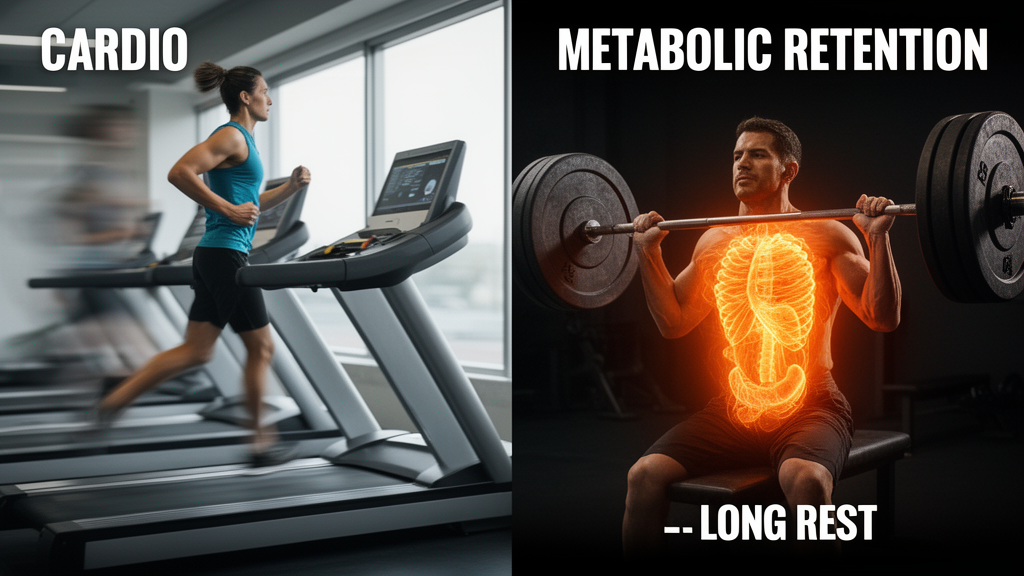
If you sacrifice weight on the bar for a higher heart rate, you are trading Muscle Retention for a tiny, temporary calorie spike. Since muscle tissue is metabolically expensive to maintain, losing even 1lb of muscle will lower your daily metabolic rate far more than any EPOC spike can compensate for.
You have “burned” an extra 100 calories—the equivalent of a single medium apple.
In exchange for that apple, you have sacrificed your ability to lift heavy weights, build muscle, and maintain your strength.
The EPOC Illusion
Proponents of short rest often talk about Excess Post-exercise Oxygen Consumption also known as EPOC, or “The Afterburn Effect.” They claim that short rest keeps your metabolism elevated for 24 hours after the workout.
Science shows that while EPOC is real, its effect is vastly overstated. For most people, EPOC accounts for about 6% to 15% of the total calories burned during the session.
If you burned 400 calories in your short-rest session, EPOC might give you another 40 to 60 calories. Again, this is negligible in the grand scheme of fat loss.
The Muscle Retention Danger
The real problem with the “short rest for fat loss” approach is that it makes your lifting session less effective at its primary job: Muscle Retention.
Muscle tissue is metabolically expensive. It takes a lot of calories just to maintain it.
- Heavy Lifting with Long Rest: Signals the body to keep muscle.
- Light Lifting with Short Rest: Signals the body that muscle is an expensive burden that can be discarded.
When you lose muscle, your Basal Metabolic Rate or BMR drops. You now burn fewer calories every hour of the day while you are sleeping and eating.
Short rest might burn more calories today, but it can lead to a slower metabolism tomorrow.
Summary
- For Fat Loss: Use a calorie deficit and walking/cardio.
- For Lifting: Use the rest period that allows you to move the most weight with the best form.
Don’t turn your weight training into bad cardio. Let the weights be weights.